Motor Bottom Side
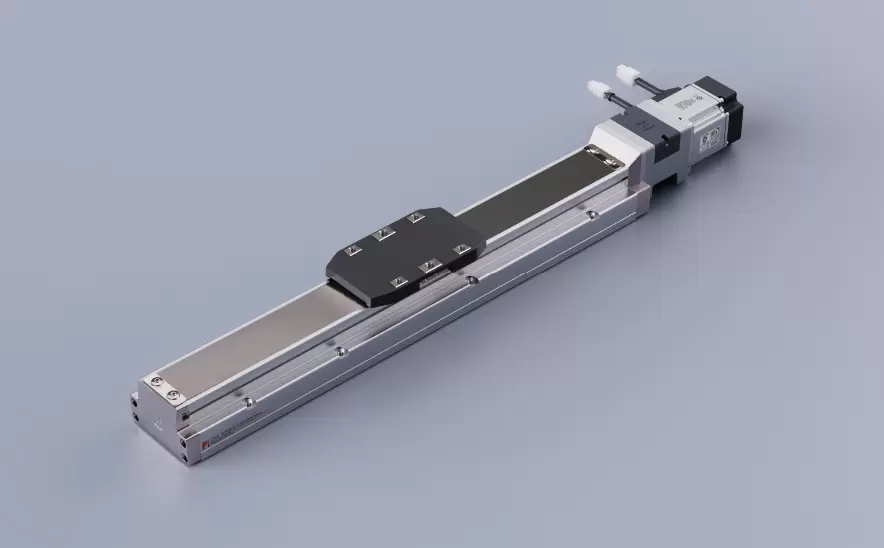
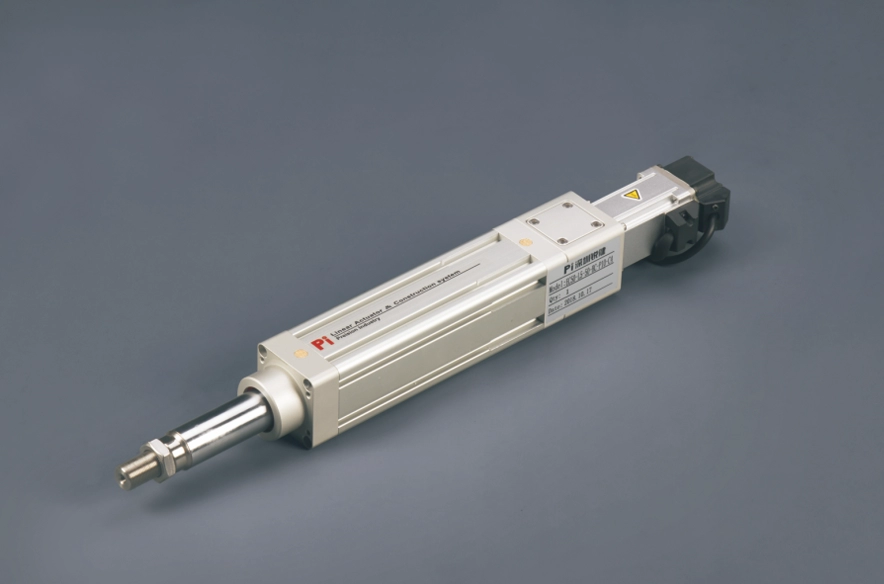
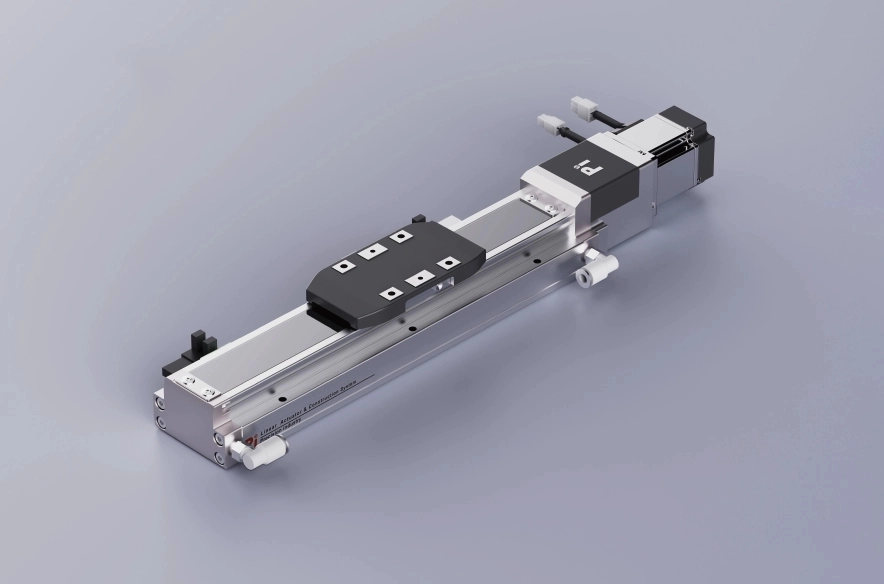
Repeatability:±0.005/0.01mmHorizontal Load:150kgVertical Load:55kgMaximum Speed:2000mm/sTravel Range:100-1500mm

 Current location:Home > Company > News > Latest news > Standard Ball Screw Actuators in Medical and Laboratory Equipment Applications
 Date: Dec 31 2025
Medical and laboratory equipment place some of the strictest demands on motion control systems. Accuracy, repeatability, smoothness, and long-term reliability are not just performance metrics—they directly affect diagnostic results, treatment safety, and research validity. As healthcare and life sciences continue to advance toward higher automation and precision, linear motion components must meet increasingly rigorous standards.
Among the available motion technologies, standard ball screw actuators have become a dependable solution for medical devices and laboratory automation. Their predictable motion behavior, mechanical stability, and compatibility with precision control systems make them well suited for applications where consistency and reliability are critical.
Since its founding in 2003, Ruan has focused on helping industrial customers improve accuracy and process control. Through its Pi brand, Ruan designs and manufactures precision positioning slide tables, XY linear modules, electric cylinders, rectangular coordinate modules, linear motor modules, built-in slide tables, industrial robot arms, and transmission components. Within this portfolio, the Standard Ball Screw Actuator plays an important role in supporting medical and laboratory equipment manufacturers worldwide.
This article explores how standard ball screw actuators are applied in medical and laboratory equipment and why they remain a preferred choice in these sensitive and precision-driven environments.
Medical and laboratory systems often operate at small scales, with tight tolerances and strict regulatory requirements. Motion errors can lead to inaccurate measurements, inconsistent sample handling, or unreliable diagnostic outcomes.
Typical motion requirements include:
High repeatability over long operating cycles
Smooth, vibration-free movement
Stable positioning at low speeds
Predictable response to control commands
Reliable operation in clean or controlled environments
Ball screw actuators are particularly effective at meeting these demands due to their rolling contact mechanism and rigid structural design.
Modern diagnostic systems rely heavily on precise positioning to ensure accurate data capture.
Positioning stages in imaging equipment
Adjustable platforms for scanning systems
Sample alignment mechanisms
Standard ball screw actuators provide smooth linear motion and stable holding capability, ensuring that sensors and imaging components remain accurately positioned during operation. Their predictable motion behavior helps maintain consistency across repeated diagnostic procedures.
Automation has become essential in laboratories to improve throughput and reduce human error. Sample handling systems must move liquids, containers, or instruments with consistent accuracy.
Repeatable positioning for robotic pipetting systems
Controlled vertical motion for sample loading and unloading
Stable travel for tray and rack movement
Because ball screw actuators offer low backlash and stable motion at low speeds, they help ensure that samples are handled consistently, which is critical for reproducible experimental results.
In addition to end-use medical devices, ball screw actuators are widely used in the manufacturing and testing equipment that produces medical products.
Typical applications include:
Assembly stations for medical components
Calibration equipment for sensors and instruments
Automated inspection systems
In these scenarios, repeatability and rigidity are essential to ensure consistent assembly quality and compliance with manufacturing standards.
Many medical and laboratory processes require slow, controlled movement rather than rapid travel. Sudden motion or vibration can damage delicate components or disrupt sensitive measurements.
Ball screw actuators excel in low-speed applications because:
Rolling contact minimizes stick-slip behavior
Motion remains smooth even at very low velocities
Direction changes are controlled and repeatable
This makes them well suited for tasks such as reagent dispensing, probe positioning, and fine mechanical adjustments.
Medical and laboratory equipment often integrates multiple subsystems, including sensors, optics, and mechanical fixtures. These assemblies require stable support to maintain alignment.
Standard ball screw actuators provide:
High axial stiffness to resist deflection
Rigid actuator housings for structural stability
Integrated guidance to absorb side loads
This rigidity ensures that positioning accuracy is maintained even when loads vary during operation.
Many medical and laboratory environments require clean operation to prevent contamination.
Ball screw actuators can be adapted to meet these needs through:
Protective sealing structures
Controlled lubrication strategies
Material choices compatible with clean environments
When properly configured, they operate reliably in laboratories, medical production facilities, and controlled research spaces.
Medical and laboratory equipment increasingly relies on servo-based motion control for precision and flexibility.
Ball screw actuators integrate well with servo systems because:
Torque-to-thrust conversion is predictable
Mechanical response is consistent
Fine position control is achievable through feedback systems
This compatibility allows engineers to design compact, precise, and easily controlled motion systems for advanced medical applications.
Medical and laboratory equipment is often expected to operate continuously with minimal downtime.
Ball screw actuators support long service life through:
Rolling contact that reduces wear
Hardened components for durability
Predictable maintenance requirements
With proper lubrication and periodic inspection, they maintain performance over extended operating cycles, supporting dependable equipment operation.
With more than two decades of experience, Ruan understands the importance of reliability and precision in medical and laboratory environments. The Pi brand’s standard ball screw actuators are designed with stable structures, controlled backlash, and precise assembly to meet the expectations of equipment manufacturers in healthcare and life sciences.
By focusing on practical engineering and manufacturing discipline, Ruan supports customers in building motion systems that deliver consistent, repeatable results in sensitive applications.
Standard ball screw actuators play a vital role in medical and laboratory equipment applications, supporting precise positioning, smooth motion, and reliable repeatability. From diagnostic imaging and laboratory automation to medical device manufacturing equipment, their balanced performance makes them a trusted solution in environments where accuracy and stability are critical.
Backed by years of precision engineering experience, Ruan continues to provide motion solutions that help medical and laboratory equipment manufacturers meet the challenges of modern automation with confidence.