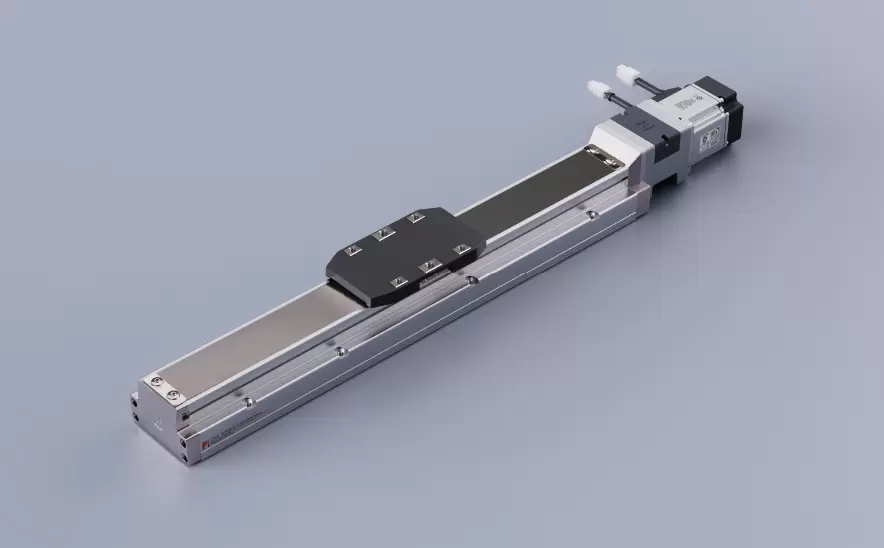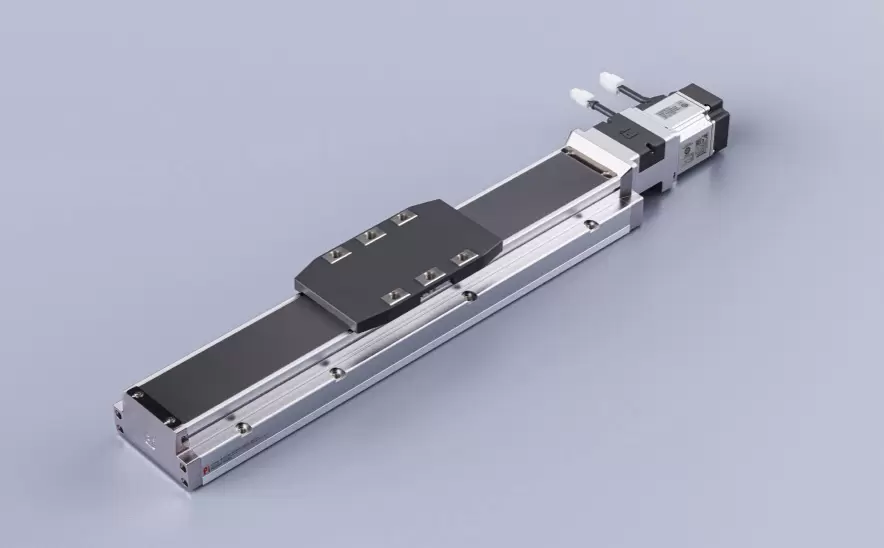
Motor Bottom Side
Repeatability:±0.005/0.01mmHorizontal Load:150kgVertical Load:55kgMaximum Speed:2000mm/sTravel Range:100-1500mm

 Current location:Home > Company > News > Latest news > Precision Positioning Slide Table vs. Other Positioning Systems: Which Is Right for You?
 Date: Feb 25 2026
When it comes to high-precision applications, selecting the right positioning system can be a game-changer. Whether you're working in robotics, semiconductor manufacturing, optical systems, or automated assembly, the precision with which you move components can directly impact your product quality, efficiency, and overall performance.
Among the many options available, precision positioning slide tables are popular for tasks that demand high accuracy and repeatability. However, they aren’t the only solution on the market. Other systems like linear actuators, robotic arms, and rotary tables can also serve the purpose, depending on your specific needs.
In this article, we’ll compare precision positioning slide tables with other popular positioning systems to help you determine which is best suited for your application.
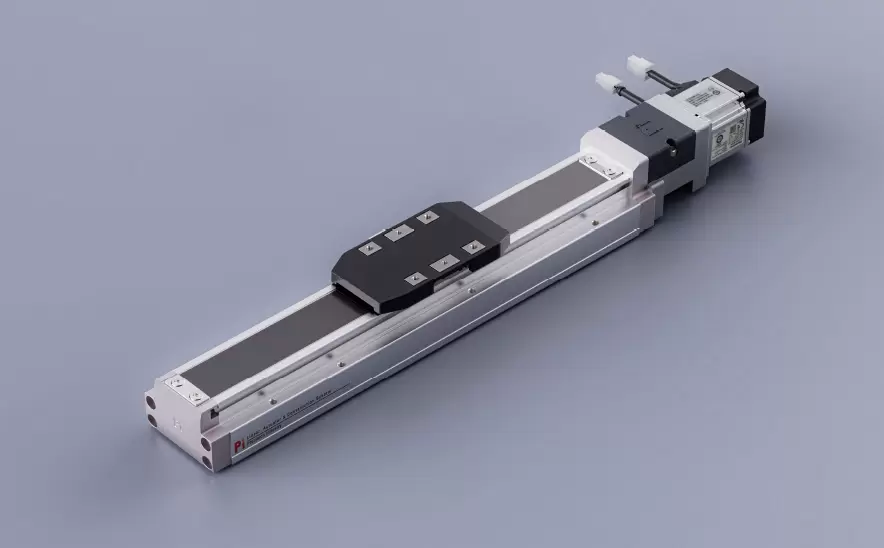
What is a Precision Positioning Slide Table?A precision positioning slide table is a mechanical system designed to provide accurate, controlled movement along a straight path. Typically used for tasks that require micron-level accuracy, slide tables are often employed in CNC machinery, optical alignment, and robotic automation systems.
Key Features:
Linear motion along a single or multiple axes (XY, XYZ).
High precision and repeatability, typically measured in microns.
Manual or motorized actuation for precise control.
Can handle light to moderate load capacities depending on design.
Applications: Precision slide tables are ideal for applications such as microscope positioning, laser beam steering, surface inspection, robotic pick-and-place systems, and automated assembly.
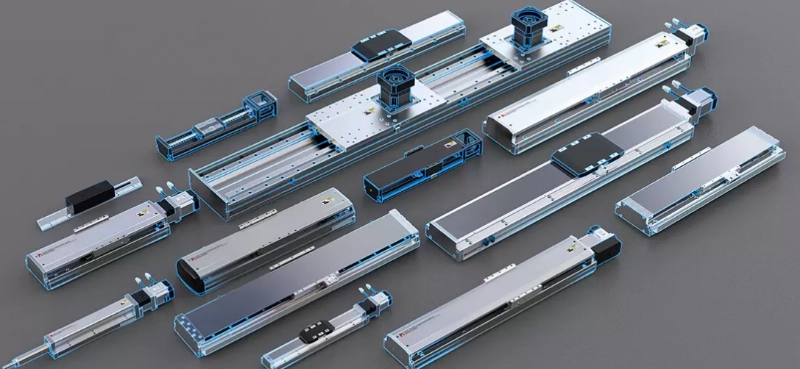
Other Positioning Systems: What Are Your Alternatives?While precision slide tables are a great choice for certain applications, other positioning systems may offer advantages in specific use cases. Let’s compare some of these systems to help you choose the right one.
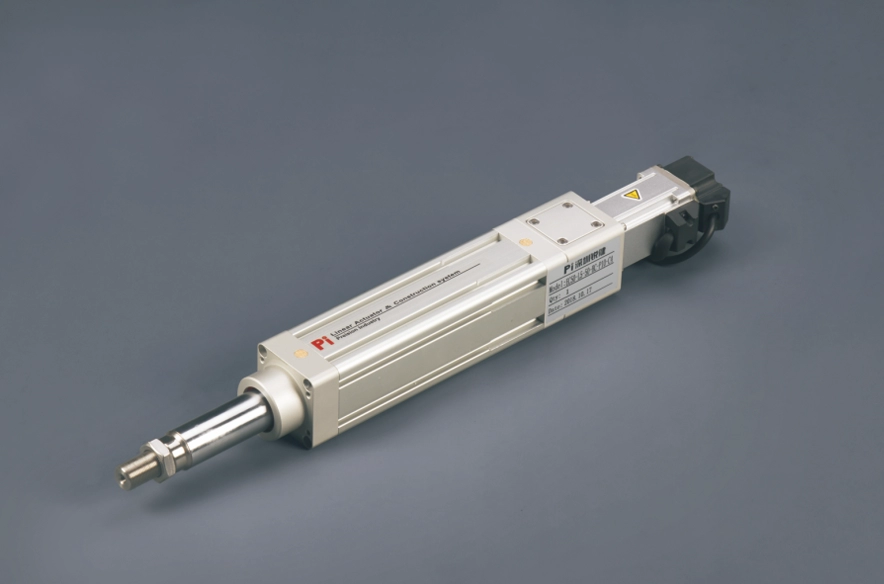
1. Linear ActuatorsA linear actuator is a device that converts rotational motion into linear motion, offering smooth, controlled movement along a single axis. Linear actuators are typically used in automated systems for positioning heavy or bulky loads with a reasonable level of precision.
Key Features:
Variety of types: Can be electric, pneumatic, or hydraulic.
Higher load capacity: Can handle heavier loads compared to most slide tables.
Motorized movement: Offers precise, programmable control over motion.
Advantages Over Slide Tables:
Higher load capacity: Ideal for applications that require moving heavier components.
Flexibility: Available in electric, pneumatic, and hydraulic models, allowing for versatility across different industries.
Customizable stroke lengths: Some actuators can be adjusted to meet your system’s needs.
When to Choose Linear Actuators:
Linear actuators are well-suited for applications where higher load capacity and powerful motion are needed, such as material handling systems, robotic arms, or industrial presses. However, for high-precision tasks requiring sub-micron accuracy, a precision slide table might be a better choice.
Robotic arms are versatile machines designed for tasks like assembly, inspection, welding, and picking. They offer multi-axis movement and are often integrated into automation systems to handle tasks that require both precision and flexibility.
Key Features:
Multiple axes of movement: Can operate along several axes simultaneously, including rotational and vertical motion.
Programmable: Can be programmed to perform complex tasks with high repeatability.
Higher load capacity: Can handle large components and heavy weights.
Advantages Over Slide Tables:
Multi-axis flexibility: Robotic arms offer more freedom of movement and can perform complex tasks that require multi-directional motion (e.g., rotating, tilting).
Higher adaptability: They can be programmed to perform a variety of operations beyond simple positioning.
Versatility: Can handle larger payloads and perform multiple functions (gripping, welding, cutting).
When to Choose Robotic Arms:
Robotic arms are ideal for applications that need complex, multi-directional movement, such as robotic assembly lines, welding, or material handling. For precise linear motion over short distances (e.g., in optics or microsurgery, where movement accuracy is crucial), a precision positioning slide table would likely be more suitable.
A rotary table provides precise rotational movement around a central axis. These systems are often used for tasks like indexing, cutting, or turning components in CNC machines or 3D laser scanning.
Key Features:
Rotational movement: Typically provides 360-degree rotation or specific incremental positions.
High precision: Often used in applications requiring precise rotational control, such as automated assembly or robotic arms.
Manual or motorized options.
Advantages Over Slide Tables:
Rotational flexibility: Ideal for applications that require precise rotational motion or indexing, such as robotic arms, welding stations, or CNC milling.
Compact design: Rotary tables are often more space-efficient than linear positioning systems.
When to Choose Rotary Tables:
Rotary tables are ideal for rotational positioning tasks or applications that require angular control, such as CNC machining, laser engraving, or automated positioning of parts. If your application requires both rotational and linear movement, you might use a combination of a rotary table and a precision slide table for more complex setups.
An XYZ stage is a multi-axis positioning system that provides movement along the X, Y, and Z axes, allowing for three-dimensional positioning. XYZ stages are commonly used in microscopy, CNC machining, and high-precision testing.
Key Features:
Three-dimensional motion: Provides full 3D positioning for complex tasks.
High precision: Often used in applications that require sub-micron accuracy and tight repeatability.
Motorized movement: Typically driven by electric motors for precise control.
Advantages Over Slide Tables:
Three-axis flexibility: XYZ stages offer more flexibility than slide tables for applications that require precise 3D positioning.
Accuracy: Often built for high-precision tasks such as microscopy, nanotechnology, or optical alignment.
When to Choose XYZ Stages:
XYZ stages are best suited for applications that need multi-dimensional precision, such as microscope stages, optical testing, or 3D printing. If your application requires movement along multiple axes with high precision, an XYZ stage is likely the best option.
When deciding between a precision positioning slide table and other positioning systems, it’s essential to consider the following factors:
Accuracy and precision: If you need micron-level accuracy for tasks like laser alignment or optical positioning, a precision slide table or XYZ stage is likely the best choice.
Load capacity: For heavier loads, linear actuators or robotic arms may be more suitable.
Type of movement: If your application requires rotational movement, a rotary table might be the better option. For multi-axis movement, a robotic arm or XYZ stage would be ideal.
Space and flexibility: Consider your available workspace and whether you need a compact system or a more flexible solution like a robotic arm or XYZ stage.
Automation: If your system requires automated control and programming, motorized precision slide tables, robotic arms, or XYZ stages are likely the most suitable.
ConclusionChoosing the right positioning system depends on the specific needs of your application. A precision positioning slide table is an excellent choice for tasks that demand high linear accuracy, repeatability, and simplicity. However, for applications requiring multi-directional movement, high load capacities, or rotational motion, other systems like linear actuators, robotic arms, or rotary tables may be a better fit.
By carefully evaluating the performance requirements, precision needs, and complexity of your task, you can make an informed decision that ensures optimal results for your system.