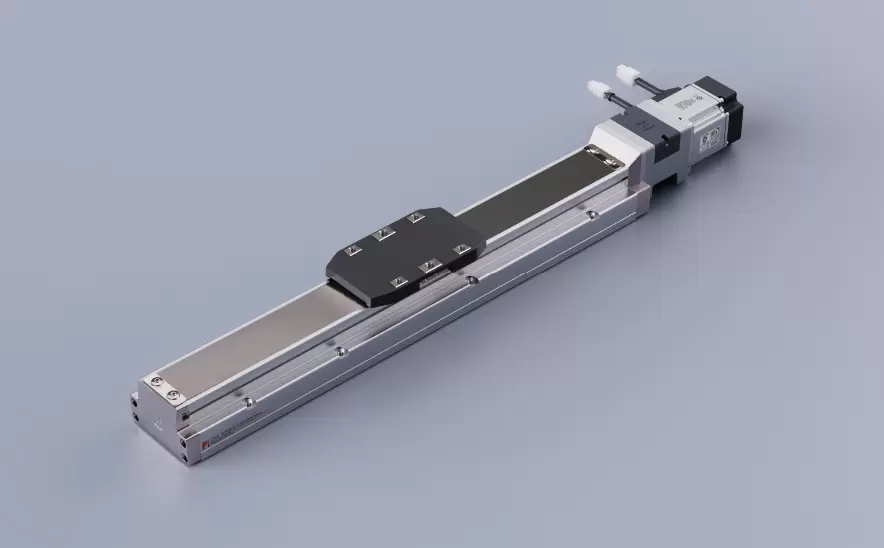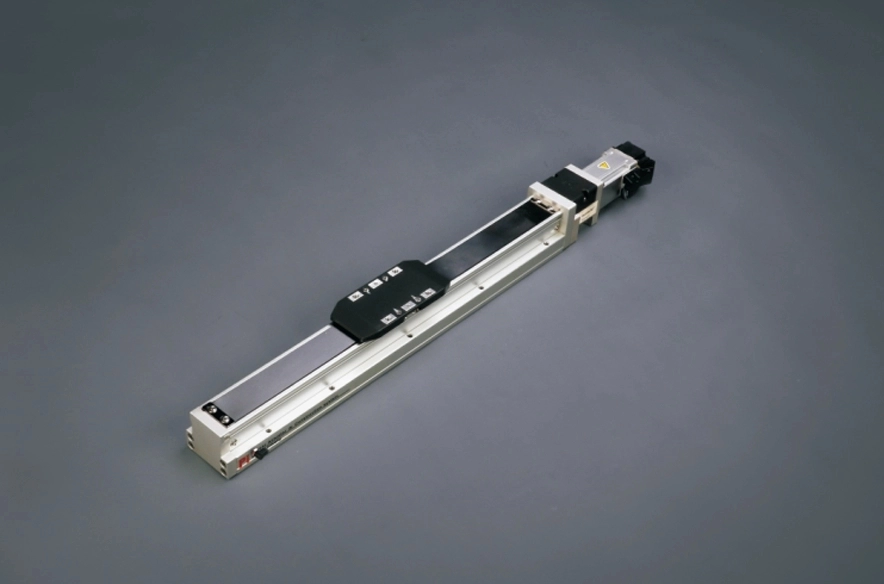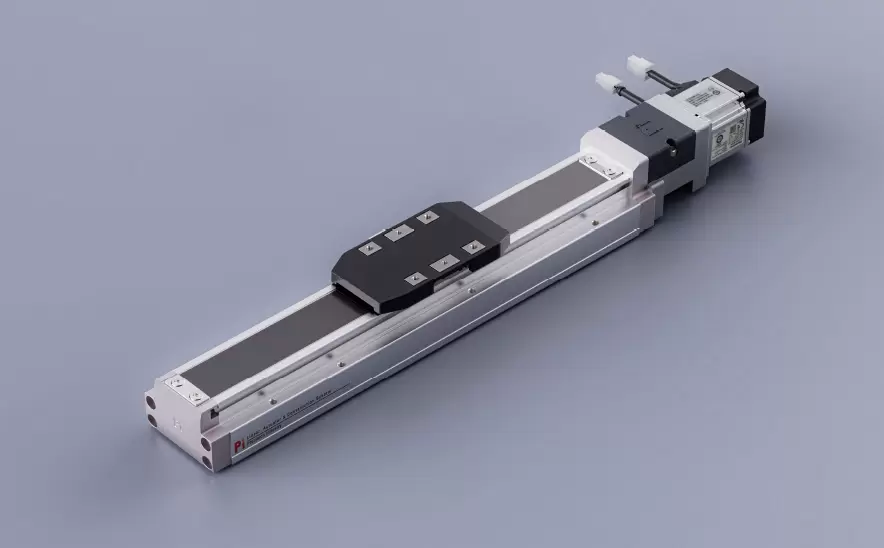
Motor Bottom Side
Repeatability:±0.005/0.01mmHorizontal Load:150kgVertical Load:55kgMaximum Speed:2000mm/sTravel Range:100-1500mm

 Current location:Home > Company > News > Latest news > What to Look for in a High-Precision Positioning Slide Table
 Date: Feb 25 2026
When selecting a high-precision positioning slide table for your application, you’re investing in a crucial component that ensures the accuracy, efficiency, and reliability of your entire system. Whether your application is in robotics, automated assembly, optics, or semiconductor manufacturing, the right slide table can make all the difference in achieving the desired results.
In this article, we’ll walk you through the key features and specifications you should consider when choosing a high-precision positioning slide table. We’ll focus on the performance aspects that matter most and help you make an informed decision for your specific needs.
The foundation of any high-precision positioning system is its ability to accurately position components with minimal deviation. Accuracy refers to how close the actual position of the slide table is to the target position, while repeatability describes how consistently the system can return to that position after multiple cycles.
What to Look For:
Tolerance specifications: Look for slide tables with tight tolerance ranges (usually in microns or fractions of millimeters). Higher precision systems may have tolerances of ±1 micron or better.
Repeatability: Repeatability is just as important as accuracy. A slide table with high repeatability ensures that the system can consistently return to the same position with minimal error.
Why It Matters: High-precision applications, such as laser alignment, optical testing, or semiconductor wafer handling, require micron-level accuracy and reliable repeatability to avoid errors and maintain system integrity.
Another critical factor in choosing a high-precision positioning slide table is its load capacity—the amount of weight it can handle while maintaining its precision and stability. Different applications demand varying levels of load-bearing performance, so it’s essential to understand your system’s weight requirements.
What to Look For:
Static and dynamic load ratings: Static load refers to the maximum weight the table can hold while stationary, while dynamic load is the maximum weight the table can move with high precision.
Stiffness: A high-precision slide table should be rigid enough to handle its load without excessive deflection or flexing. This ensures that the movement remains smooth and accurate under load.
Why It Matters: For heavy-duty applications (like robotic arms or automated material handling), you’ll need a table with a high load capacity to prevent misalignment. For delicate tasks (such as microscope positioning or optical alignment), a slide table with low deflection is important to maintain stability.
The travel range (or stroke length) of a slide table defines how far it can move along its axis. Depending on your application, you may need a slide table that offers a long travel range for covering large areas or a shorter travel range for precise, localized movement.
What to Look For:
Required stroke length: Ensure that the slide table’s travel range aligns with the area you need to cover. Some systems offer adjustable stroke lengths, giving you flexibility for different setups.
Compact vs. extended designs: If space is a concern, look for compact designs that offer precise control over short distances. For larger systems, you may need a table with a longer stroke length.
Why It Matters: Applications like 3D printing, laser cutting, or assembly automation may require extended travel ranges, while optical positioning or testing systems often benefit from shorter, more precise movements.
The speed at which the slide table moves and the acceleration with which it reaches that speed are important factors, especially in high-throughput or automated environments. A fast slide table ensures your system operates efficiently, while controlled acceleration ensures smooth transitions without compromising precision.
What to Look For:
Maximum speed: Look for tables with a high maximum speed for time-sensitive applications. Some slide tables can move at speeds exceeding 100 mm/s or more, depending on the system design.
Acceleration rate: The acceleration is just as important as the maximum speed, especially for applications where precision is critical. Faster acceleration can lead to more vibrations, which might affect accuracy.
Why It Matters: If you need to move components quickly but still require high precision (for example, in automated pick-and-place systems or CNC machines), you need a slide table that can balance speed and smoothness.
The type of actuation used to drive the slide table determines its performance characteristics, including speed, control, and energy consumption. There are several actuation options, each suited for different types of applications.
What to Look For:
Electric actuators: These provide precise control over the movement of the slide table and are commonly used in automated systems where programmability and repeatability are required. They’re ideal for tasks like robotic arms, laser cutting, and testing systems.
Pneumatic actuators: Pneumatic systems can offer faster movement with high force output. They are typically used in industrial automation or heavy lifting applications.
Hydraulic actuators: Hydraulic systems are best for handling extremely heavy loads but are less precise than electric or pneumatic actuators.
Why It Matters: For precision tasks where fine control is necessary (such as microscopy or electronics assembly), electric actuators are generally the best option. However, for applications requiring high force or faster movement (such as press machines or industrial systems), pneumatic or hydraulic actuators might be more suitable.
High-precision positioning slide tables need to function effectively under various environmental conditions. Factors such as dust, moisture, and temperature can all affect the performance of the system. For example, cleanrooms and laboratories may require dust-resistant or contamination-free systems, while outdoor or industrial settings may demand robust designs that can handle harsh conditions.
What to Look For:
IP rating (Ingress Protection): Check the table's IP rating to ensure it can withstand exposure to dust, dirt, and moisture.
Material resistance: Consider materials like stainless steel for corrosion resistance or anodized aluminum for lightweight durability in challenging environments.
Why It Matters: In critical environments like clean rooms or pharmaceutical labs, you’ll need a slide table that resists contaminants and ensures precision without interference. Similarly, if the system will be used outdoors or in wet conditions, ensure that the table is waterproof and resistant to corrosion.
For high-precision applications, you often need to integrate the slide table into a larger automated system or control network. Look for tables that offer easy integration with PLC controllers, robotic systems, or CNC machines.
What to Look For:
Communication protocols: Ensure the slide table is compatible with standard communication protocols such as Ethernet, Modbus, or RS-232.
Feedback systems: Some advanced tables come with encoders or position sensors to provide real-time feedback to your control system, ensuring high accuracy and real-time adjustments.
Why It Matters: If you're building an automated or robotic system, ensuring easy integration with your existing control platform is crucial to minimize setup time and maximize efficiency.
Maintenance is a crucial consideration when choosing a high-precision positioning slide table. Choosing a model that is easy to maintain can reduce downtime and increase the lifespan of your system.
What to Look For:
Low-maintenance designs: Look for tables with sealed bearings or self-lubricating components to reduce the need for frequent maintenance.
Durability: High-quality materials, like stainless steel or ceramic coatings, can help increase the durability of your system, especially in challenging environments.
Why It Matters: Choosing a low-maintenance, durable system helps reduce the total cost of ownership by minimizing service costs and extending the life of the equipment.
Selecting a high-precision positioning slide table requires careful consideration of various factors that will directly impact your system’s performance. From accuracy and repeatability to actuation types, load capacity, and environmental suitability, every detail matters when it comes to precision applications.
By understanding your specific requirements and comparing slide tables based on these key features, you can choose the right system that meets your performance, reliability, and budgetary needs. Whether you’re working in robotics, automated manufacturing, or any high-precision field, investing in the right slide table ensures that your system operates at peak performance, delivering results with the utmost precision.