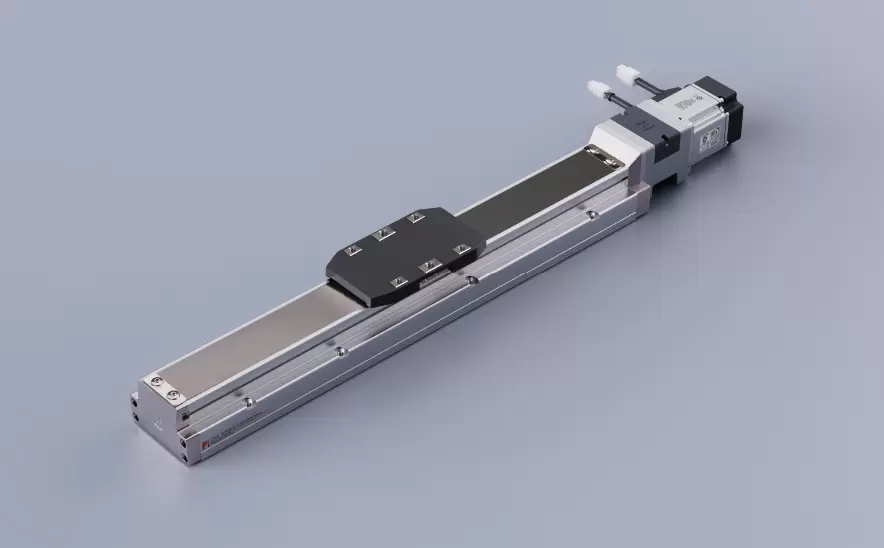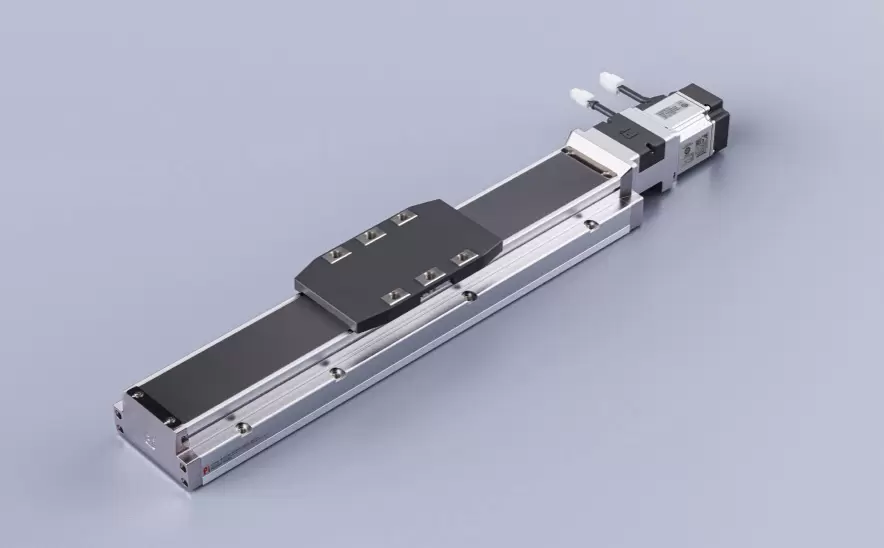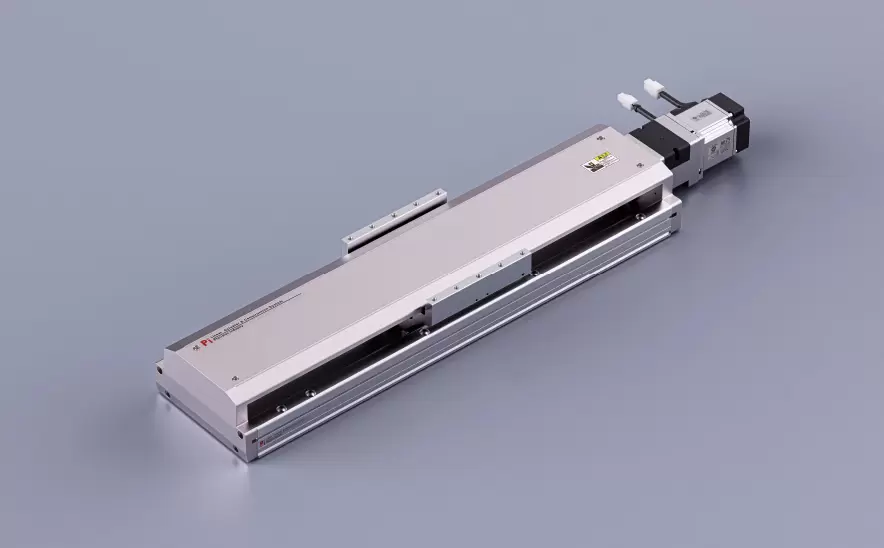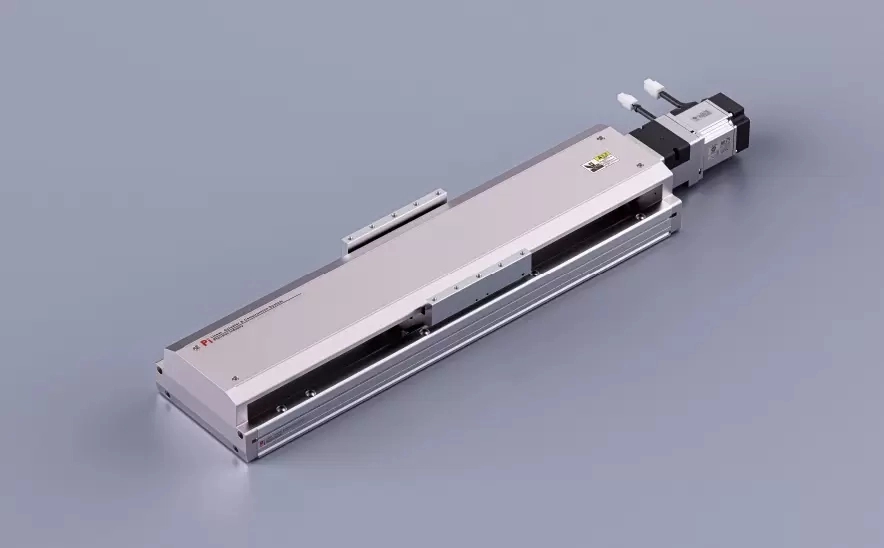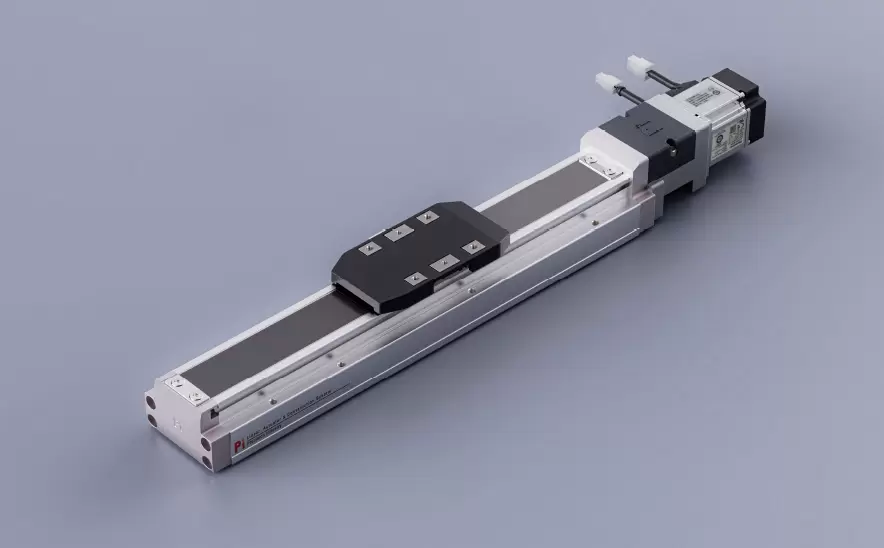
Motor Bottom Side
Repeatability:±0.005/0.01mmHorizontal Load:150kgVertical Load:55kgMaximum Speed:2000mm/sTravel Range:100-1500mm

 Current location:Home > Company > News > Latest news > How to Use Precision Positioning Slide Tables for Optimal Repeatability
 Date: Apr 08 2026
In many precision applications, repeatability is just as important as accuracy. Whether in automated assembly, semiconductor handling, optical alignment, or laboratory testing, operators often need a positioning system to return to the same point thousands—or even millions—of times without noticeable variation.
Precision positioning slide tables are designed to achieve this level of consistency. However, reaching optimal repeatability depends not only on the design of the equipment but also on how it is installed, operated, and maintained. Understanding a few practical principles can help ensure that the slide table performs reliably in long-term operation.
Repeatability refers to the ability of a positioning system to return to a specific location repeatedly under the same conditions. Unlike absolute accuracy, which measures how close the system is to a true position, repeatability focuses on consistency.
For many automated processes, consistent movement is what keeps production running smoothly. If the slide table always stops at the same location—even if the reference point is slightly offset—the process can still remain stable.
This is why repeatability is often a key specification when selecting precision motion equipment.
One of the most important factors affecting repeatability is the mechanical foundation of the system. If the slide table is mounted on an unstable or uneven surface, even the most advanced stage may struggle to maintain consistent positioning.
To improve stability:
Install the slide table on a rigid, flat base
Tighten mounting bolts evenly
Avoid structural flex in the supporting frame
Ensure fixtures and tooling are firmly secured
A solid mechanical setup minimizes unwanted movement that could affect positioning results.
Load placement plays a significant role in motion stability. When weight is unevenly distributed, it can introduce slight tilting or increased friction during movement.
For best repeatability:
Place the workpiece close to the center of the platform
Avoid loads that extend far beyond the mounting area
Use properly designed fixtures to secure the load
Balanced loads help maintain consistent motion and reduce stress on guide components.
Repeatability can also be influenced by how the slide table moves. Sudden changes in speed or acceleration may introduce small vibrations that affect positioning results.
Operators should aim for consistent motion profiles by:
Using smooth acceleration and deceleration settings
Avoiding unnecessary speed fluctuations
Keeping motion parameters consistent across cycles
Stable motion control allows the system to return to the same position reliably.
Dust and debris can interfere with smooth linear motion. Even tiny particles on guide rails may increase friction or cause minor variations in movement.
Regular cleaning helps maintain reliable performance:
Wipe down exposed rails when necessary
Prevent chips or particles from accumulating
Use protective covers if the environment contains debris
Clean motion components support consistent movement over long periods.
Precision motion systems are sensitive to their surroundings. Temperature changes, vibration, and air movement can all influence positioning stability.
To maintain repeatability:
Operate the system in a temperature-stable environment
Minimize vibration from nearby machines
Keep the workspace organized and controlled
A stable environment helps ensure that each motion cycle behaves the same as the last.
Over time, mechanical components naturally experience wear. Regular inspections help ensure the slide table continues to perform consistently.
Maintenance practices may include:
Checking fasteners and mounting hardware
Verifying smooth movement along the travel range
Ensuring proper lubrication of moving parts
Reviewing system performance for small changes
Addressing minor issues early helps maintain repeatability throughout the system’s lifespan.
Precision positioning slide tables are powerful tools for applications that demand consistent and reliable motion. Achieving optimal repeatability, however, requires more than advanced hardware. It depends on careful installation, balanced loads, consistent motion control, and proper maintenance.
By following these practical guidelines, users can ensure that their slide tables continue to deliver stable and repeatable performance—even in demanding environments where precision and consistency are essential.