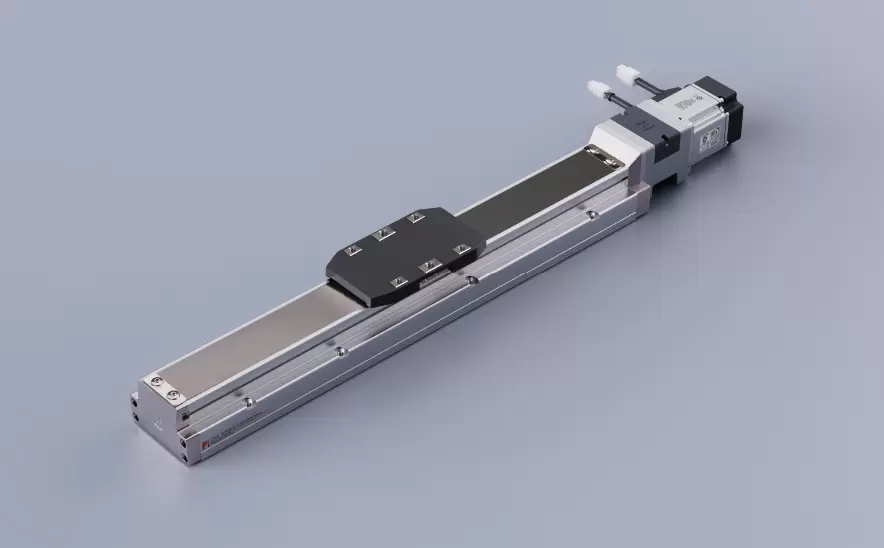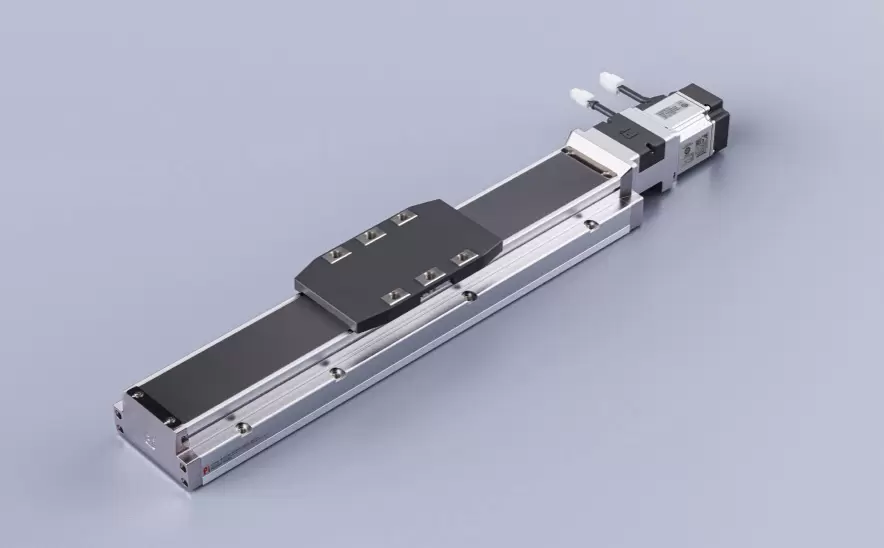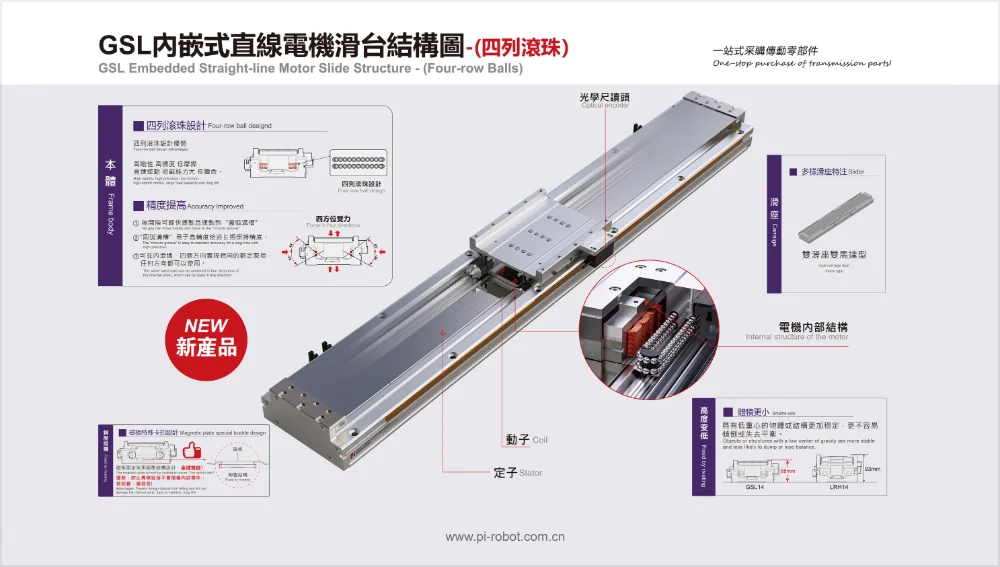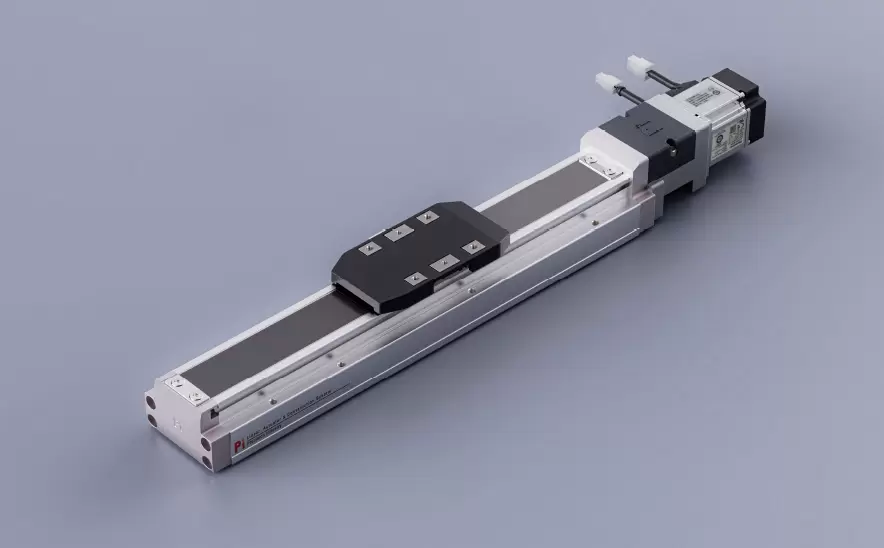
Motor Bottom Side
Repeatability:±0.005/0.01mmHorizontal Load:150kgVertical Load:55kgMaximum Speed:2000mm/sTravel Range:100-1500mm

 Current location:Home > Company > News > Latest news > How to Avoid Downtime with Proper Precision Positioning Slide Table Maintenance
 Date: Jul 08 2026
In today's automated manufacturing environment, every minute of downtime comes at a cost. Whether you're operating semiconductor equipment, inspection systems, laboratory automation platforms, or precision assembly lines, an unexpected shutdown can disrupt production schedules, delay deliveries, and increase operating expenses.
While many factors can contribute to equipment failure, poor maintenance remains one of the most common—and preventable—causes. For precision positioning slide tables, a proactive maintenance strategy can significantly reduce the risk of downtime while extending the lifespan of critical components.
This article explores practical ways to keep your slide table operating reliably and avoid costly interruptions.
Precision positioning slide tables are designed for long-term accuracy and repeatable motion. However, they operate under continuous mechanical stress. Over time, small issues can develop into major problems if they go unnoticed.
Some common causes of unexpected downtime include:
Insufficient lubrication
Contaminated guide rails and bearings
Wear of drive components
Loose fasteners or couplings
Misalignment of moving parts
Damaged cables or connectors
Delayed replacement of worn components
The good news is that most of these issues can be identified and corrected before they impact production.
Many facilities still rely on reactive maintenance—fixing equipment only after a problem occurs. While this approach may seem cost-effective in the short term, it often leads to longer shutdowns and higher repair costs.
Preventive maintenance focuses on regular inspections and planned servicing before failures happen.
Benefits include:
Increased equipment reliability
Reduced emergency repairs
Better production consistency
Lower maintenance costs over time
Improved equipment lifespan
Instead of asking, "What broke?" preventive maintenance asks, "What could break next?"
Rails and bearing assemblies are constantly exposed to environmental contaminants. Dust, debris, and microscopic particles can gradually affect motion quality and accelerate wear.
To minimize risk:
Clean exposed surfaces regularly.
Remove debris before it enters moving components.
Inspect protective covers and seals.
Maintain a clean operating environment whenever possible.
A few minutes spent cleaning can prevent hours of downtime later.
Lubrication plays a critical role in reducing friction and protecting moving parts.
When lubrication is neglected:
Friction increases.
Components generate more heat.
Wear accelerates.
Motion quality deteriorates.
Establish a lubrication schedule based on operating conditions and manufacturer recommendations. For high-duty-cycle applications, more frequent lubrication may be necessary.
Consistency is often more important than quantity. Applying the correct lubricant at the proper intervals helps maintain smooth operation and protects expensive mechanical components.
One of the most effective ways to prevent downtime is to identify performance changes early.
Pay attention to indicators such as:
Increased positioning errors
Reduced repeatability
Unusual noises
Excessive vibration
Slower movement speeds
Increased motor load
These symptoms often appear long before a complete failure occurs.
Modern control systems can also provide valuable performance data. Monitoring trends over time allows maintenance teams to schedule service during planned production breaks rather than during unexpected shutdowns.
The drive system is responsible for converting motor power into precise motion.
Depending on the slide table design, this may include:
Ball screws
Belt drives
Linear motors
Couplings
Bearings
Regular inspections can reveal:
Excessive backlash
Component wear
Loose connections
Alignment issues
Addressing these concerns early helps maintain positioning accuracy and prevents secondary damage to other parts of the system.
Mechanical parts are not the only source of downtime.
Electrical issues such as damaged cables, loose connectors, or sensor failures can stop a slide table just as effectively as a worn bearing.
During routine inspections:
Examine cable carriers.
Check connector integrity.
Look for insulation damage.
Verify sensor operation.
Confirm encoder feedback accuracy.
Electrical inspections are often quick to perform but can prevent significant troubleshooting time later.
Every mechanical component has a service life.
Waiting until a part completely fails can result in:
Extended downtime
Damage to neighboring components
Higher repair costs
Production losses
Instead, replace parts based on condition and performance trends rather than waiting for total failure.
Components commonly monitored for wear include:
Bearing blocks
Ball screws
Drive belts
Couplings
Rail systems
Planned replacement is almost always less disruptive than emergency replacement.
A well-maintained service log is one of the most valuable tools in a maintenance program.
Record:
Inspection dates
Lubrication activities
Performance measurements
Component replacements
Observed abnormalities
Over time, these records help identify recurring issues and improve maintenance planning.
Data-driven maintenance decisions are often more effective than relying solely on visual inspections.
Operators interact with equipment every day and are often the first to notice changes.
Encourage personnel to report:
Unusual sounds
Changes in motion quality
Positioning inconsistencies
Unexpected alarms
Increased vibration
Early reporting allows maintenance teams to investigate small issues before they escalate into major failures.
Creating a culture of awareness can significantly improve equipment reliability.
Downtime rarely happens without warning. In many cases, the signs appear weeks or even months before a failure occurs. The key is having a maintenance strategy that identifies and addresses those warning signs early.
By combining routine inspections, proper lubrication, performance monitoring, timely component replacement, and detailed maintenance records, businesses can dramatically reduce unplanned downtime and keep their precision positioning slide tables operating at peak performance.
A well-maintained slide table doesn't just last longer—it supports consistent productivity, protects product quality, and helps your entire operation run more efficiently.