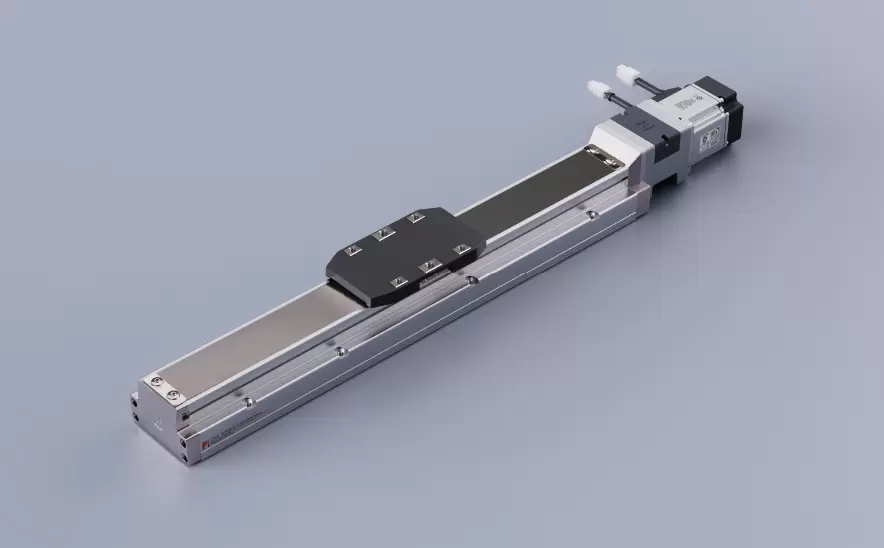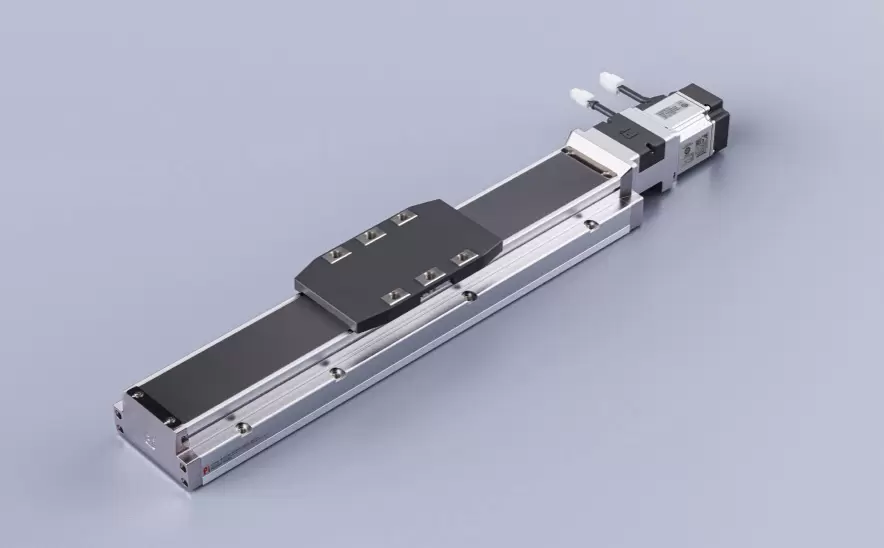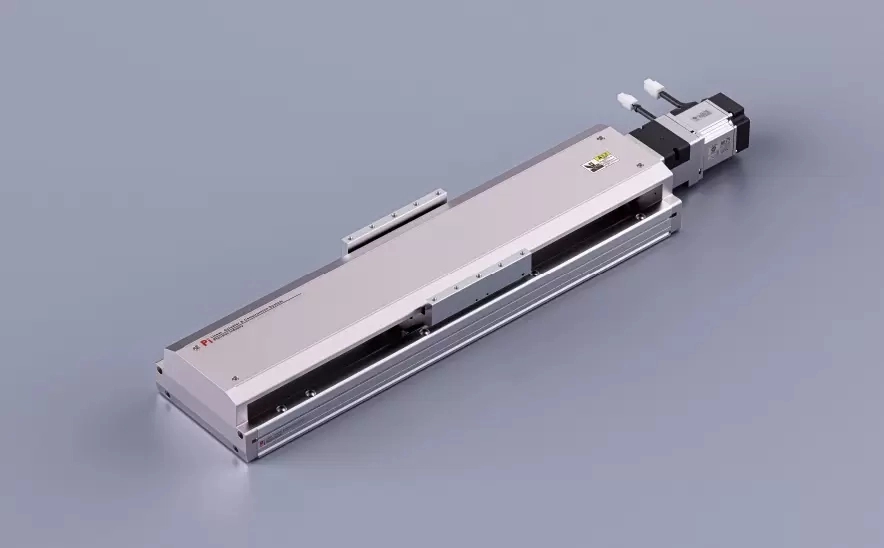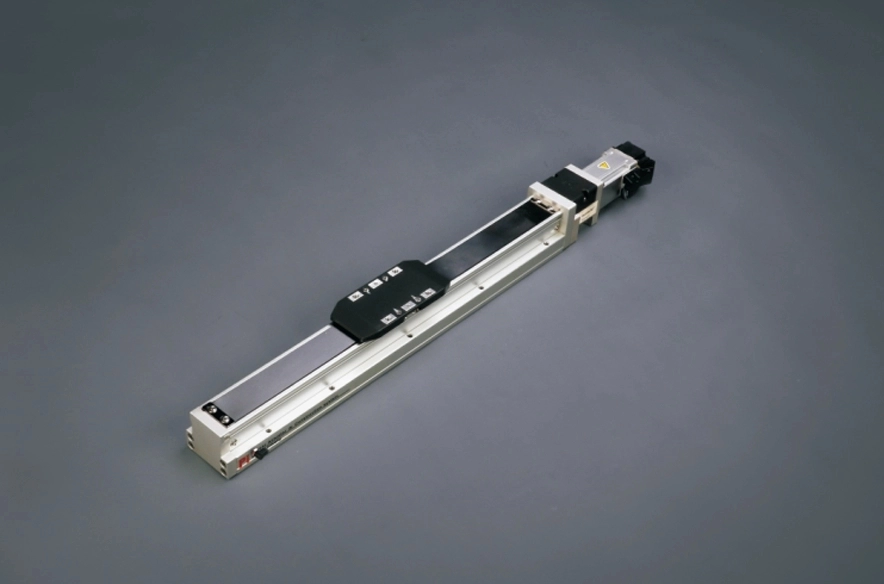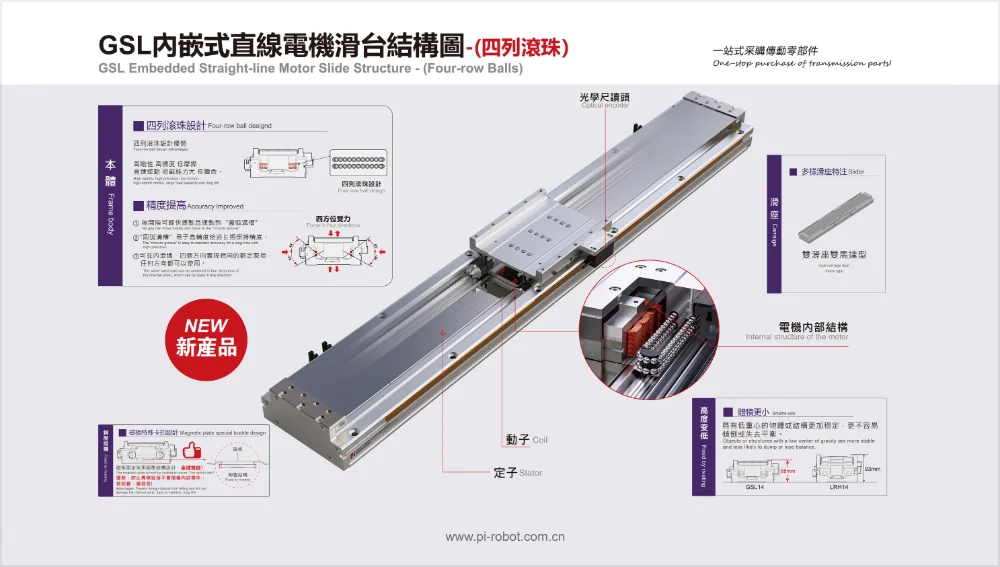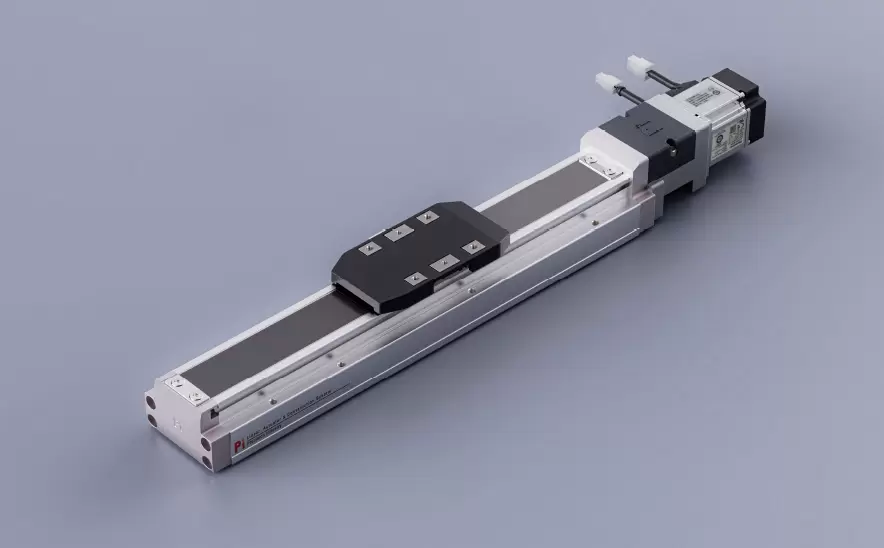
Motor Bottom Side
Repeatability:±0.005/0.01mmHorizontal Load:150kgVertical Load:55kgMaximum Speed:2000mm/sTravel Range:100-1500mm

 Current location:Home > Company > News > Latest news > The Role of Calibration in the Maintenance of Precision Positioning Slide Tables
 Date: Jun 24 2026
Precision positioning slide tables are essential in industries where accuracy matters—semiconductor manufacturing, optical inspection, laboratory automation, and high-precision assembly. While regular mechanical maintenance—cleaning, lubrication, and part replacement—is crucial, calibration is the often-overlooked element that ensures your slide table continues to perform at its peak.
Calibration is more than a technical check; it’s a way to align your system with its intended performance standards and detect hidden drift before it affects production quality. Here’s why calibration plays a central role in maintaining precision positioning slide tables.
In the context of a slide table, calibration involves verifying and adjusting the system so that its actual motion matches its expected motion. This may include:
Positioning accuracy: Ensuring the table moves to the exact commanded location.
Repeatability: Confirming the table consistently returns to the same point after multiple movements.
Straightness and flatness: Checking that motion follows a precise line without deviation.
Encoder and sensor alignment: Making sure feedback devices report accurate positions.
Even small deviations can accumulate over time, leading to misalignment in critical processes. Regular calibration prevents these small errors from becoming major quality issues.
Calibration should be part of your slide table maintenance routine. Typical triggers include:
Scheduled maintenance intervals (annually, semi-annually, or quarterly depending on usage).
After replacing major components such as linear guides, ball screws, or motors.
Following relocation of the equipment or exposure to environmental changes.
When performance issues are detected, such as inconsistent positioning or increased vibration.
Proactive calibration avoids unplanned downtime and ensures production remains within tolerance.
Calibration complements traditional maintenance tasks:
Detects hidden wear: Even if guides and screws appear fine, calibration can reveal small misalignments or backlash that may affect accuracy.
Extends component life: Correct alignment reduces unnecessary stress on motors, bearings, and screws.
Enhances repeatability: For high-precision applications, consistent performance is crucial—calibration ensures the table returns reliably to exact positions.
Supports quality control: In manufacturing, calibrated equipment maintains product quality and reduces scrap.
Think of calibration as a tune-up for precision. Just as a finely tuned car runs smoother and lasts longer, a calibrated slide table performs better and wears less quickly.
While the exact process may vary depending on the model and manufacturer, general steps include:
Reference measurement: Use laser interferometers, dial indicators, or high-precision gauges to measure current motion accuracy.
Comparison: Compare measured positions with the expected positions from the controller.
Adjustment: Realign guides, screws, or motor couplings as needed to correct deviations.
Verification: Run test motions across the full travel range to confirm improvements.
Documentation: Record results and adjustments for future maintenance and trend analysis.
Following a structured procedure ensures calibration is repeatable and reliable.
Schedule regular calibration: Integrate it into your preventive maintenance plan rather than waiting for problems.
Maintain a stable environment: Temperature changes, humidity, and vibrations can affect positioning accuracy.
Train operators: Proper usage reduces stress on the system and maintains calibration longer.
Use genuine parts: Replacing worn components with approved parts ensures alignment remains stable.
Calibration is most effective when combined with proper maintenance habits.
Calibration is a cornerstone of maintaining precision positioning slide tables. It ensures that mechanical adjustments, lubrication, and component replacements translate into real-world performance improvements. Without calibration, even well-maintained equipment may drift out of specification, impacting accuracy, repeatability, and ultimately product quality.
In short, calibration doesn’t just measure performance—it preserves it. By integrating regular calibration into your maintenance routine, you can maximize system reliability, extend equipment life, and maintain the high precision your applications demand.