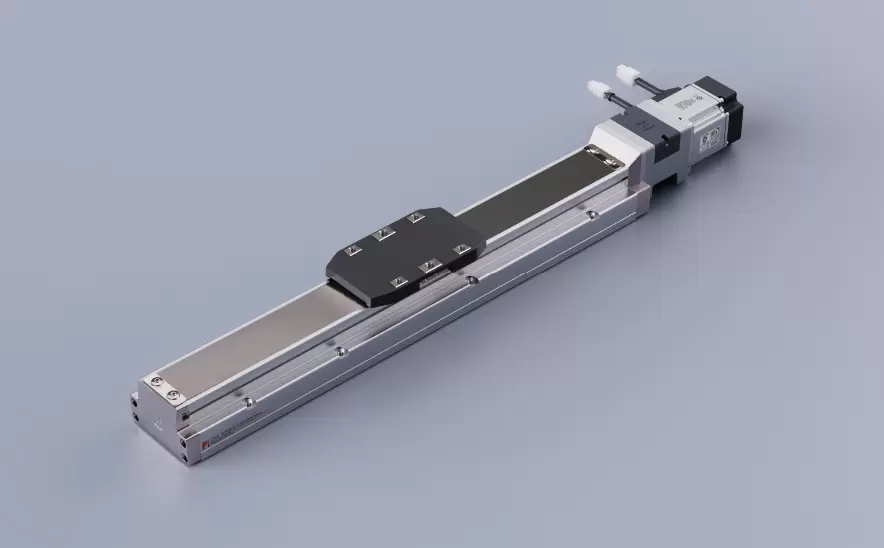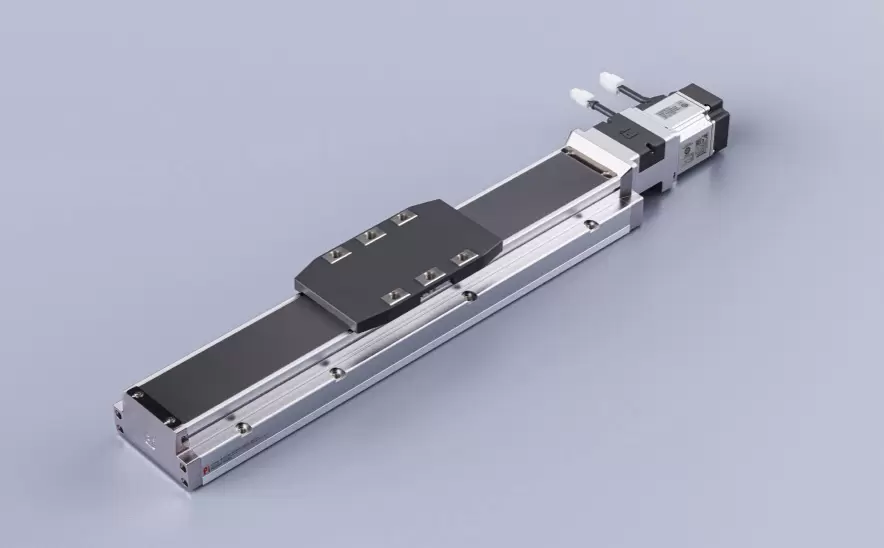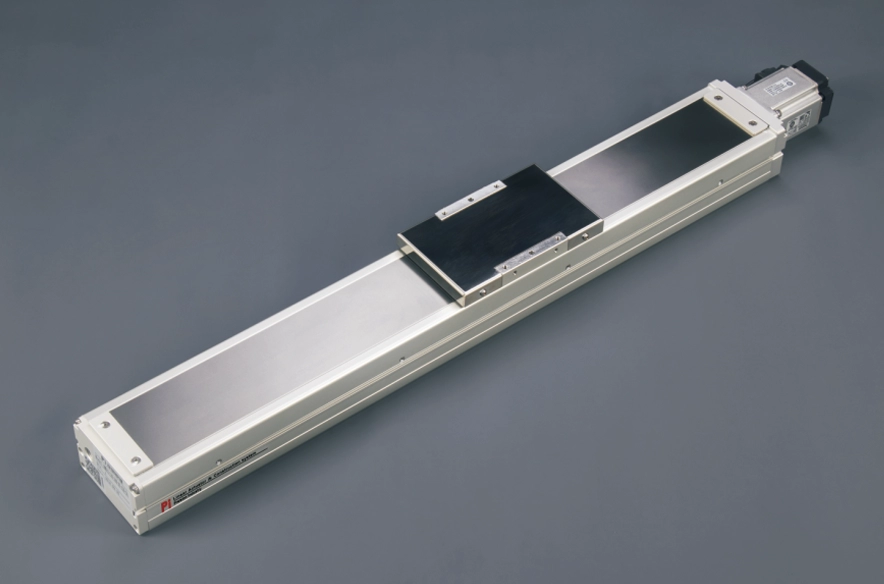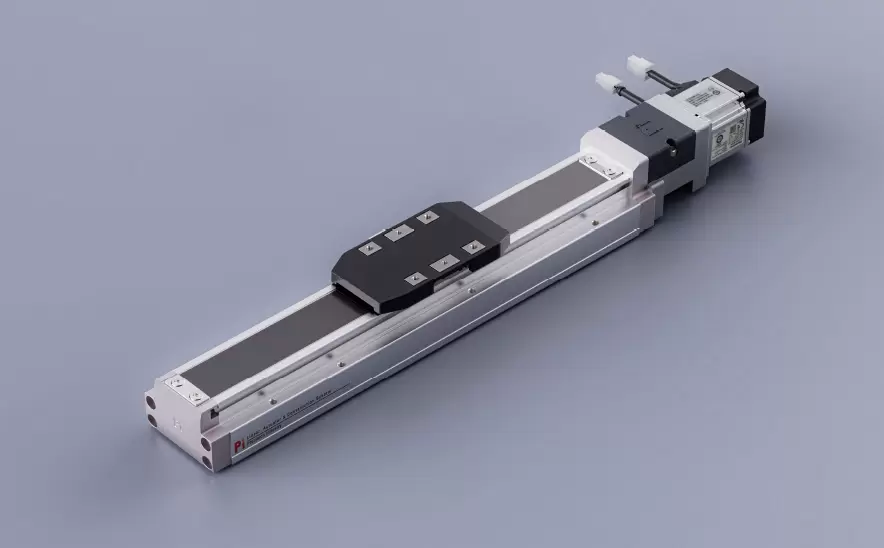
Motor Bottom Side
Repeatability:±0.005/0.01mmHorizontal Load:150kgVertical Load:55kgMaximum Speed:2000mm/sTravel Range:100-1500mm

 Current location:Home > Company > News > Latest news > Guide to Ball Screw Linear Actuator Structure and Performance
 Date: Nov 26 2025
Ball screw linear actuators are essential motion components in industrial automation, CNC equipment, semiconductor manufacturing, medical automation, and robotic systems. Their combination of precision, rigidity, and consistency allows them to support processes where even small deviations in movement can impact product quality or operational stability.
Since 2003, Ruan Pi-Robot has focused on helping industries improve the accuracy and reliability of their production processes. Founded by a team committed to precision engineering, the company has grown into a large-scale manufacturer with industrial parks in Shenzhen and Yueyang totaling 70,000 square meters. Today, more than 300 employees support the design and production of precision machinery parts, including positioning slide tables, XY linear slides, electric cylinders, rectangular coordinate modules, linear motor modules, built-in slide tables, robotic arms, and transmission components.
Among these technologies, the ball screw linear actuator stands out for its mechanical stability and reliable performance. This guide explains its structure, working principles, performance characteristics, and industrial advantages.
A ball screw linear actuator is a motion system that converts rotary movement from a motor into controlled linear travel. It combines a ball screw, nut, guide system, housing, and motor interface, creating a compact and efficient mechanism for precise positioning.
Unlike belt or rack-and-pinion systems, ball screws use circulating ball bearings between the screw and nut to reduce friction. This rolling contact ensures smoother motion and better repeatability.
A well-designed actuator is defined by the quality and configuration of its internal components. Below are the major elements that make up the system:
The screw shaft contains a helical groove. As it rotates, it generates linear displacement when coupled with a nut. Critical factors include:
Screw diameter
Lead (pitch)
Shaft material and heat treatment
Surface hardness and finish
These parameters directly affect load capacity, speed, and accuracy.
The nut houses recirculating ball bearings that roll between the nut and screw grooves. The preload inside the nut determines:
Backlash
Rigidity
Repeatability
Noise level
Preloaded nuts reduce axial play, improving precision for CNC and robotics applications.
These rolling balls minimize friction. Their quality determines:
Smoothness of motion
Wear resistance
Durability under load
High-grade bearings extend the lifetime of the actuator and sustain accuracy during long-term industrial use.
A ball screw actuator typically integrates linear guides or rails that support the moving carriage. The guide system ensures:
Stability
Parallelism
Load distribution
Vibration control
The rigidity of the guide system is crucial when handling significant loads or multi-axis combinations.
The housing protects internal components from contamination, while the carriage transfers motion to the load. Materials vary depending on:
Required stiffness
Environmental conditions
Load capacity
Ruan Pi-Robot designs housings to optimize weight, rigidity, and ease of integration.
Actuators can be paired with servo or stepper motors. The motor interface affects:
Installation options
Coupling stability
Alignment accuracy
Motor selection plays a major role in overall system performance.
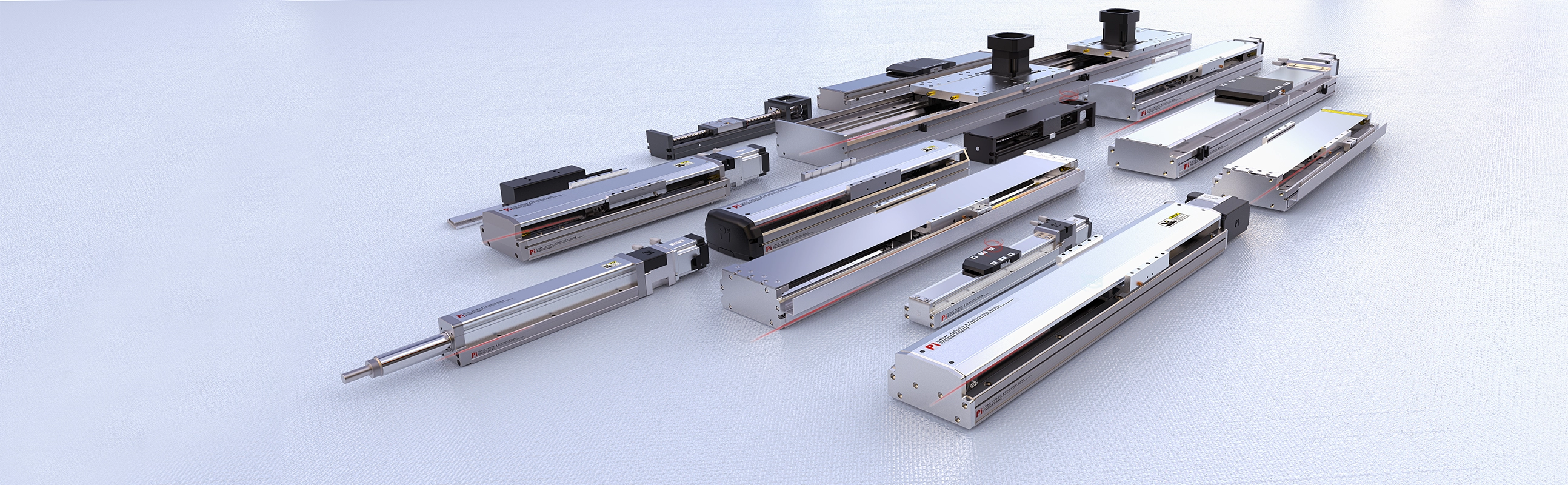
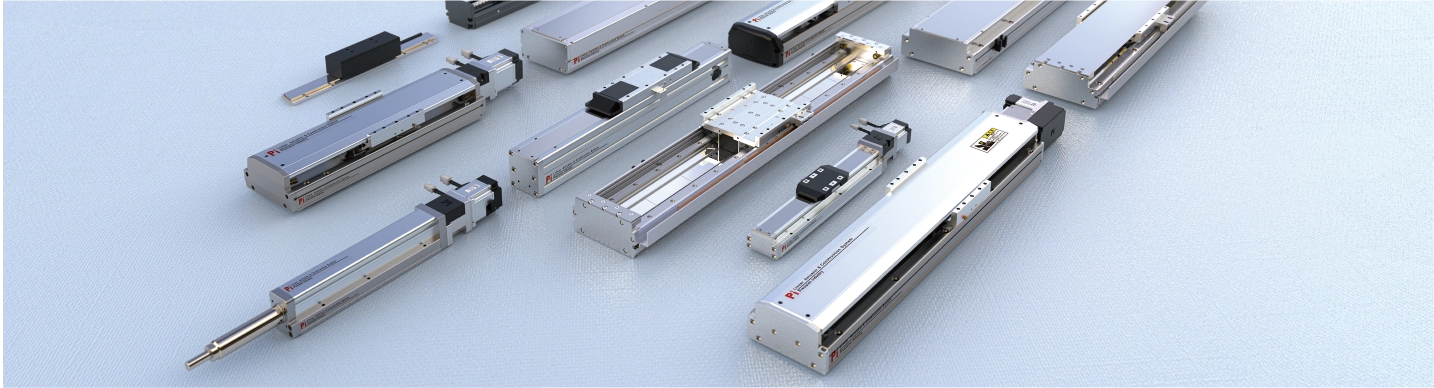
For an overview of actuator models and structural options, engineers can refer to the Standard Ball Screw Linear Actuator product range.
The operating principle is straightforward:
Rotary motion from the motor is converted into precise linear motion through the interaction between the screw and nut.
The motor rotates the screw shaft.
Rolling balls circulate within the nut.
As the screw turns, the nut travels along its length.
The linear guide maintains alignment and supports the load.
The carriage moves the attached tooling or component.
The smoothness of the rolling motion, combined with tight manufacturing tolerances, enables extremely consistent positioning and accurate movement.
Ball screw actuators offer micron-level positioning accuracy depending on screw grade and preload. This makes them suitable for:
Semiconductor processing equipment
Medical diagnostic systems
Optical inspection machines
Low backlash and controlled motion help maintain consistent results.
Due to the rigid construction and mechanical advantage of the screw, ball screw actuators support higher loads compared with belt-driven systems.
Rolling contact results in lower friction and more stable motion, particularly at low speeds where other transmission types may exhibit stick-slip effects.
Repeatability is essential in applications with repetitive cycles, such as:
Pick-and-place robotics
Automated assembly systems
CNC tool positioning
Ball screws maintain durable, reliable performance over millions of cycles.
Although not as fast as belt actuators, ball screw systems offer stable and predictable speed across a wide operating range.
Industries such as semiconductor, PCB manufacturing, LCD production, and laboratory automation require tightly controlled movement. Ball screw actuators provide the needed accuracy.
The structure resists bending and deflection, making it suitable for:
Pressing
High-force assembly
Vertical axis motion
Ball screw actuators can be integrated into:
Single-axis stages
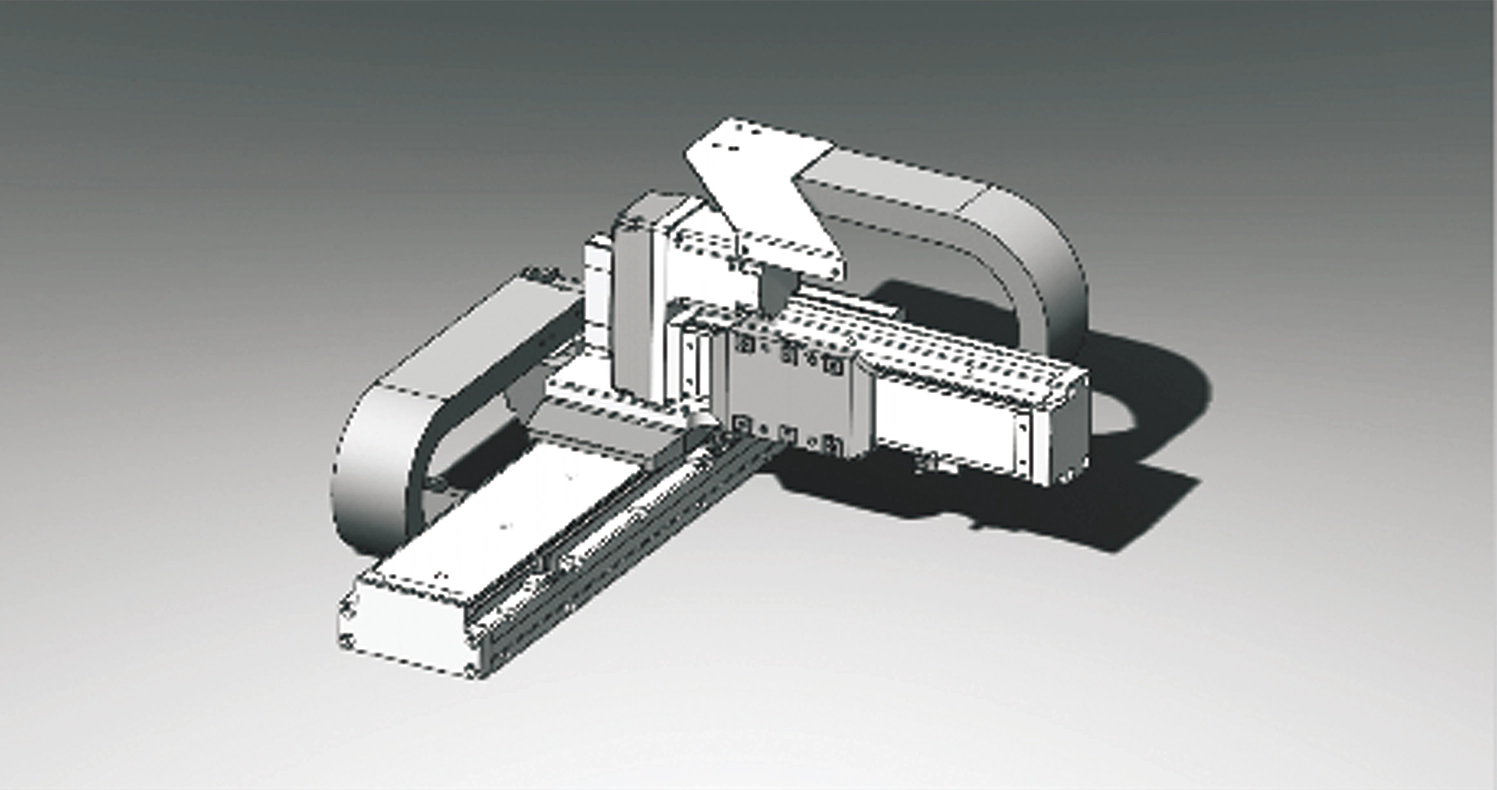
Multi-axis gantry systems
CNC auxiliary axes
Robotic positioning modules
Their compact design supports flexible installation.
With proper sealing or protective covers, ball screw actuators operate reliably in dusty workshops or ultra-clean environments.
Lubrication intervals and preload selection significantly impact lifetime. When engineered properly, ball screw actuators maintain performance for extremely long usage periods.
Ball screw actuators are used in a wide range of fields, including:
CNC machinery for tool positioning
Semiconductor wafer handling
Optical metrology and alignment
Precision dispensing machines
Medical analyzers and imaging systems
Automated assembly lines
Robotics motion platforms
Testing and inspection equipment
Their combination of accuracy and rigidity makes them a versatile foundation for numerous automation tasks.
With 20 years of experience in precision mechanical engineering, Ruan maintains a clear advantage in product reliability and structural design.
Comprehensive actuator selection
Consistent manufacturing accuracy
Customizable travel lengths and mounting options
Compatibility with major motor brands
Expertise in both high-precision and high-load applications
Broad industry application experience
The company’s dedication to improvement and customer satisfaction continues to support the development of advanced automation globally.
Ball screw linear actuators remain one of the most important motion technologies in modern automation. Their structure provides rigidity, their mechanics ensure smooth motion, and their performance offers precision suitable for demanding industrial tasks.
Understanding the internal structure, operating principles, and performance characteristics helps engineers select the right actuator for their application. Ruan Pi-Robot, with its expertise built over two decades, continues to provide high-quality motion systems that support industries in advancing accuracy, productivity, and innovation.