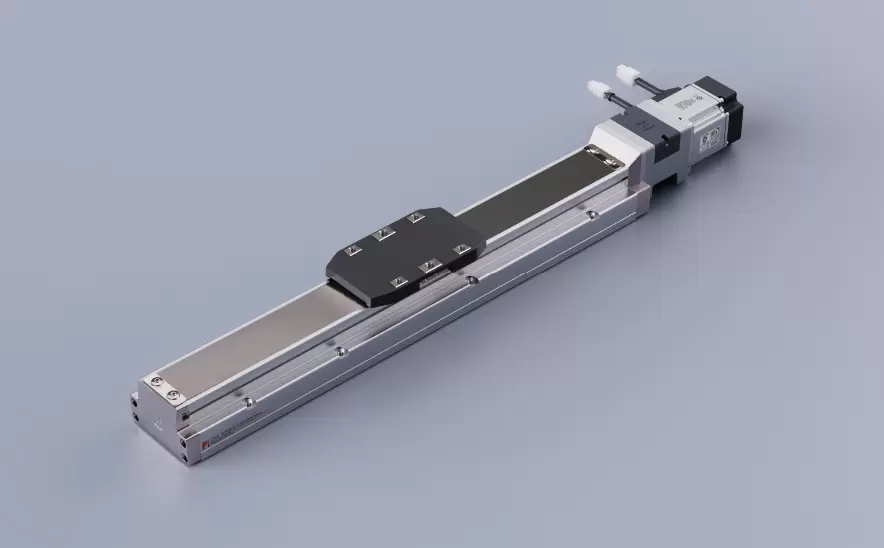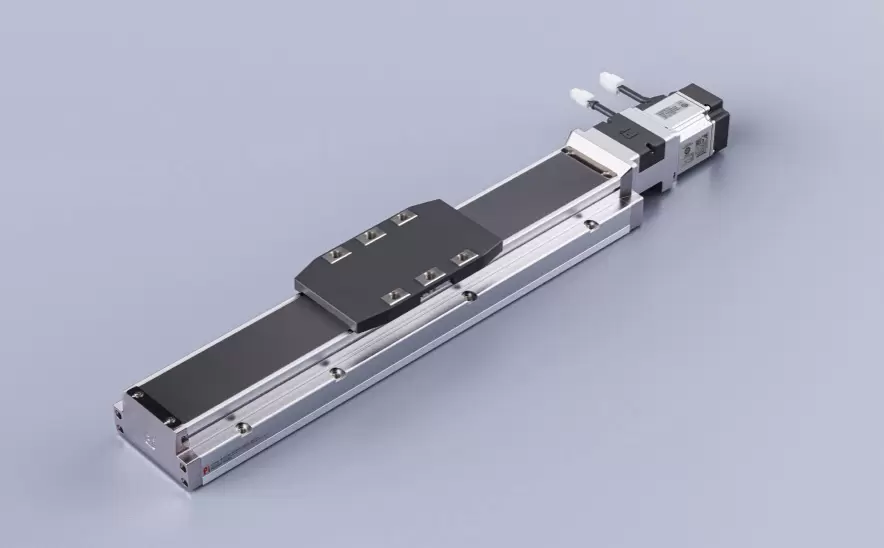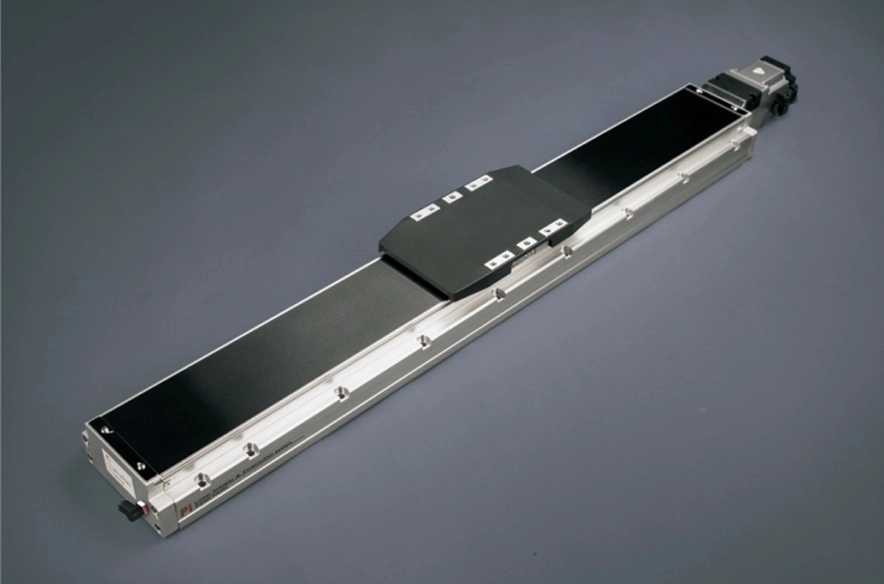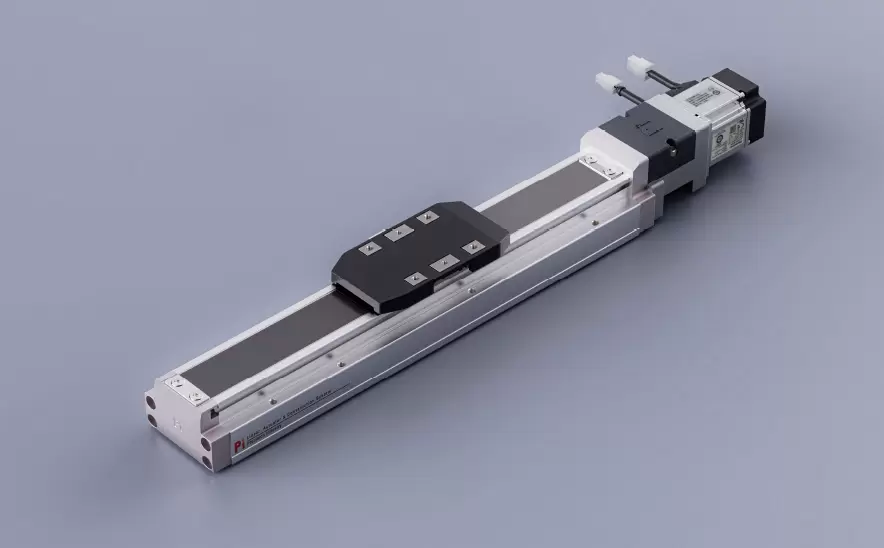
Motor Bottom Side
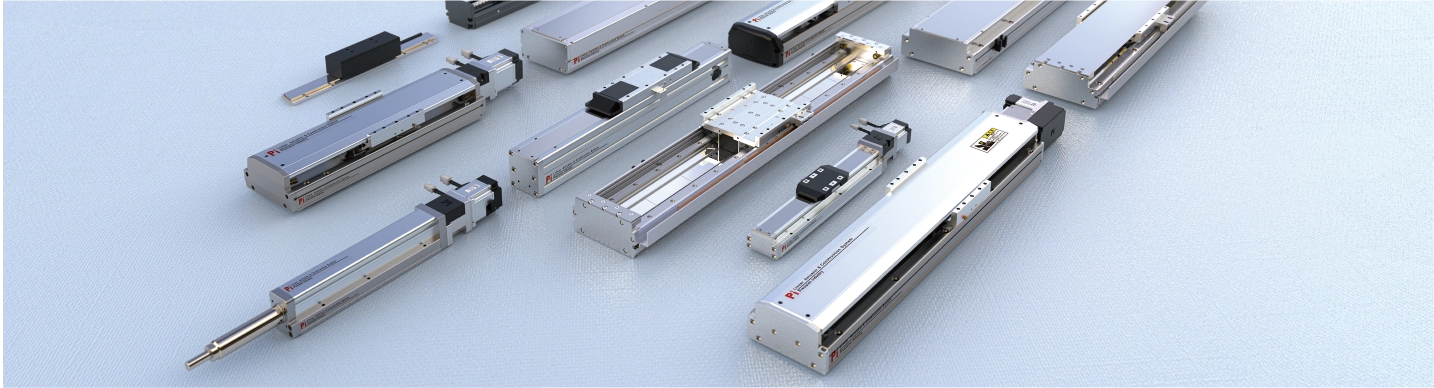
Repeatability:±0.005/0.01mmHorizontal Load:150kgVertical Load:55kgMaximum Speed:2000mm/sTravel Range:100-1500mm

 Current location:Home > Company > News > Latest news > Improving Repeatability in Automation with Standard Ball Screw Actuators
 Date: Dec 30 2025
In industrial automation, repeatability is often more critical than absolute positioning accuracy. A system that can return to the same position consistently over thousands or millions of cycles is essential for maintaining product quality, process stability, and production efficiency. Poor repeatability leads to alignment drift, inconsistent assembly results, increased scrap rates, and frequent machine recalibration.
Among the various linear motion solutions available today, standard ball screw actuators have become a cornerstone technology for applications where repeatable positioning is required. Their mechanical structure, motion characteristics, and compatibility with servo control systems make them especially effective in automation environments that demand consistency.
Since its establishment in 2003, Ruan has focused on improving product and process precision for industrial customers worldwide. Through the Pi brand, Ruan designs and manufactures precision positioning slide tables, XY linear modules, electric cylinders, rectangular coordinate modules, linear motor modules, built-in slide tables, industrial robot arms, and transmission components. Across these solutions, the Standard Ball Screw Actuator plays a key role in achieving reliable repeatability in automation systems.
This article explains how standard ball screw actuators improve repeatability and why they are widely used in precision-driven industrial applications.
Repeatability refers to a system’s ability to return to the same position under identical conditions. Unlike accuracy, which measures deviation from a reference point, repeatability focuses on consistency over time.
In automation, high repeatability is critical for:
Automated assembly lines
Robotic pick-and-place systems
Precision inspection equipment
Semiconductor and electronics manufacturing
Testing and calibration platforms
Even if a system is slightly offset from its theoretical position, consistent repeatability allows compensation through calibration. Inconsistent repeatability, however, cannot be easily corrected.
One of the primary reasons ball screw actuators offer excellent repeatability is their rolling contact mechanism. Steel balls circulate between the screw shaft and nut, replacing sliding friction with rolling friction.
Stable friction characteristics across the stroke
Reduced stick-slip behavior
Smooth direction changes
Predictable mechanical response
In contrast, sliding mechanisms may exhibit changing friction levels depending on load, speed, or lubrication state, leading to inconsistent motion.
Backlash is a major contributor to repeatability errors, especially when motion frequently changes direction.
Standard ball screw actuators improve repeatability by using:
Preloaded ball nut designs
Controlled internal contact forces
Tight tolerance matching between screw and nut
Preload ensures constant contact between the rolling elements and raceways, eliminating axial play. This allows the actuator to respond consistently to position commands, even during frequent bidirectional motion.
Repeatability is not only influenced by motion smoothness but also by structural rigidity. Any deformation under load can cause slight position shifts that accumulate over time.
Ball screw actuators provide high axial stiffness due to:
Precision-machined screw shafts
Rigid actuator housings
Integrated guide systems that absorb side loads
This rigidity helps maintain consistent end positions regardless of load variations, acceleration forces, or cycle frequency.
Modern automation systems rely on closed-loop servo control to achieve precise positioning. Mechanical predictability is essential for effective servo tuning.
Ball screw actuators offer:
Linear torque-to-thrust conversion
Stable response to acceleration and deceleration commands
Minimal hysteresis during direction reversal
Because the mechanical system behaves consistently, servo parameters remain stable over time. This reduces the need for frequent retuning and improves long-term repeatability.
Many automation processes require precise low-speed motion rather than rapid travel. Examples include optical alignment, probing, dispensing, and inspection scanning.
Ball screw actuators excel in low-speed repeatability because:
Rolling contact prevents sudden motion jumps
Fine screw lead options allow small incremental movement
Friction remains consistent even at low velocities
This capability is particularly important in semiconductor, medical, and laboratory automation environments.
Side loads and external forces can negatively affect repeatability if they are transmitted to the screw.
Properly designed ball screw actuator systems use:
Integrated linear guide rails
Accurate alignment between screw and guides
Rigid mounting interfaces
These design choices ensure that lateral forces are absorbed by the guides rather than the screw, preserving repeatable linear motion.
Over time, wear can reduce repeatability if mechanical components degrade unevenly.
Ball screw actuators maintain repeatability over long service cycles because:
Rolling contact reduces surface wear
Hardened raceways and balls resist deformation
Lubrication systems maintain consistent motion
With proper maintenance, repeatability remains stable across millions of operating cycles, making ball screw actuators suitable for continuous production environments.
Automation systems often operate in challenging environments, including cleanrooms, electronics factories, and medical production spaces.
Standard ball screw actuators can be adapted through:
Protective sealing structures
Controlled lubrication methods
Material selection suitable for clean or controlled environments
Stable environmental performance helps ensure repeatable motion even under demanding operating conditions.
With over two decades of experience, Ruan understands that repeatability is achieved through balanced mechanical design, precise manufacturing, and correct system integration. The Pi brand’s standard ball screw actuators are designed with preload control, structural rigidity, and precision assembly to support repeatable positioning across semiconductor, electronics, medical, and automation industries.
Repeatability is a defining factor in automation system performance. Standard ball screw actuators improve repeatability through rolling contact motion, backlash control, high rigidity, predictable servo response, and long-term wear stability.
For industrial automation applications where consistency matters more than theoretical accuracy, standard ball screw actuators remain a proven and reliable solution. Supported by Ruan’s engineering expertise and precision manufacturing capabilities, these actuators help automation systems achieve stable, repeatable performance across demanding industrial environments.