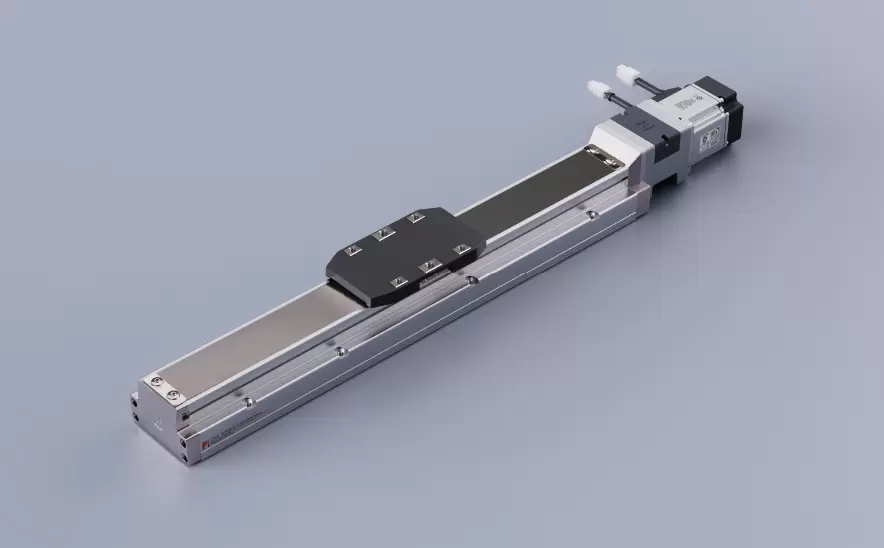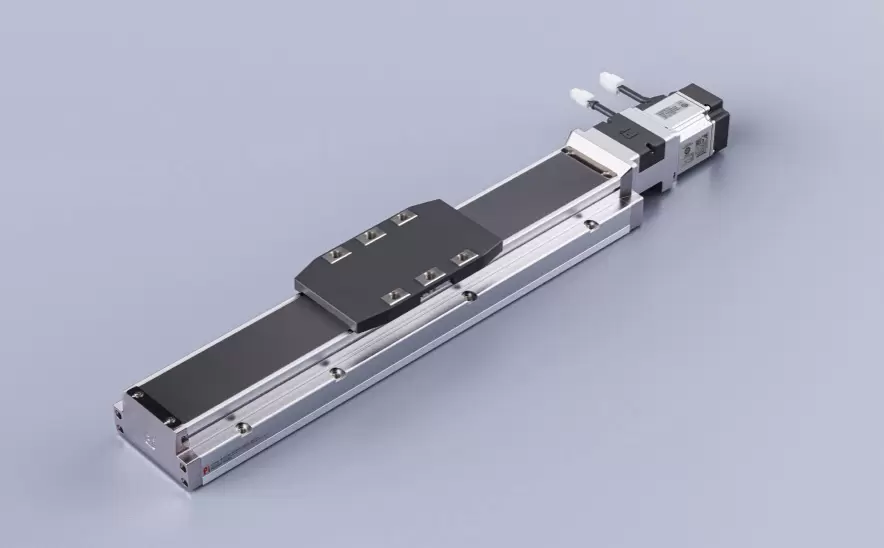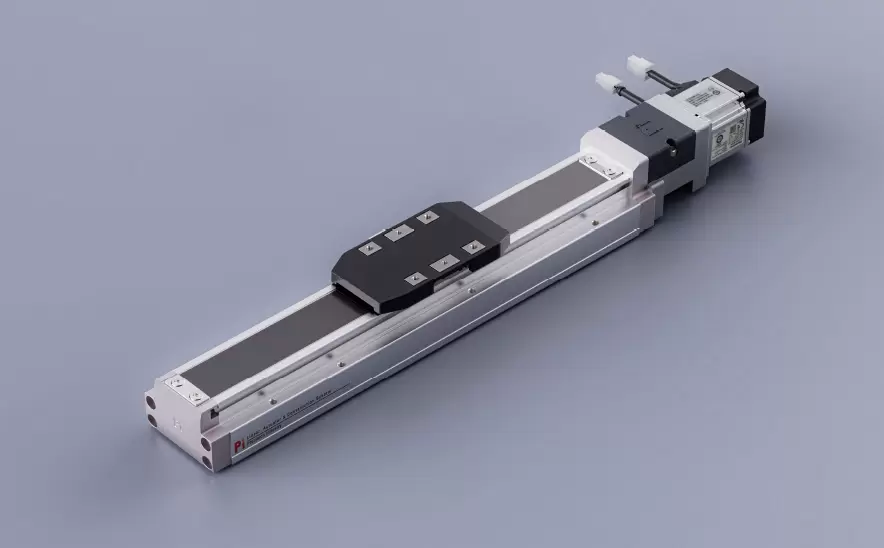
Motor Bottom Side
Repeatability:±0.005/0.01mmHorizontal Load:150kgVertical Load:55kgMaximum Speed:2000mm/sTravel Range:100-1500mm

 Current location:Home > Company > News > Latest news > What Is a Standard Ball Screw Actuator and How Does It Work in Automation
 Date: Dec 09 2025
In modern industrial automation, accurate and repeatable linear motion is a fundamental requirement. From semiconductor manufacturing and PCB production to medical devices and automated testing equipment, machines depend on motion systems that can deliver consistent positioning under varying loads and operating conditions. One of the most widely adopted solutions for this purpose is the standard ball screw actuator.
For engineers and system integrators, understanding how a standard ball screw actuator works—and why it is so commonly used—helps ensure better system design, longer service life, and higher production stability.
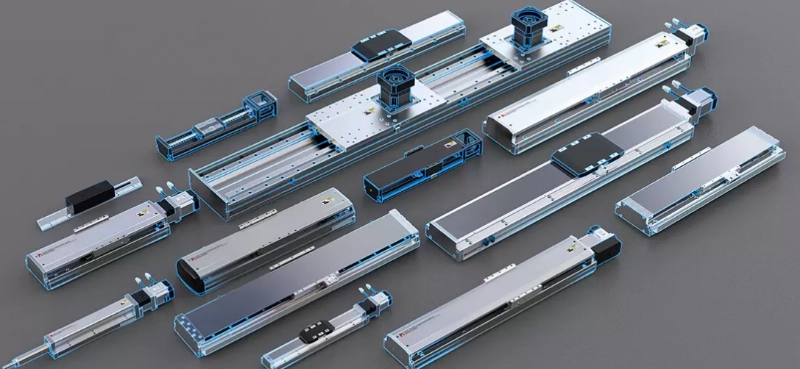
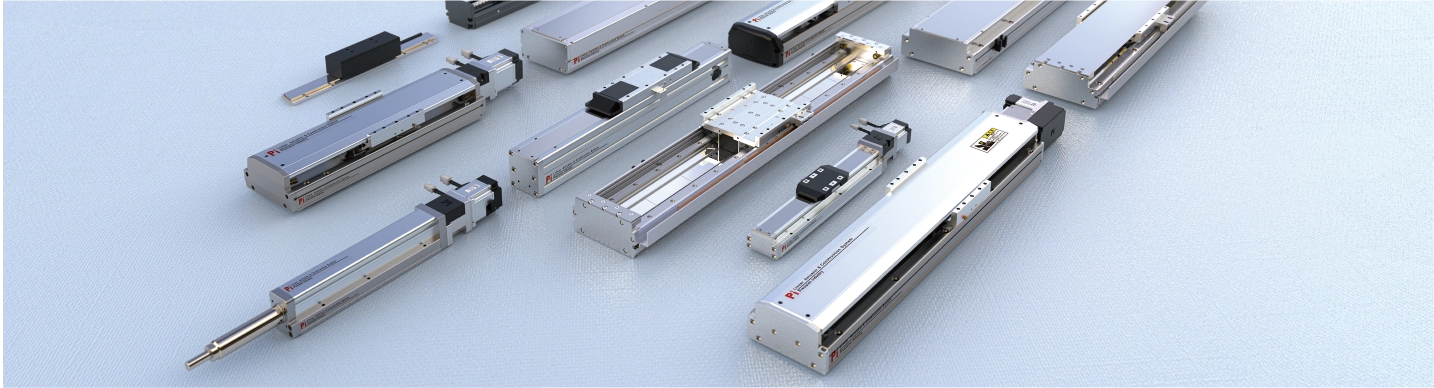
As a precision machinery manufacturer, Ruan has focused on motion accuracy since its founding in 2003. Under the Pi brand, the company designs and produces precision positioning slide tables, XY linear modules, electric cylinders, rectangular coordinate modules, linear motor modules, built-in slide tables, industrial robot arms, and transmission components. These products serve demanding industries such as semiconductor, new energy, LCD, PCB, medical, automation, automotive, and testing equipment. Among them, the Standard Ball Screw Actuator plays a core role in many automation systems.
This article explains what a standard ball screw actuator is, how it works, and why it remains a cornerstone of industrial automation.
A standard ball screw actuator is a linear motion device that converts rotary motion from a motor into precise linear movement using a ball screw mechanism. The core components typically include:
A precision ground or rolled ball screw
A ball nut with circulating steel balls
Linear guide rails or integrated guiding structure
An actuator housing or profile
A motor interface for servo or stepper motors
The defining feature of a ball screw actuator is the use of rolling contact between the balls and the screw raceway, rather than sliding contact. This design dramatically reduces friction and allows for high positioning accuracy and repeatability.
“Standard” in this context refers to a mature, widely adopted structural design that balances performance, reliability, and ease of integration. Standard ball screw actuators are modular, configurable, and suitable for a broad range of automation applications.
The working principle of a ball screw actuator is straightforward but highly efficient.
Motor rotation
A servo or stepper motor rotates the screw shaft through a coupling or direct drive.
Ball circulation
Steel balls inside the nut roll between the screw and nut raceways, carrying the axial load.
Linear displacement
As the screw rotates, the ball nut moves linearly along the screw axis.
Guided motion
Linear guides or integrated rails prevent rotation of the nut and ensure straight, stable travel.
Because rolling friction is much lower than sliding friction, energy loss is minimal, motion is smooth, and wear is significantly reduced.
Ball screw actuators are known for their precise motion control. With proper screw lead selection and servo tuning, they can achieve very fine positioning resolution. This makes them suitable for applications such as:
Semiconductor wafer handling
Optical inspection platforms
Precision assembly stations
Measurement and calibration equipment
Accuracy remains consistent across repeated cycles, which is critical in mass production environments.
Repeatability refers to the ability to return to the same position repeatedly under identical conditions. Ball screw actuators perform well in this area due to:
Controlled backlash through preloaded ball nuts
Rigid mechanical structure
Stable rolling contact
In automation systems where thousands or millions of identical movements are required, repeatability often matters more than absolute positioning accuracy.
Compared with belt-driven systems, ball screw actuators can carry higher axial loads in a relatively compact form. This is especially valuable for:
Vertical lifting axes
Pressing or clamping mechanisms
Automation systems with limited installation space
Ruan’s actuator designs focus on structural rigidity and load stability to meet industrial demands.
Modern automation relies heavily on servo motors and closed-loop control systems. Ball screw actuators respond predictably to motor commands, making them ideal for:
Smooth acceleration and deceleration
Controlled low-speed motion
Accurate stopping without overshoot
This predictable behavior simplifies servo tuning and improves overall system stability.
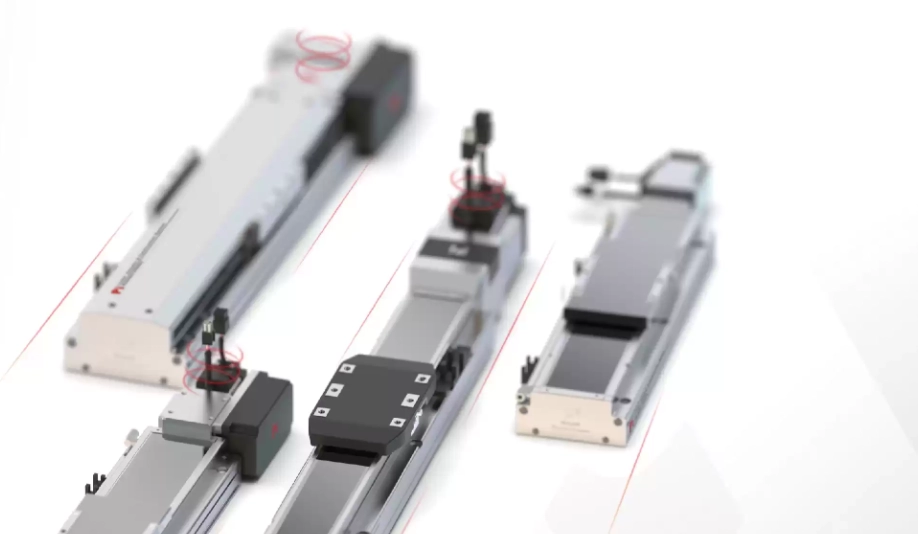
Standard ball screw actuators are used across many industries supported by Ruan’s Pi product line.
Wafer transfer systems
Probe stations
Alignment and inspection platforms
Panel handling systems
Precision positioning tables
Automated testing fixtures
Diagnostic device positioning
Sample handling systems
Precision adjustment mechanisms
Pick-and-place systems
Assembly lines
Robot auxiliary axes
Calibration platforms
Motion-based testing rigs
Precision scanning systems
In these environments, motion accuracy directly impacts product quality and process reliability.
When integrating a standard ball screw actuator into an automation system, engineers should evaluate:
Load requirements: Static and dynamic loads, including safety margins
Speed requirements: Travel speed, acceleration, and cycle time
Stroke length: Required travel distance and available installation space
Duty cycle: Frequency of operation and thermal considerations
Environmental conditions: Dust, temperature, cleanroom requirements
Choosing the right actuator configuration ensures long-term reliability and minimizes maintenance needs.
The performance of a ball screw actuator is closely tied to manufacturing precision. Factors such as:
Screw machining accuracy
Ball nut assembly quality
Guide rail straightness
Housing rigidity
all influence motion stability and service life.
With over 20 years of experience, Ruan emphasizes precision manufacturing and quality control to ensure its actuators meet the expectations of high-end automation users worldwide.
A standard ball screw actuator is a foundational component in modern automation systems. By converting rotary motion into precise, repeatable linear movement, it enables high-accuracy positioning across a wide range of industrial applications. Its balance of accuracy, load capacity, reliability, and ease of integration explains why it remains one of the most widely used linear motion solutions.
For industries that demand precision—from semiconductor and medical equipment to advanced automation—standard ball screw actuators continue to play a critical role. Backed by long-term engineering expertise, Ruan provides motion solutions designed to help manufacturers improve accuracy, stability, and overall production performance.