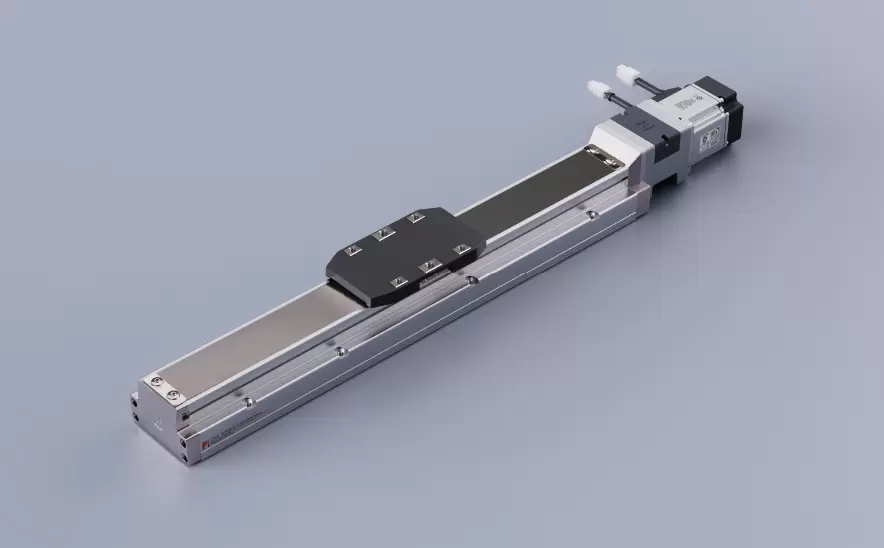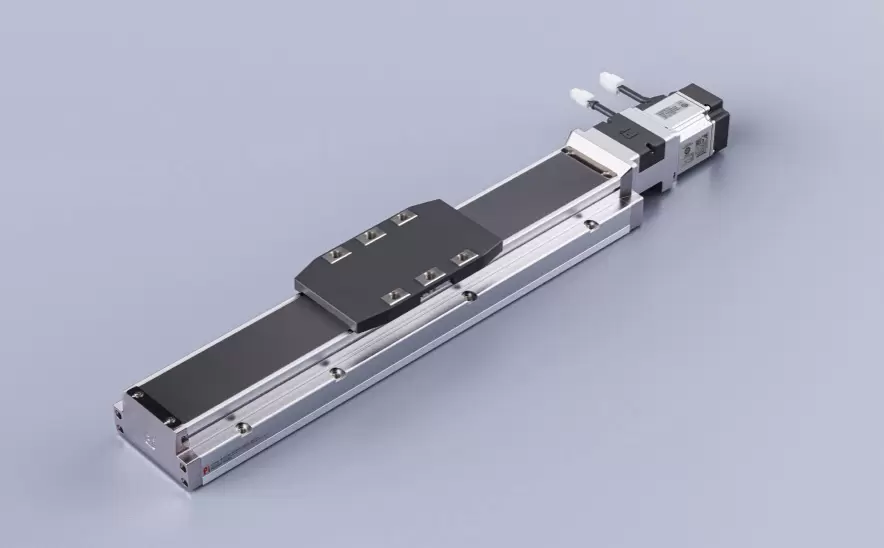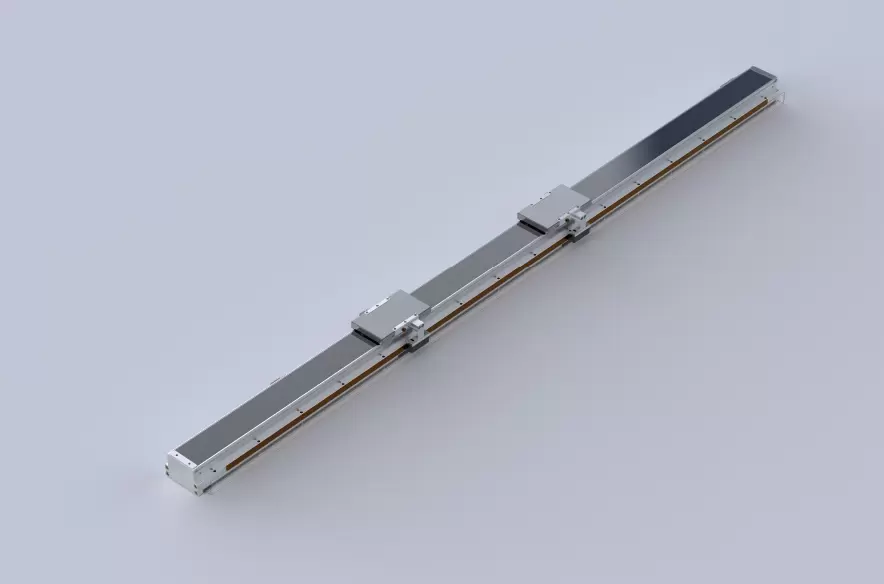
Motor Bottom Side
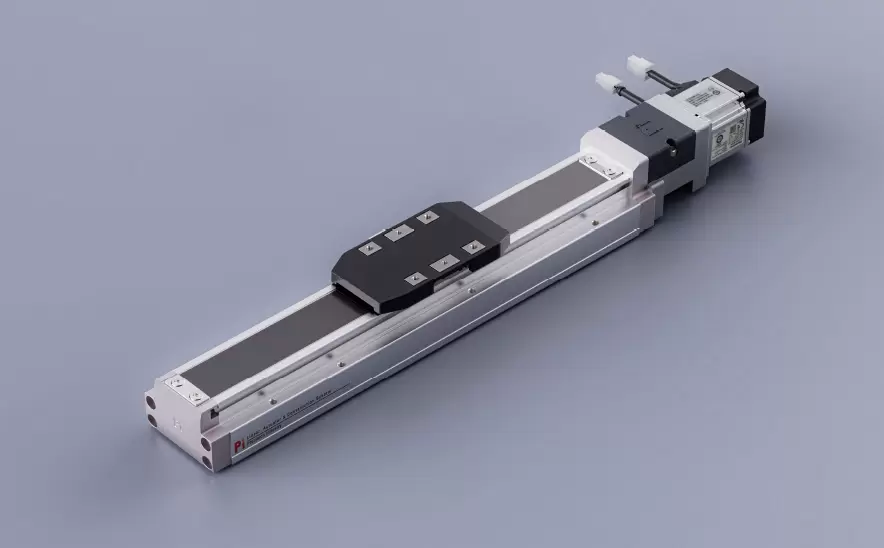
Repeatability:±0.005/0.01mmHorizontal Load:150kgVertical Load:55kgMaximum Speed:2000mm/sTravel Range:100-1500mm

 Current location:Home > Company > News > Latest news > How Ball Screw Linear Actuators Enhance Positioning Accuracy in Precision Manufacturing
 Date: Dec 05 2025
Precision manufacturing has become one of the defining pillars of modern industry. As products grow smaller, lighter, and more complex—whether in semiconductors, LCD components, medical devices, or advanced automotive systems—the demand for accurate, repeatable positioning continues to rise. Even a slight deviation in linear motion can affect assembly quality, inspection integrity, and overall production efficiency.
Ball screw linear actuators have emerged as one of the most reliable solutions for delivering consistent positioning accuracy. Their mechanical structure, low friction characteristics, and controllable motion make them indispensable in high-precision environments.
Since 2003, Ruan has focused on supporting industrial customers with motion technologies that improve manufacturing accuracy. With over 300 employees and two industrial parks across Shenzhen and Yueyang, the company’s Pi brand specializes in precision machinery components, including slide tables, electric cylinders, linear motor modules, and robotic transmission systems. This long-term expertise informs how Ball Screw Linear Actuators improve accuracy in demanding applications.
This article explores the engineering principles and real-world factors that allow ball screw actuators to deliver exceptional positioning performance.
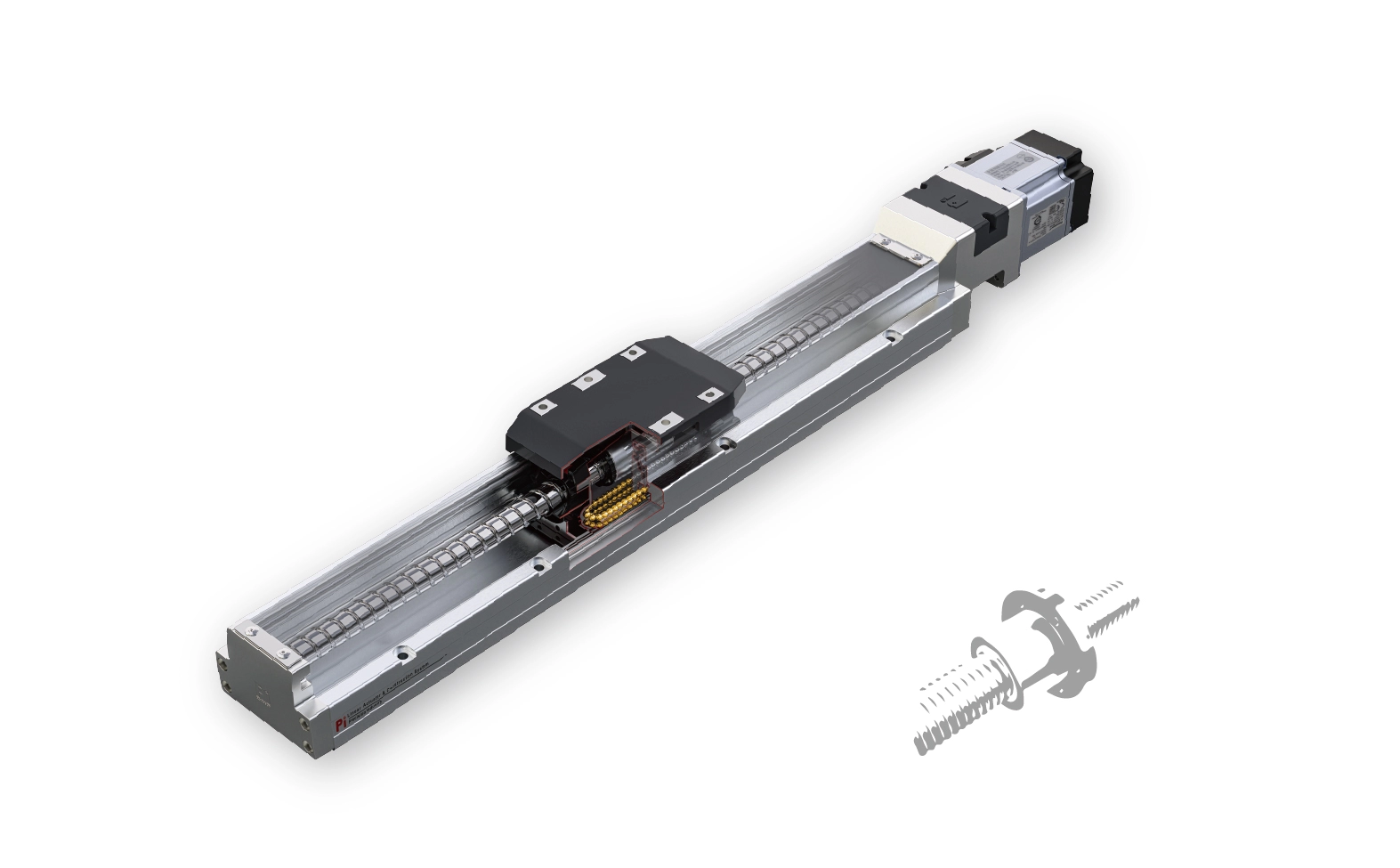
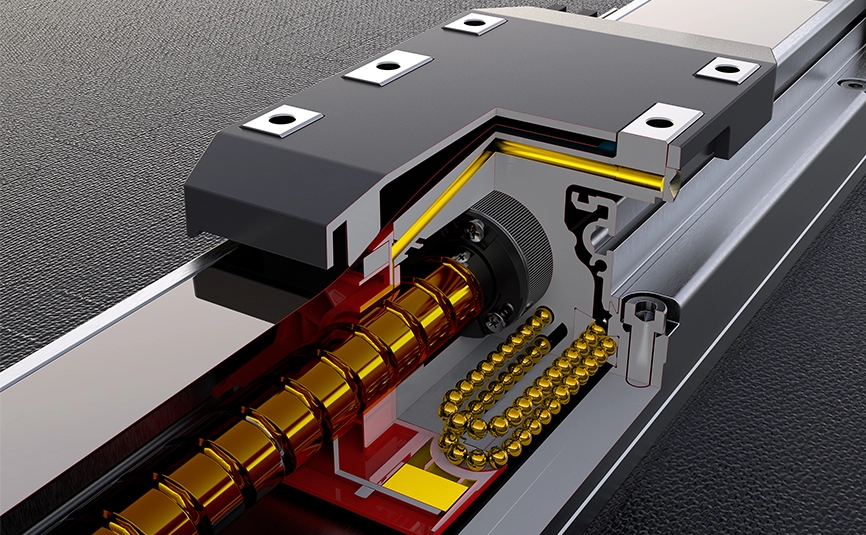
Unlike lead screws or belts, ball screw actuators use a rolling contact mechanism. Steel balls circulate between the screw shaft and nut, reducing friction significantly.
Lower friction ensures predictable linear movement.
The actuator exhibits minimal stick–slip behavior, essential for micro-movement.
Repeatability remains stable even across long stroke travel.
Energy loss from friction is reduced, resulting in more consistent motion control.
For equipment such as semiconductor wafer handling or medical diagnostic devices, smoothness at low speed is critical. The rolling contact system in ball screws enables precise slow-speed travel that other drive mechanisms often cannot match.
Positioning accuracy depends heavily on rigidity. A flexible or unstable system introduces positional drift, vibration, and backlash.
Ball screw actuators provide superior axial stiffness due to:
Robust screw geometry
Preloaded ball nuts
High-quality guide rails
Reinforced actuator housings
Reduced deflection under vertical or horizontal loads
Stable operation during acceleration and deceleration
Maintained accuracy even with heavy end-effectors or tooling
Improved long-term reliability
Processes like micro-assembly, CNC fine adjustments, and optical inspection rely on rigid actuator support to maintain positional certainty.
Backlash—unwanted clearance between mechanical components—is one of the main causes of positioning inaccuracy. Ball screw actuators minimize backlash through:
Adjustable or factory-set preloaded nuts
Precision-ground screw threads
Tight manufacturing tolerances
Accurate directional changes
Stable positioning at target locations
Elimination of oscillation after stopping
Higher consistency across repeated cycles
Precision electronics assembly, for example, requires hundreds of thousands of identical movements. Low-backlash ball screws maintain accuracies that would degrade quickly in belt-driven systems.
Modern automation systems rely on servo motors to regulate speed, acceleration, and position. Ball screw actuators are ideal for servo-driven motion because the mechanical system responds predictably to control signals.
High resolution at low motor increments
Smooth acceleration curves with minimal resonance
Accurate torque-to-thrust transfer
Controlled stopping without rebound
With precise servo tuning, a ball screw actuator can achieve micron-level repeatability. This is essential for metrology equipment, micro cutting, robotic dispensing, and surface finishing systems.
In many industries, accurate small-scale movement is more important than long-distance travel. Ball screw actuators excel at micro-positioning because:
Rolling elements reduce friction far below sliding mechanisms
Ball contact allows fine incremental control
The screw lead affects travel resolution and can be optimized
Servo feedback systems translate small signals into stable physical movement
For semiconductor lithography stages, lab automation, and inspection tools, this micro-motion capability ensures precise measurement and process control.
The consistency of a ball screw actuator depends on the quality of:
Screw machining and grinding
Heat treatment processes
Nut assembly precision
Guide rail straightness
Housing structural stability
Ruan’s Pi brand focuses on these fundamentals by:
Using high-grade steel
Applying strict screw grinding tolerances
Controlling parallelism and flatness across actuator bodies
Ensuring consistent preload on nuts and bearings
These details directly influence accuracy, especially in fast-paced, multi-axis manufacturing cells.
Even a high-quality actuator cannot perform well if integrated poorly.
Mounting surfaces must be flat and rigid
Guide rails should be parallel to actuator travel
Motor couplings must be aligned to prevent torsional distortion
External forces should be absorbed by guides, not the screw
Correct alignment prevents:
Vibration
Uneven wear
Drift over time
Loss of precision in multi-axis systems
Machine designers in semiconductor and medical industries must pay close attention to these details to maintain accuracy over long service cycles.
Maintenance influences positioning accuracy more than most users realize. Key practices include:
Scheduled lubrication
Monitoring for backlash increases
Checking guide rail wear
Re-tuning servo control parameters
Inspecting for contamination or debris
Proper maintenance prevents loss of accuracy that could affect production yield, inspection quality, or medical device reliability.
Ball screw linear actuators are essential for delivering positioning accuracy in precision manufacturing. Their combination of low friction, high rigidity, minimal backlash, predictable servo response, and superior micro-motion capability makes them uniquely suited for demanding industrial applications.
With over 20 years of experience in precision engineering, Ruan continues to provide motion solutions that support the evolving needs of semiconductor, LCD, PCB, medical, and automotive industries. For manufacturers seeking stable, repeatable, and precise linear movement, a well-selected and properly integrated ball screw actuator remains an indispensable part of the modern production environment.