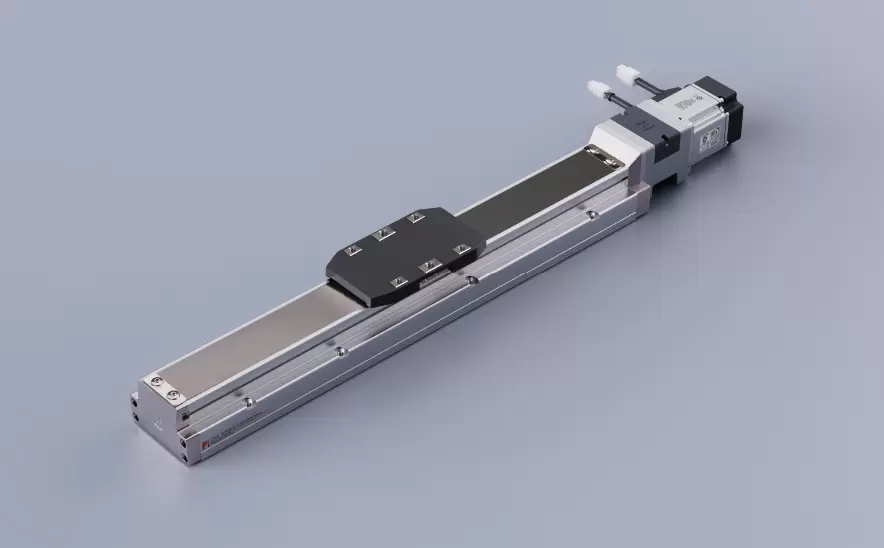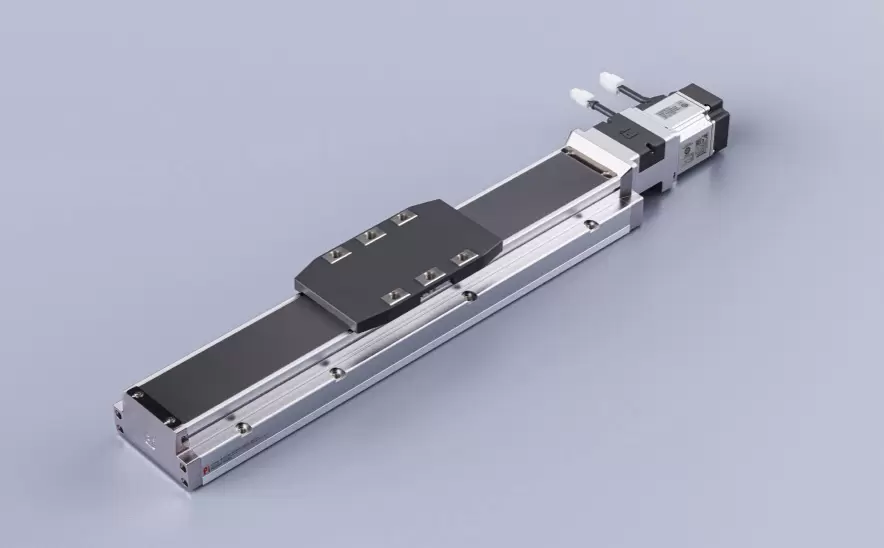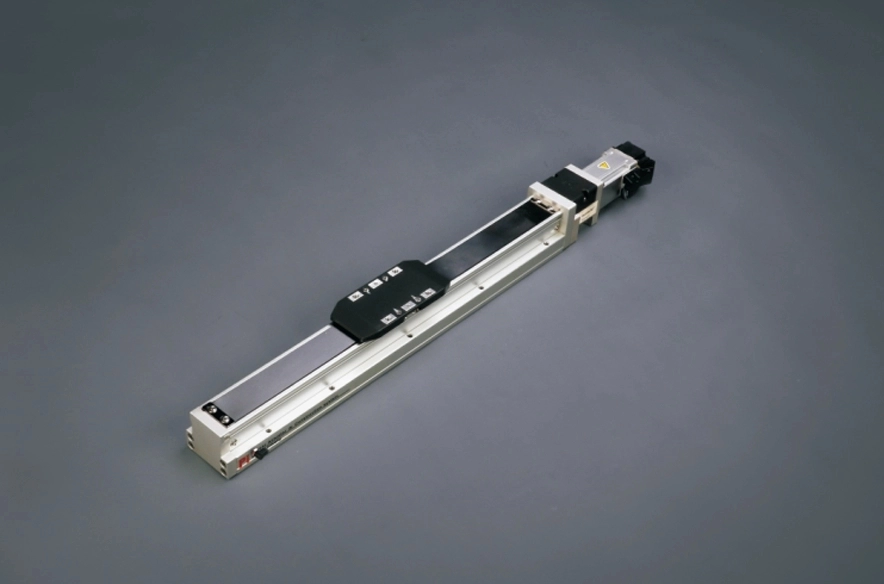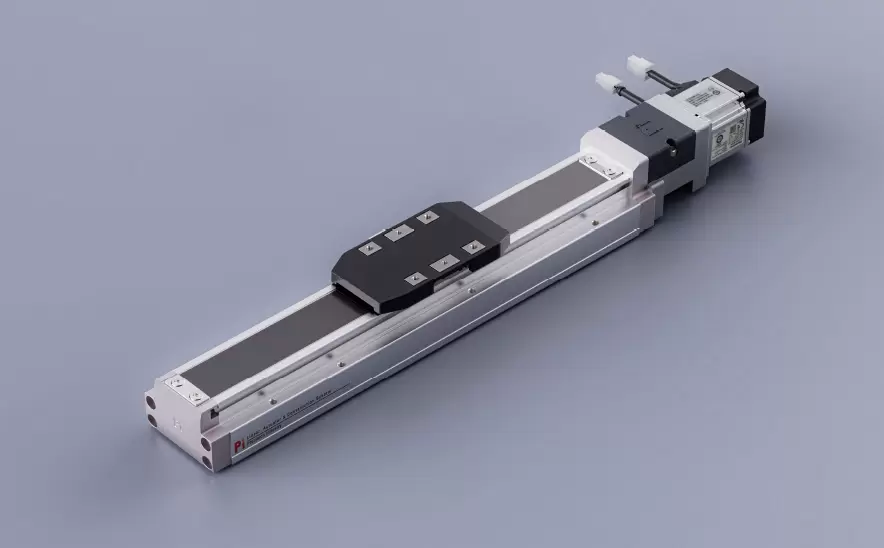
Motor Bottom Side
Repeatability:±0.005/0.01mmHorizontal Load:150kgVertical Load:55kgMaximum Speed:2000mm/sTravel Range:100-1500mm

 Current location:Home > Company > News > Latest news > Why Standard Ball Screw Actuators Are Essential for High-Precision Positioning
 Date: Dec 16 2025
High-precision positioning has become a fundamental requirement across modern manufacturing industries. As products evolve toward higher integration, smaller tolerances, and stricter quality standards, the margin for motion error continues to shrink. Whether in semiconductor fabrication, electronics assembly, medical equipment, or automated inspection systems, positioning accuracy directly affects yield, consistency, and long-term equipment reliability.
Among the many linear motion solutions available today, the standard ball screw actuator remains one of the most trusted and widely adopted technologies for high-precision positioning. Its mature mechanical structure, predictable motion characteristics, and proven performance make it indispensable in precision automation systems.
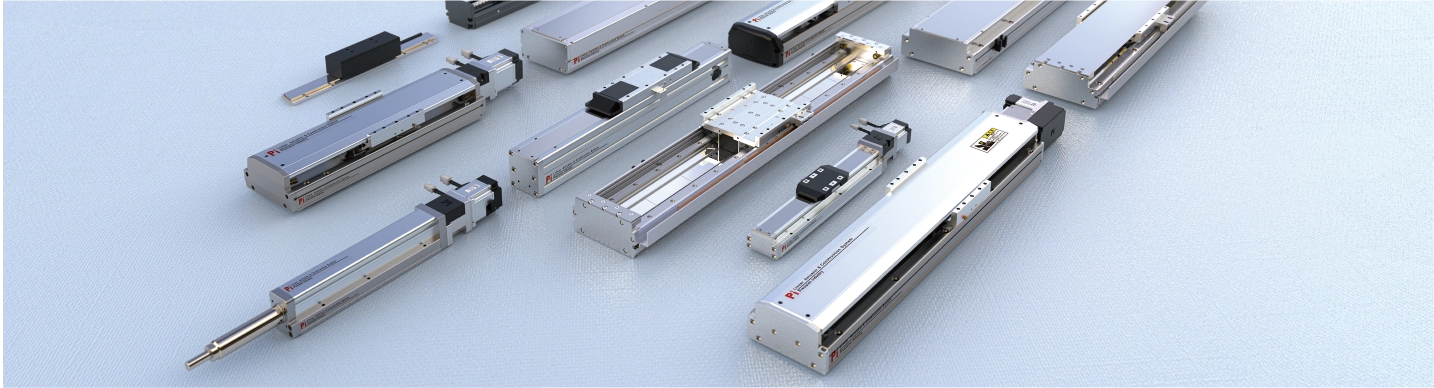
Since its establishment in 2003, Ruan has focused on helping industrial customers improve product and process accuracy. Through its Pi brand, Ruan designs and manufactures precision positioning slide tables, XY linear modules, electric cylinders, rectangular coordinate modules, linear motor modules, built-in slide tables, industrial robot arms, and automatic transmission components. Across these product lines, the Standard Ball Screw Actuator plays a central role in delivering stable and accurate linear motion.
This article explains why standard ball screw actuators are essential for high-precision positioning and how their engineering advantages support demanding industrial applications.
At the heart of a ball screw actuator is its rolling contact mechanism. Steel balls circulate between the screw shaft and the nut, replacing sliding friction with rolling friction.
Reduced friction leads to smoother motion
Motion response is predictable across the entire stroke
Positioning accuracy is maintained even at low speeds
Stick–slip effects common in sliding systems are minimized
In precision positioning tasks—such as optical alignment, micro-assembly, or inspection scanning—this smoothness is critical. It allows the actuator to move in controlled increments without sudden jumps or hesitation.
Precision positioning is not only about resolution; it also depends on rigidity. Any deformation under load can cause positioning errors, especially in vertical or cantilevered applications.
Standard ball screw actuators provide high axial stiffness through:
Precision-machined screw shafts
Preloaded ball nuts
Rigid actuator housings
Integrated linear guide systems
Reduced deflection when carrying tools or workpieces
Stable positioning during acceleration and deceleration
Consistent accuracy under varying loads
In semiconductor, LCD, and PCB equipment, where even minor deflection can cause misalignment, rigidity is a decisive advantage.
Repeatability—the ability to return to the same position consistently—is often more important than absolute accuracy in automation.
Ball screw actuators achieve low backlash by:
Using preloaded ball nuts
Maintaining tight manufacturing tolerances
Ensuring precise alignment between screw and guides
Accurate bidirectional positioning
Stable stop positions without drift
Reliable performance over long production cycles
This makes standard ball screw actuators ideal for applications involving repetitive motion, such as automated assembly lines and testing equipment.
Modern precision systems rely heavily on servo motors and closed-loop control. The mechanical characteristics of the actuator directly influence control performance.
Ball screw actuators offer:
Linear, predictable torque-to-thrust conversion
Smooth acceleration and deceleration profiles
Minimal hysteresis during direction changes
Because the mechanical response is stable, servo tuning becomes more straightforward. This allows engineers to achieve higher positioning accuracy without complex compensation algorithms.
Many high-precision applications require extremely small, controlled movements rather than long travel distances.
Standard ball screw actuators excel at micro-positioning because:
Rolling contact allows fine incremental motion
Screw lead can be optimized for resolution
Low friction ensures stable low-speed operation
In medical equipment, laboratory automation, and semiconductor inspection systems, this ability to move accurately at very small scales is essential.
Precision positioning must be maintained not just during initial operation, but over the entire service life of the equipment.
Ball screw actuators provide long-term accuracy because:
Rolling friction reduces wear on contact surfaces
Proper lubrication maintains smooth motion
Structural rigidity prevents gradual misalignment
With correct maintenance, positioning performance remains stable even after extended operating cycles, making ball screw actuators suitable for continuous production environments.
High-precision industries often operate under strict environmental conditions, including cleanrooms or controlled manufacturing spaces.
Standard ball screw actuators can be adapted for such environments through:
Optimized sealing structures
Controlled lubrication methods
Integration with cleanroom-compatible materials
This flexibility allows them to be used in semiconductor, electronics, and medical manufacturing where contamination control is critical.
While alternative technologies such as linear motors offer ultra-high speed and acceleration, standard ball screw actuators provide a balanced solution that combines:
High positioning accuracy
Strong load capacity
Stable long-term performance
Mature, proven design
Ease of integration into automation systems
For many high-precision positioning tasks, this balance makes ball screw actuators the most practical and reliable choice.
With more than 20 years of experience, Ruan understands that precision positioning depends on both mechanical design and manufacturing quality. By focusing on precision machining, structural rigidity, and application-oriented design, Ruan’s Pi brand delivers motion solutions that support the evolving needs of high-precision industries.
Standard ball screw actuators developed by Ruan are designed to integrate seamlessly into advanced automation systems, helping customers achieve stable accuracy, repeatability, and operational reliability.
High-precision positioning is a cornerstone of modern manufacturing, and standard ball screw actuators play a vital role in achieving it. Their rolling motion mechanism, high rigidity, low backlash, predictable servo response, and long-term stability make them indispensable in precision automation systems.
For industries that demand consistent accuracy—such as semiconductor, electronics, medical, and advanced automation—standard ball screw actuators remain a proven and essential solution. Backed by decades of precision engineering experience, Ruan continues to support customers worldwide with motion technologies that make every movement more accurate.