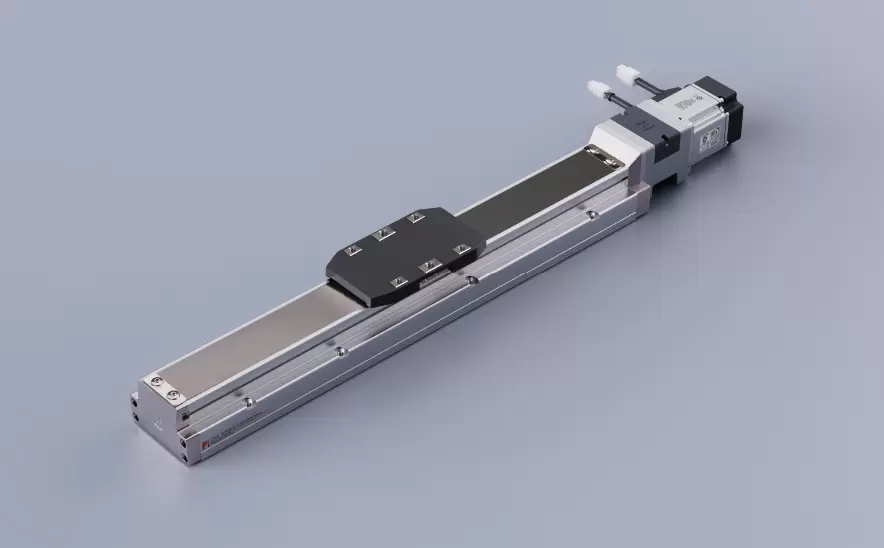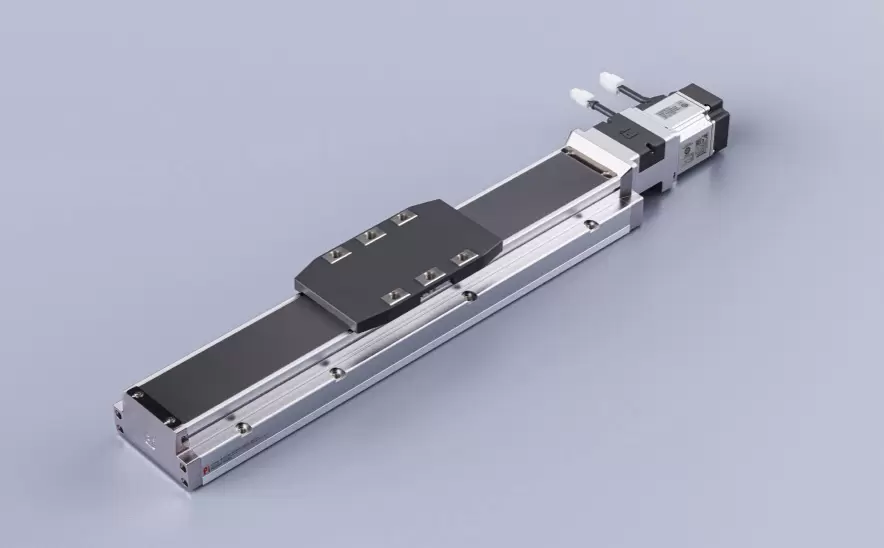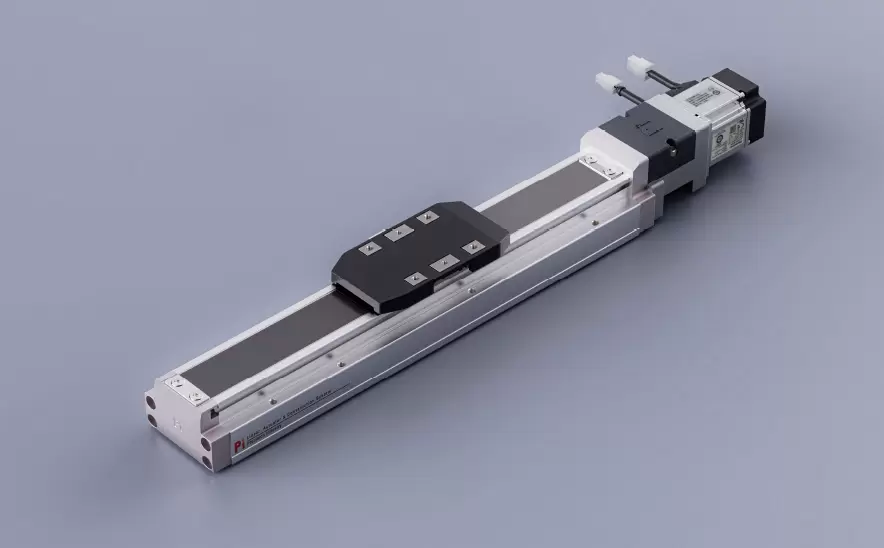
Motor Bottom Side
Repeatability:±0.005/0.01mmHorizontal Load:150kgVertical Load:55kgMaximum Speed:2000mm/sTravel Range:100-1500mm

 Current location:Home > Company > News > Latest news > Standard Ball Screw Actuator Applications in Semiconductor and Electronics Manufacturing
 Date: Dec 11 2025
Semiconductor and electronics manufacturing are among the most demanding industrial sectors in terms of precision, repeatability, and process stability. As device geometries continue to shrink and production throughput increases, motion systems must deliver accurate positioning under strict environmental and operational constraints. Even small deviations in linear motion can lead to yield loss, alignment errors, or inspection inaccuracies.
One of the most widely adopted motion solutions in these industries is the standard ball screw actuator. Thanks to its stable structure, predictable motion behavior, and high positioning accuracy, it has become a core component in many semiconductor and electronics manufacturing systems.
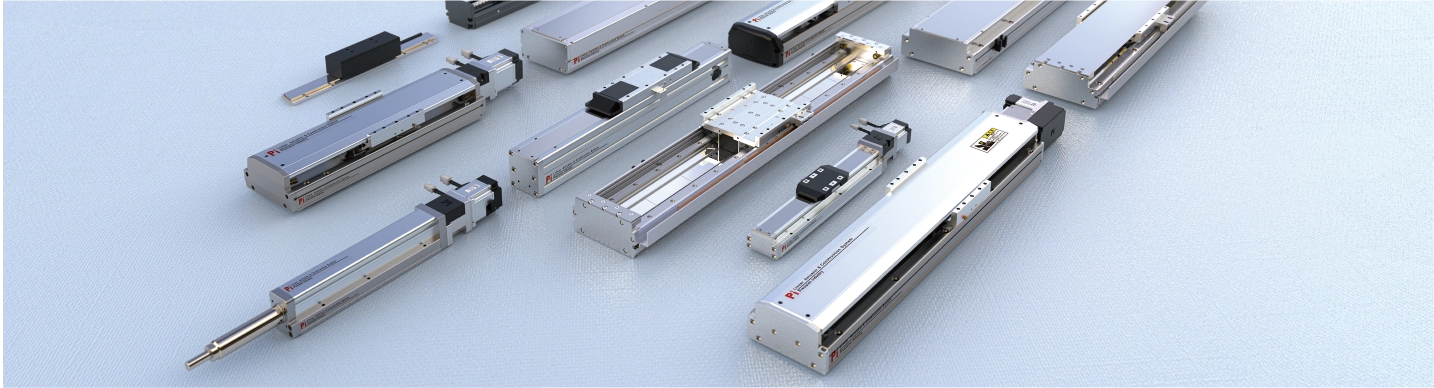
Founded in 2003, Ruan has focused on improving industrial precision through advanced motion technology. Under the Pi brand, the company designs and manufactures precision positioning slide tables, XY linear modules, electric cylinders, rectangular coordinate modules, linear motor modules, built-in slide tables, industrial robot arms, and transmission components. Among these, the Standard Ball Screw Actuator plays a critical role in supporting semiconductor, LCD, PCB, medical, and automation equipment worldwide.
This article explores how standard ball screw actuators are applied across key stages of semiconductor and electronics manufacturing and why they remain a trusted solution in these precision-driven industries.
Production environments for semiconductors and electronic components require motion systems that can meet several strict requirements:
High positioning accuracy and repeatability
Smooth, low-vibration movement
Stable performance over long operating cycles
Compatibility with clean or controlled environments
Reliable operation under continuous production conditions
Ball screw actuators are particularly well suited to these requirements due to their rolling contact mechanism, rigid structure, and compatibility with servo control systems.
In semiconductor fabrication, wafer handling is one of the most critical processes. Wafers must be transported, aligned, and positioned with extreme care to avoid contamination or mechanical damage.
Accurate linear positioning during wafer loading and unloading
Smooth vertical and horizontal motion to minimize vibration
Stable holding capability during process pauses
Repeatable alignment for downstream processing equipment
Ball screw actuators provide controlled movement with minimal backlash, ensuring wafers are placed precisely at each processing stage.
Lithography systems require precise positioning to ensure patterns are accurately transferred onto wafers. Even minor positioning errors can result in defective chips.
High rigidity supports stable motion under tool load
Predictable response to servo commands
Reliable micro-movement for fine alignment
Consistent performance across long production cycles
In these applications, ball screw actuators often work in combination with linear guides and servo motors to achieve high-precision multi-axis motion.
Semiconductor and electronics manufacturing rely heavily on inspection and measurement to maintain quality and yield. Inspection systems must scan surfaces, components, or circuits with consistent speed and accuracy.
Smooth low-speed motion for high-resolution scanning
Stable positioning for optical and sensor-based measurement
High repeatability for comparative analysis across batches
Standard ball screw actuators support controlled, repeatable travel that allows inspection systems to deliver reliable measurement results.
In PCB production, accurate positioning is required for drilling, routing, component placement, and testing.
PCB drilling and routing tables
Pick-and-place positioning stages
Automated optical inspection platforms
Testing and calibration fixtures
Ball screw actuators offer the load capacity and rigidity needed to support tooling while maintaining precise motion paths, even at high cycle counts.
LCD and display panel manufacturing involves handling large, delicate panels that require stable, vibration-free movement.
Stable linear motion for panel alignment
High load capacity for larger panel sizes
Smooth travel to prevent surface damage
Repeatable positioning for consistent assembly
The balance of strength and precision makes standard ball screw actuators suitable for both small and large display production systems.
Electronics assembly lines often involve repetitive, high-speed operations that demand consistent accuracy.
Component feeding systems
Assembly positioning tables
Press-fit and fastening equipment
Automated testing stations
Their predictable mechanical behavior simplifies control logic and improves system reliability in continuous production environments.
Many semiconductor and electronics processes take place in cleanroom environments. Motion components must operate reliably without generating excessive particles or contamination.
Standard ball screw actuators can be adapted for clean environments through:
Optimized sealing structures
Controlled lubrication strategies
Proper material selection
When integrated correctly, they meet the operational needs of controlled manufacturing spaces.
Despite the emergence of alternative motion technologies, standard ball screw actuators remain widely used because they offer a balanced combination of:
Accuracy and repeatability
Load capacity
Cost-effective long-term operation
Mature, proven mechanical design
Compatibility with common automation architectures
For many semiconductor and electronics applications, this balance makes them a practical and reliable choice.
With over 20 years of experience, Ruan understands the performance expectations of semiconductor and electronics manufacturers. The company’s Pi brand focuses on delivering precision motion components that integrate seamlessly into advanced manufacturing systems.
By combining precision machining, stable structural design, and application-oriented engineering, Ruan supports customers in improving process accuracy, equipment reliability, and production efficiency.
Standard ball screw actuators play a vital role in semiconductor and electronics manufacturing, supporting critical processes such as wafer handling, alignment, inspection, PCB production, and automated assembly. Their ability to deliver precise, repeatable linear motion under demanding conditions makes them an essential component in modern high-tech production environments.
As manufacturing technologies continue to evolve, reliable motion solutions remain fundamental. Backed by decades of precision engineering experience, Ruan’s standard ball screw actuators continue to help manufacturers meet the challenges of accuracy, stability, and efficiency in semiconductor and electronics production.