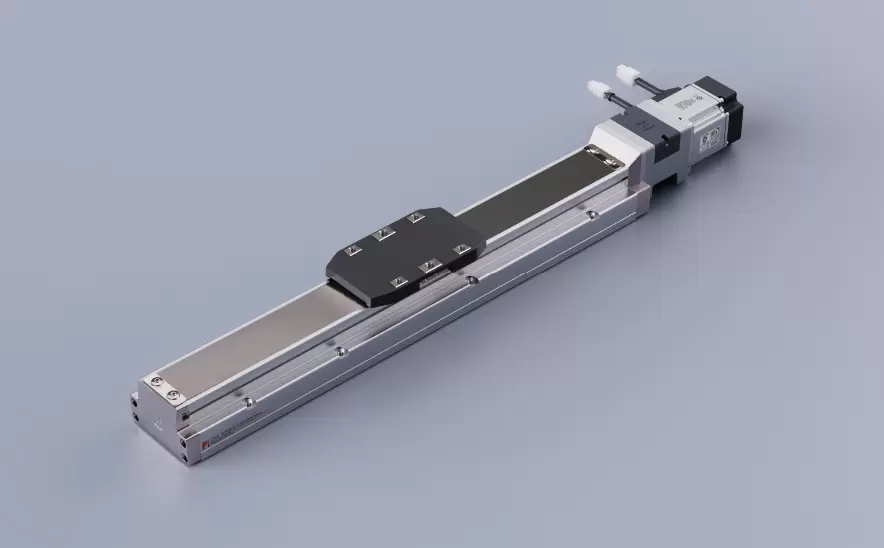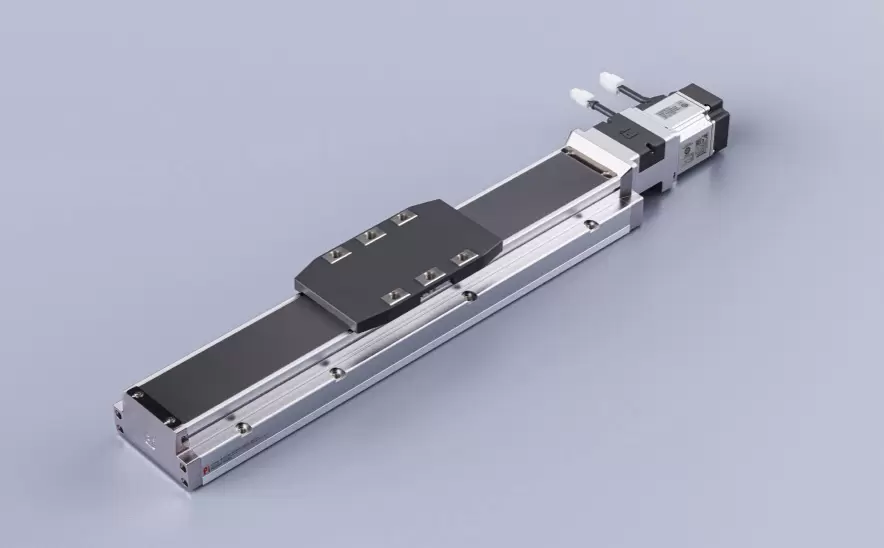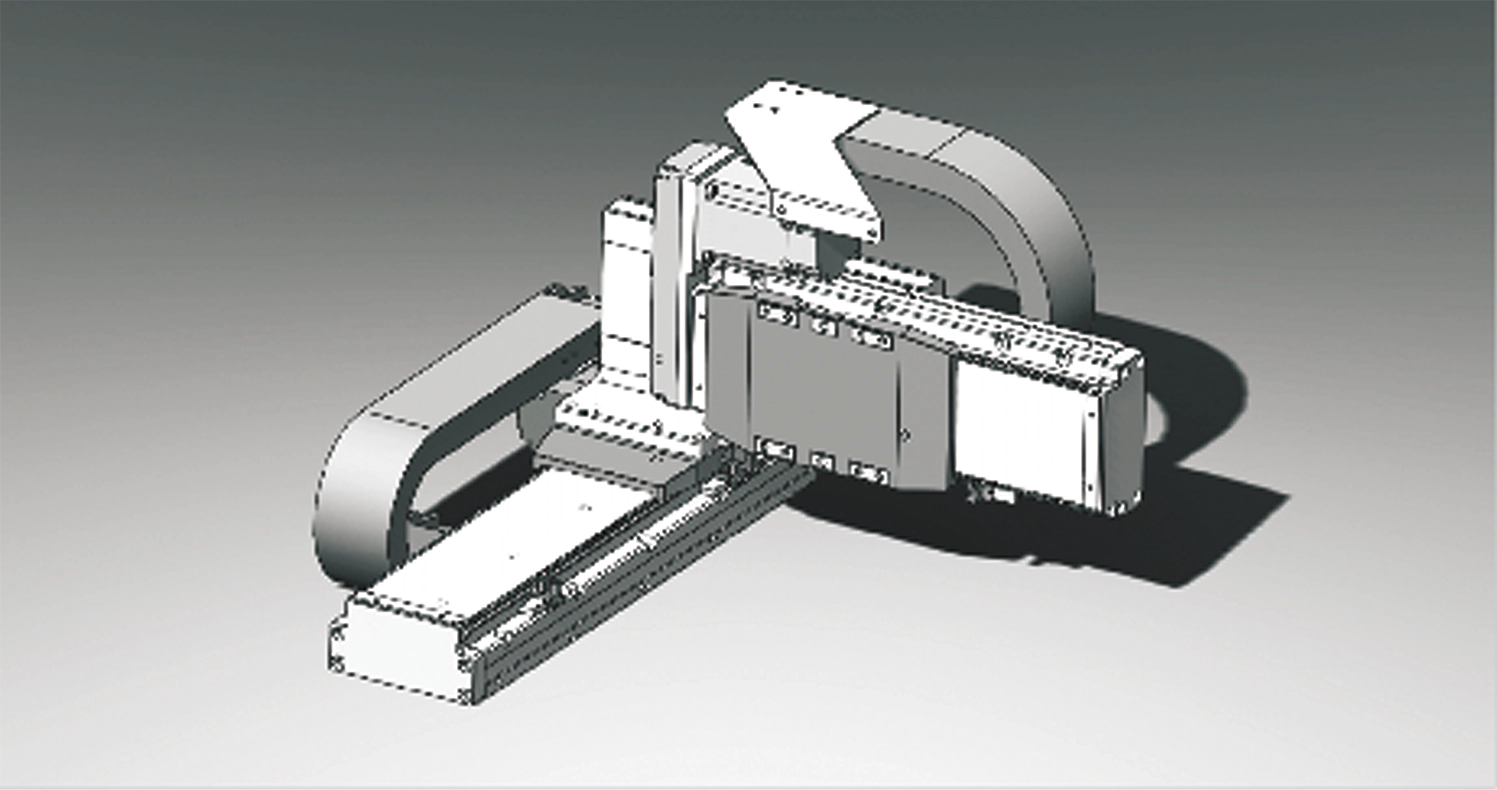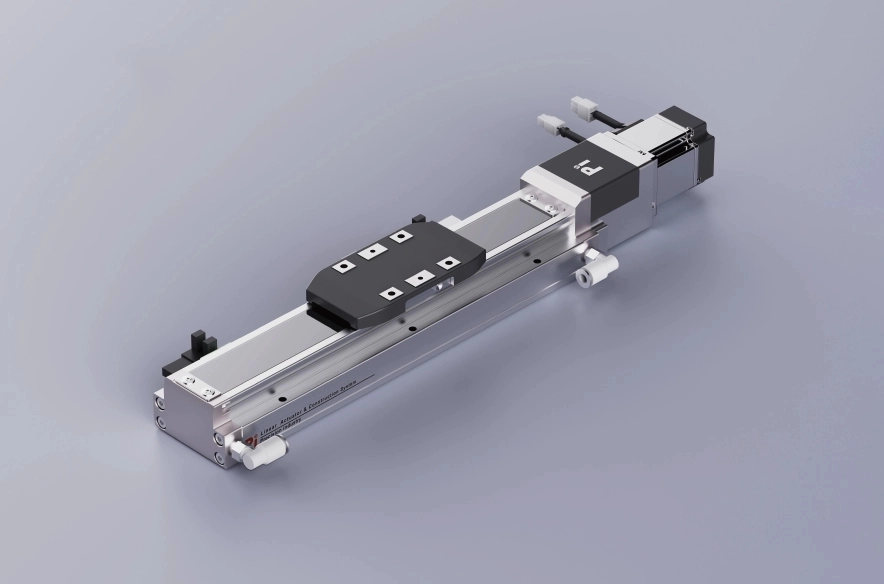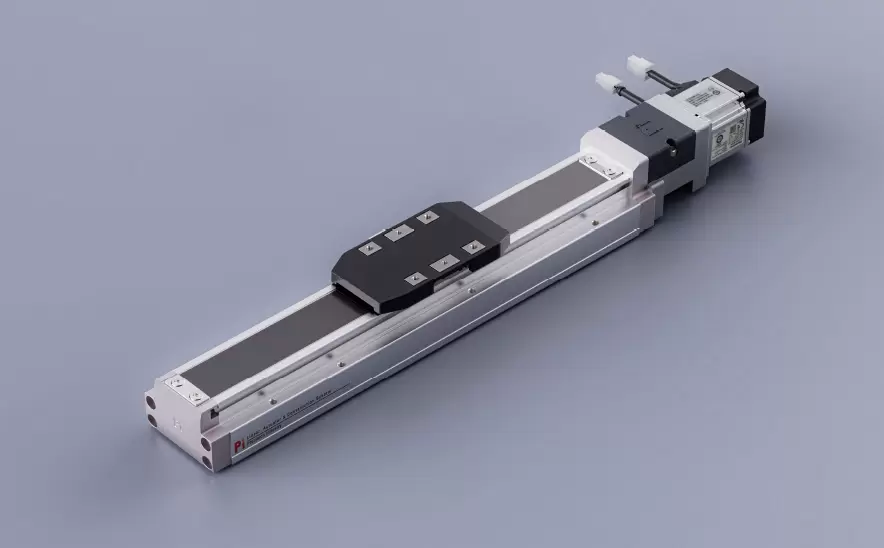
Motor Bottom Side
Repeatability:±0.005/0.01mmHorizontal Load:150kgVertical Load:55kgMaximum Speed:2000mm/sTravel Range:100-1500mm

 Current location:Home > Company > News > Latest news > Standard Ball Screw Actuator Design Principles for Accuracy and Stability
 Date: Dec 25 2025
In industrial automation and precision manufacturing, linear motion accuracy is not achieved by chance. It is the result of deliberate mechanical design choices, material selection, and system integration. Among various linear motion technologies, the standard ball screw actuator has earned its reputation as a reliable solution for applications where accuracy, repeatability, and long-term stability are essential.
Since its establishment in 2003, Ruan has focused on improving product and process accuracy for industrial customers worldwide. Through its Pi brand, Ruan designs and manufactures precision positioning slide tables, XY linear modules, electric cylinders, rectangular coordinate modules, linear motor modules, built-in slide tables, industrial robot arms, and transmission components. At the core of many of these solutions is the Standard Ball Screw Actuator, whose design principles directly influence machine performance.
This article explains the key design elements that allow standard ball screw actuators to deliver high accuracy and mechanical stability in demanding automation environments.
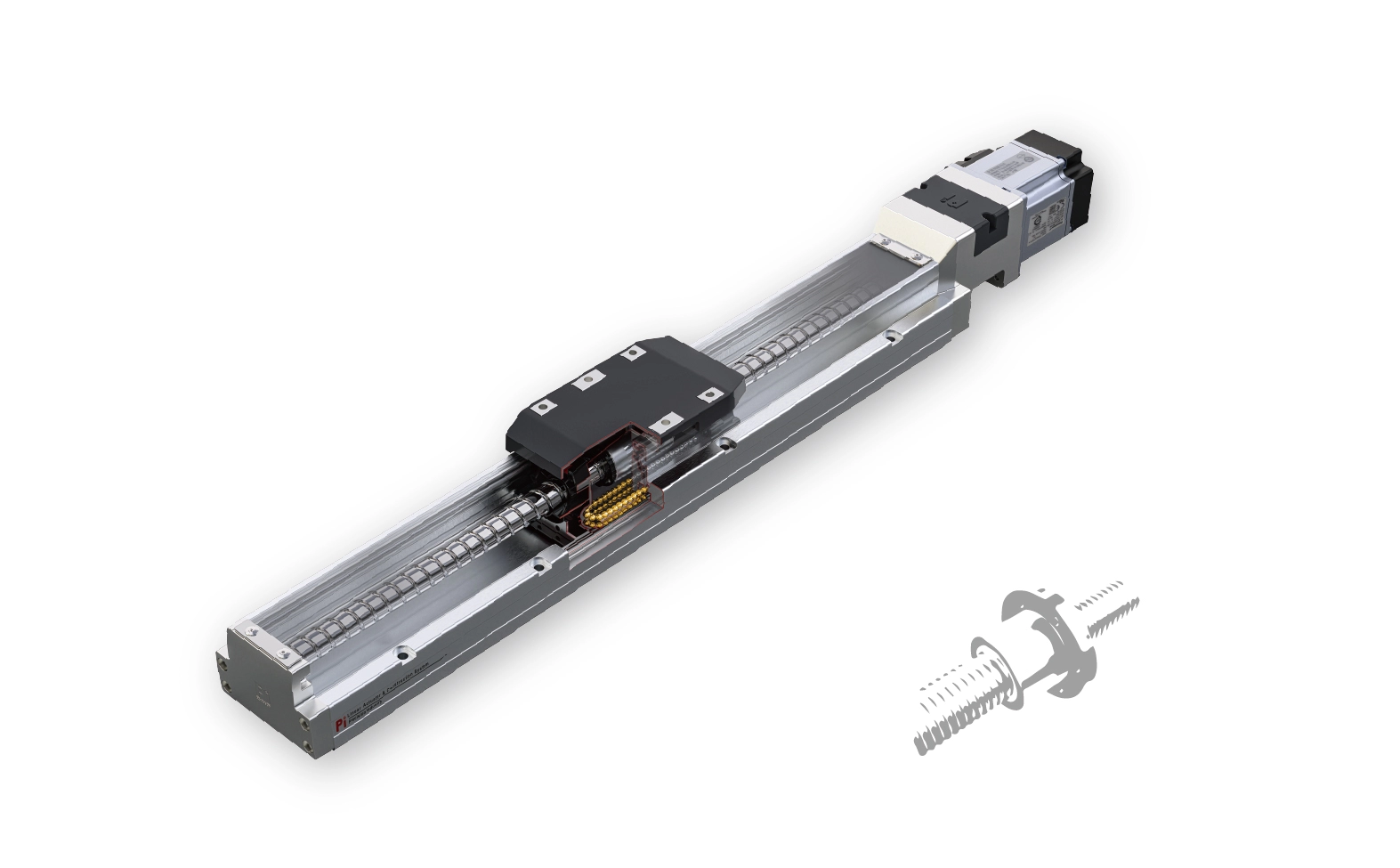
The ball screw itself is the most critical component of the actuator. Its geometry determines how effectively rotary motion is converted into linear motion.
Screw diameter and lead selection
Groove profile consistency
Surface finish quality
Precision of thread grinding or rolling
A well-designed screw ensures smooth ball circulation and uniform load distribution. Precision-ground screws provide better accuracy and repeatability, while appropriate lead selection balances speed and resolution. These choices directly affect positioning precision and motion smoothness.
Backlash is one of the primary enemies of positioning accuracy. In a ball screw actuator, backlash occurs when there is clearance between the screw and nut.
Eliminates axial play during direction changes
Improves repeatability in bidirectional motion
Stabilizes position under varying loads
Preloaded ball nuts apply controlled internal force to maintain constant contact between balls and raceways. This design principle ensures that the actuator responds consistently to control commands, especially in high-precision applications such as semiconductor alignment or optical inspection.
Unlike sliding screw mechanisms, ball screw actuators rely on rolling contact between steel balls and raceways.
Significantly reduced friction
Smooth motion at low and high speeds
Minimal stick-slip behavior
Stable performance across long operating cycles
Low friction not only improves positioning accuracy but also reduces wear, helping maintain stability over time. This predictable mechanical behavior is essential for servo-controlled automation systems.
Accuracy cannot be maintained without rigidity. Even a highly precise screw will not perform well if the actuator housing or mounting structure flexes under load.
High-strength aluminum or steel actuator profiles
Reinforced cross-sections to resist bending
Stable mounting interfaces
Controlled tolerances between internal components
Ruan’s actuator designs emphasize structural stiffness to prevent deformation during acceleration, deceleration, and load changes. This rigidity ensures consistent motion paths and prevents gradual loss of accuracy.
Ball screw actuators are typically paired with linear guide rails to control motion direction and absorb side loads.
Prevents lateral forces from affecting the screw
Maintains straight-line travel
Reduces vibration during high-speed motion
Enhances overall system stability
Accurate alignment between the screw and guide rails is essential. Poor alignment introduces uneven wear and reduces long-term accuracy. Properly designed guidance systems support both precision and durability.
The way a ball screw is supported at its ends has a major impact on stability and accuracy.
Fixed-end bearings absorb axial loads
Supported or floating ends allow thermal expansion
Proper bearing preload reduces axial movement
Well-designed bearing arrangements prevent axial shift, minimize vibration, and allow smooth rotation at different speeds. This is especially important for long-stroke or high-speed applications where screw deflection and thermal expansion must be controlled.
Even the best-designed components can lose accuracy if assembly quality is poor.
Parallelism between screw and guide rails
Squareness of mounting surfaces
Accurate coupling alignment between motor and screw
Precision assembly ensures that motion forces are evenly distributed, preventing localized stress and wear. Ruan’s manufacturing approach emphasizes tight assembly tolerances to preserve design accuracy in real-world operation.
Thermal expansion can affect positioning accuracy, particularly in high-duty or high-speed applications.
Material selection with predictable thermal behavior
Adequate heat dissipation paths
Controlled lubrication to reduce friction-induced heat
Stable thermal performance ensures that positioning accuracy remains consistent throughout long production cycles, which is critical in semiconductor and electronics manufacturing.
Mechanical design and control systems must work together. Ball screw actuators are designed to integrate seamlessly with servo motors and motion controllers.
Predictable torque-to-thrust conversion
Stable acceleration and deceleration profiles
Simplified servo tuning
This compatibility allows engineers to achieve precise positioning without excessive control complexity.
Accuracy and stability must be maintained over the full service life of the actuator.
Rolling contact to minimize wear
Proper lubrication paths
Hardened raceways and balls
Replaceable components where appropriate
With proper maintenance, these design features allow ball screw actuators to maintain performance across millions of cycles.
With over two decades of experience, Ruan understands that accuracy and stability are achieved through balanced design rather than isolated features. By combining precise screw geometry, rigid structures, reliable guidance, and manufacturing discipline, Ruan’s Pi brand standard ball screw actuators support demanding industrial applications across semiconductor, medical, automation, and electronics sectors.
The accuracy and stability of a standard ball screw actuator are the result of carefully considered design principles. From screw geometry and preload mechanisms to structural rigidity and alignment, every element contributes to reliable linear motion.
For industrial automation systems that demand consistent positioning and long-term stability, standard ball screw actuators remain a proven solution. Backed by Ruan’s engineering experience and precision manufacturing capabilities, these actuators continue to support the evolving needs of modern precision industries.