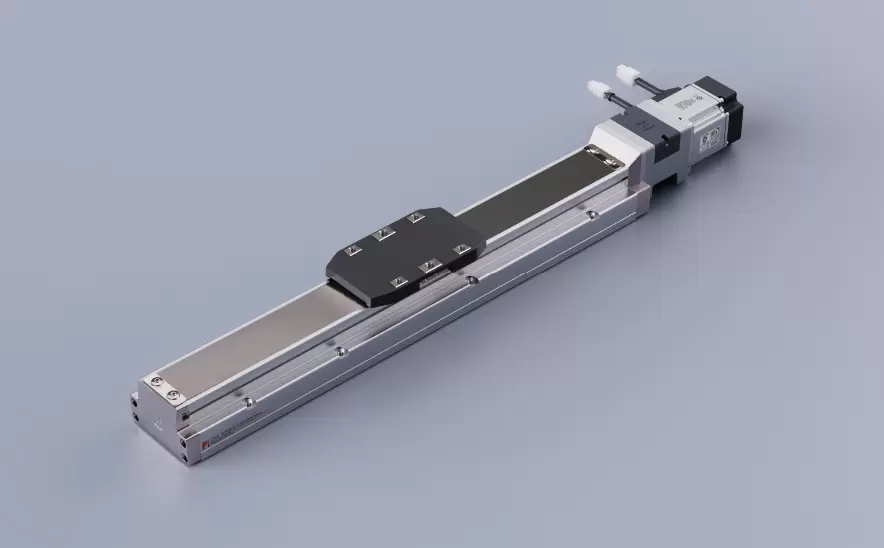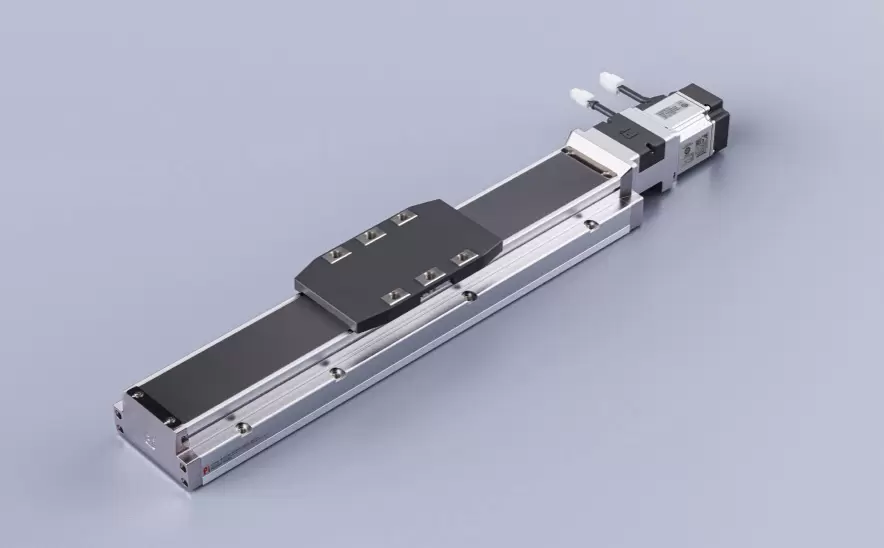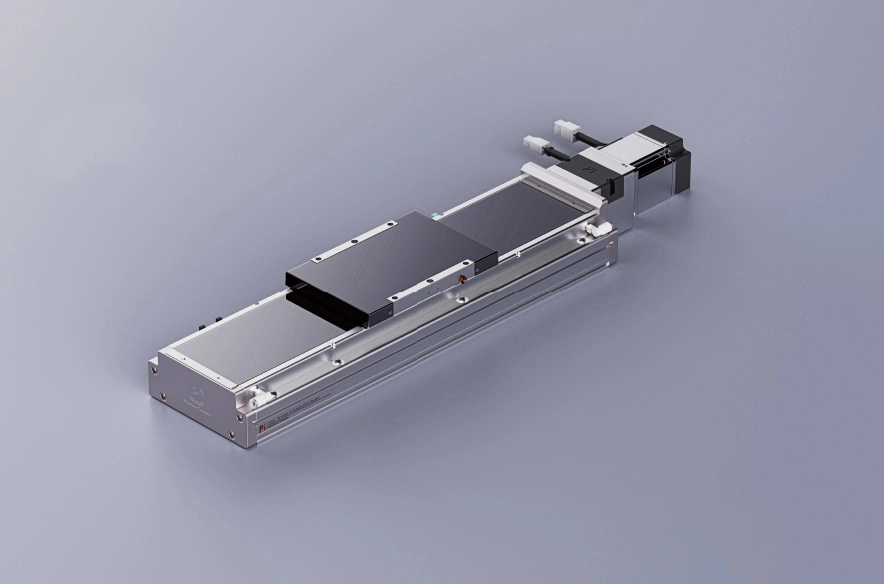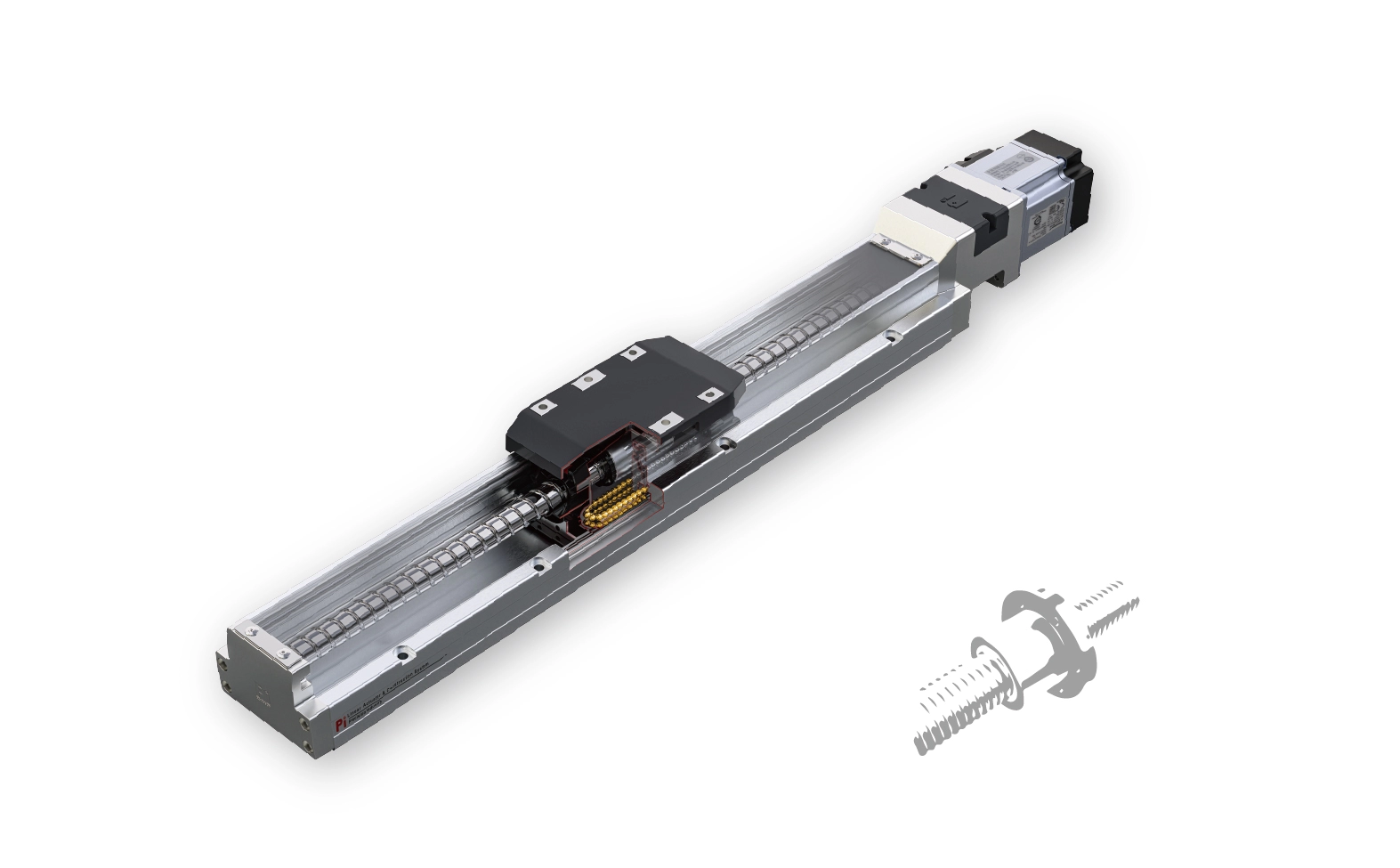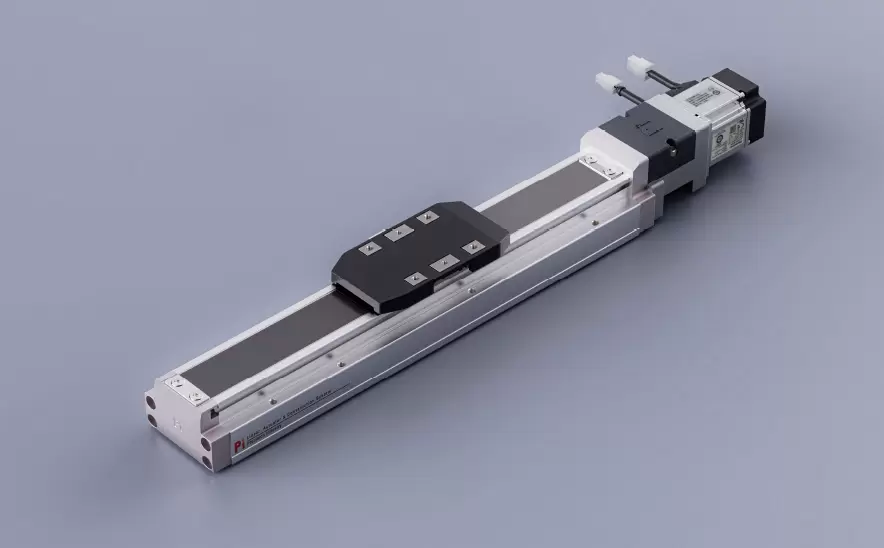
Motor Bottom Side
Repeatability:±0.005/0.01mmHorizontal Load:150kgVertical Load:55kgMaximum Speed:2000mm/sTravel Range:100-1500mm

 Current location:Home > Company > News > Latest news > How to Select the Right Standard Ball Screw Actuator for Industrial Automation
 Date: Dec 23 2025
Selecting the correct linear motion component is a critical step in industrial automation design. Motion systems have an immediate impact on machine performance, accuracy, reliability, and long-term service life. Among the most widely used solutions for precision linear motion is the ball screw actuator—a device that converts rotary motion into linear movement with low friction and high repeatability.
For engineers and system integrators, choosing the right actuating technology is not simply a matter of picking a product off a catalog. It requires a deep understanding of the application, operating conditions, mechanical constraints, and system requirements. As a precision motion specialist, Ruan has played a significant role in supplying motion components for industries such as semiconductor, PCB, LCD, medical, automotive, and automated equipment. The Standard Ball Screw Actuator from Ruan’s Pi brand exemplifies this approach with quality manufacturing and application-ready design.
This article guides you through the essential considerations for selecting the right standard ball screw actuator for industrial automation applications.
The first step in actuator selection is to understand how the actuator will be used. This includes defining both the function and the performance expectations.
What is the required motion type (positioning, scanning, indexing)?
What level of positional accuracy is needed?
Are movements high speed, low speed, or variable?
Will the motion be continuous or intermittent?
Is repeatability more important than absolute accuracy?
In precision assembly applications, accurate position control may be the primary concern. In contrast, material handling applications may prioritize speed and throughput.
A clear understanding of these requirements will help determine the mechanical design and screw configuration needed for optimal performance.
Load evaluation is a key factor in actuator selection. Loads come in various forms, including static, dynamic, and side loads.
Static load: The weight or force that the actuator must support when stationary.
Dynamic load: Forces encountered during motion, such as acceleration, deceleration, and impact forces.
Side load: Lateral forces that are not directed along the actuator’s travel axis.
Calculate total mass being moved, including fixtures and tooling.
Assess whether the load changes direction or magnitude frequently.
Consider any off-axis forces; these should be supported by external guide rails rather than the screw itself.
Ball screw actuators are strong in axial load capacity due to their rigid structure, but side loads must be managed through system design and guide selection.
The actuator’s stroke length must meet the machine’s functional requirements. Stroke selection influences the mechanical package and affects other design factors like rigidity and screw whip.
Total distance the actuator must travel in operation.
End-of-travel requirements for safety, mounting, and any mechanical stops.
The actuator’s compactness relative to installation space.
Longer strokes require careful attention to screw rigidity and guidance stability. In such cases, reinforced housings or supported screw configurations may be necessary to minimize deflection and maintain accuracy.
Industrial applications operate across a range of motion speeds. The desired speed and acceleration directly influence actuator performance. An actuator that cannot meet motion profile demands may suffer from premature wear or degraded accuracy.
High-speed motion requires higher lead screws and appropriate motor tuning.
Rapid acceleration and deceleration increase dynamic loads on the screw and nut.
For smooth motion at low speeds, backlash and friction characteristics are critical.
Standard ball screw actuators must be paired with appropriate motor systems, typically servo motors, to ensure that speed and acceleration profiles are executed without introducing mechanical instability.
Precision motion requires not just accurate positioning but consistent repeatability over time.
Accuracy: The degree to which the actuator’s position matches the commanded position.
Repeatability: The ability to return to the same position under identical conditions.
Backlash: The internal clearance between mechanical components that can affect bidirectional positioning.
Preloaded ball nuts reduce backlash and ensure consistent mechanical contact. Engineers should evaluate how much positional drift is acceptable and select actuators with appropriate preload and precision classes.
For systems like robotic alignment, inspection scanners, or laboratory automation, high repeatability is a non-negotiable requirement.
Industrial environments can vary widely, from cleanrooms to heavy machining areas with dust and chip exposure.
Temperature fluctuations
Dust, debris, and contaminants
Humidity and chemical exposure
Cleanroom or controlled air requirements
Ruan’s standard ball screw actuators can be configured with protective seals, covers, and materials that resist contamination. For cleanroom environments, special sealing and lubrication schemes help maintain performance without introducing particulate contamination.
An actuator’s performance also depends on how well it integrates with the motion control system.
Motor type and drive compatibility
Encoder feedback resolution
Control loop stability
Interfacing with PLCs or motion controllers
Servo motors with high-resolution feedback paired with ball screw actuators support precise control over acceleration, velocity, and position. Ensure that the control system can supply suitable torque and feedback accuracy for the application.
Selecting an actuator with long-term reliability helps reduce unplanned downtime and maintenance costs.
Lubrication interval and type
Wear patterns under expected loads
Availability of replacement parts
Ease of access for inspection
Ball screw actuators are known for predictable wear characteristics. Regular maintenance, proper lubrication, and alignment checks extend service life, especially in high-cycle production environments.
While standard product offerings meet most needs, custom configurations are often necessary to fit unique machine designs.
Availability of technical support
Custom lead, stroke, or mounting options
Guidance on system integration
Documentation and engineering resources
Ruan’s long-standing experience in precision motion makes it a valuable partner for engineers seeking tailored solutions. With support from the manufacturer, it’s possible to optimize actuator selection for specific production requirements.
Selecting the right standard ball screw actuator for industrial automation is a multi-step process that requires careful planning and analysis. By understanding application requirements, load conditions, motion profiles, environmental factors, and integration needs, engineers can ensure that the actuator delivers reliable performance and long-term accuracy.
With decades of experience in precision engineering, Ruan’s Pi brand standard ball screw actuators offer solutions that meet the complex demands of modern automation systems. From semiconductor production to robotics and laboratory automation, the right actuator enables machines to perform with confidence and consistency.