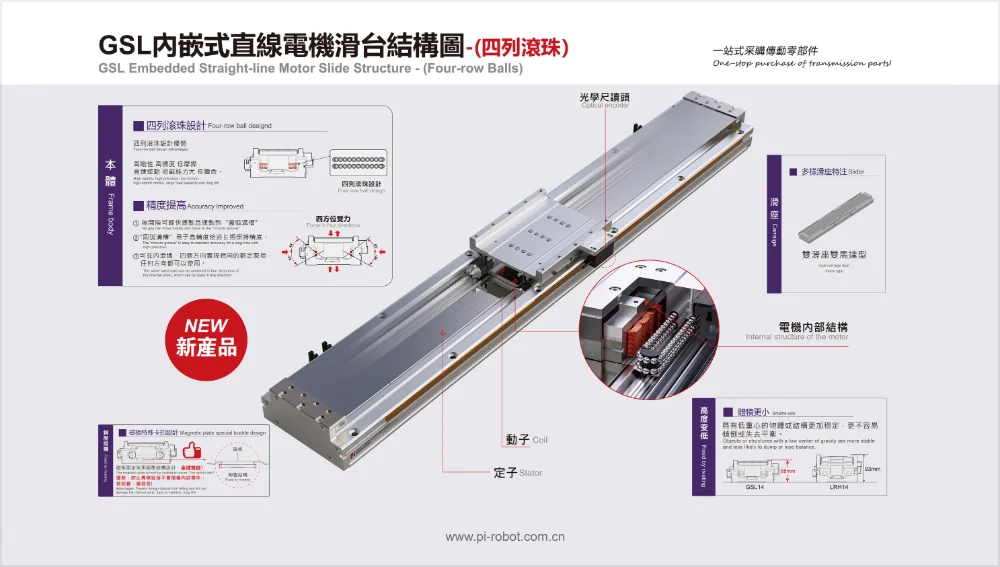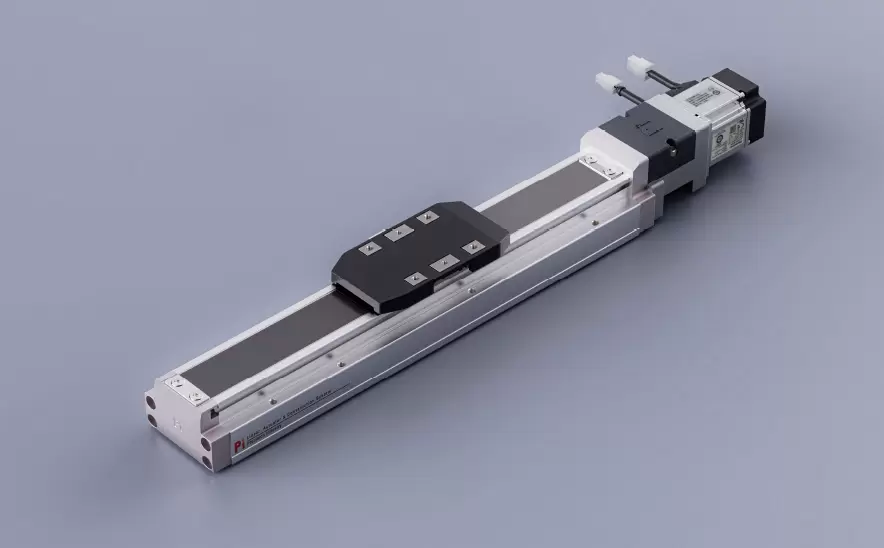
Motor Bottom Side
Repeatability:±0.005/0.01mmHorizontal Load:150kgVertical Load:55kgMaximum Speed:2000mm/sTravel Range:100-1500mm

 Current location:Home > Company > News > Latest news > How to Handle Precision Positioning Slide Tables to Avoid Unnecessary Damage
 Date: Aug 19 2026
Precision positioning slide tables are built to deliver reliable, accurate linear motion in applications where consistency matters. Whether they're used in automated production lines, optical systems, medical devices, or laboratory equipment, these components are designed with tight tolerances that support smooth and repeatable movement.
However, even the highest-quality slide table can lose performance if it is handled incorrectly. In many cases, damage doesn't happen during operation—it happens during transportation, installation, or routine handling.
Fortunately, avoiding unnecessary damage doesn't require complicated procedures. A few good habits can significantly reduce the risk of premature wear and help your equipment perform as expected for years.
Unlike heavy structural machine parts, a precision positioning slide table is manufactured to achieve smooth motion with extremely accurate alignment. This means the internal guide system, bearings, and drive components should be protected from excessive force and accidental impacts.
Treat the slide table as a precision instrument rather than a standard mechanical part. A little extra care during handling often prevents expensive repairs later.
One of the most common causes of damage occurs before the equipment is even installed.
When moving a slide table:
Support it from the base instead of lifting it by the moving platform.
Use both hands or appropriate lifting equipment for larger models.
Avoid placing unnecessary pressure on guide rails or moving sections.
Keep the unit level during transportation whenever possible.
Improper lifting can place uneven stress on internal components and affect long-term positioning performance.
A small collision may seem harmless, but precision equipment can be sensitive to sudden shocks.
During handling:
Never drop the slide table onto a workbench.
Avoid hitting nearby tools or machine frames.
Keep the equipment away from areas with heavy forklift traffic.
Use protective packaging whenever the unit is transported between facilities.
Even minor impacts may affect alignment or damage bearings that are designed for smooth, controlled motion.
Many precision positioning slide tables are shipped with protective films, rail covers, or transportation locks.
These protective parts are there for a reason.
Remove them only when:
Installation is ready to begin.
The surrounding work area is clean.
The slide table can be mounted immediately.
Leaving protective packaging in place during storage helps reduce the risk of dust, moisture, and accidental scratches.
A precision slide table performs best when installed on a rigid and flat surface.
Before installation:
Clean the mounting surface thoroughly.
Remove burrs or debris.
Confirm flatness according to installation requirements.
Tighten mounting bolts evenly instead of fully tightening one side first.
An uneven installation surface may introduce unnecessary stress that affects motion accuracy over time.
Every slide table is designed with a recommended load capacity.
Although exceeding the rated load may not cause immediate failure, it can accelerate wear on bearings, guide rails, and drive mechanisms.
For best performance:
Stay within the specified payload limits.
Position the load close to the center whenever possible.
Reduce excessive overhang that increases torque on the moving platform.
Proper load distribution helps maintain smooth operation and extends service life.
If your slide table is equipped with a motor or ball screw drive, avoid pushing the moving platform by hand unless the manufacturer specifically allows it.
Forcing movement can:
Place unnecessary stress on the drive system.
Affect calibration.
Damage internal transmission components.
Reduce positioning accuracy.
If movement feels restricted, identify the cause instead of applying additional force.
Contaminants are one of the most common threats to precision motion systems.
Whenever possible:
Keep the work area clean.
Prevent metal chips from reaching guide rails.
Protect the slide table from coolant splashes.
Store unused equipment in a dry environment.
If your application operates in dusty or humid conditions, consider adding protective covers or selecting a model designed for harsher environments.
For motorized precision positioning slide tables, electrical connections deserve the same level of attention as mechanical components.
When connecting cables:
Avoid excessive bending.
Keep cables away from moving parts.
Secure connectors properly.
Never pull on the cable itself when disconnecting.
Well-managed cable routing helps prevent unexpected electrical faults during operation.
If the slide table will remain unused for an extended period, proper storage can prevent unnecessary deterioration.
Recommended storage practices include:
Keeping the equipment in its original packaging when possible.
Storing it indoors in a clean, dry location.
Avoiding direct sunlight and excessive humidity.
Applying protective lubricant if recommended for long-term storage.
Proper storage helps preserve both mechanical performance and surface condition.
Even the best equipment can suffer damage if operators are unfamiliar with proper handling procedures.
Simple training can cover topics such as:
Safe lifting methods
Proper installation practices
Daily visual inspections
Correct cleaning techniques
Load limitations
Basic operating precautions
A well-trained team is one of the most effective ways to reduce accidental damage and improve equipment reliability.
Many equipment failures are not caused by manufacturing defects—they result from repeated small mistakes over time.
Avoiding actions such as forcing movement, exposing the slide table to contamination, or exceeding load limits can significantly improve long-term performance.
By treating precision positioning slide tables with the same care used for other high-accuracy equipment, manufacturers can reduce maintenance costs, minimize downtime, and maintain consistent production quality.
A precision positioning slide table is designed to provide dependable accuracy over thousands—or even millions—of operating cycles. Reaching that level of performance depends not only on product quality but also on how the equipment is handled throughout its entire lifecycle.
At our company, we manufacture precision positioning slide tables with durability, stability, and ease of integration in mind. We also believe that proper handling is just as important as precision engineering. By following a few simple best practices during transportation, installation, operation, and storage, users can protect their investment and enjoy reliable performance for years to come.
If you need assistance selecting the right slide table or have questions about installation and handling, our technical team is always ready to provide expert support.