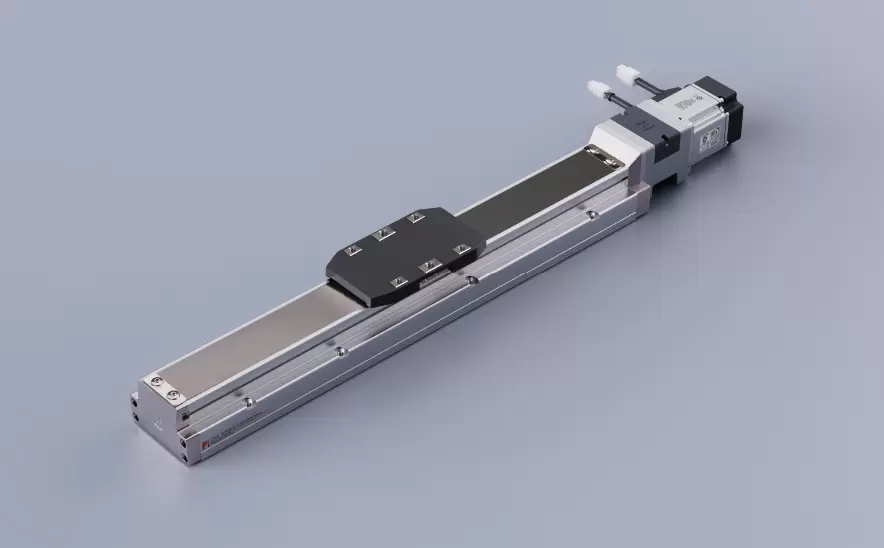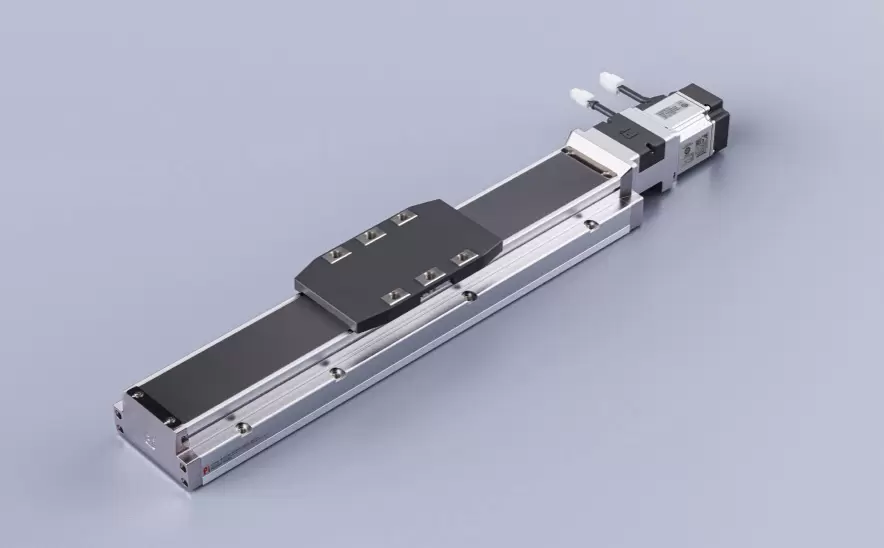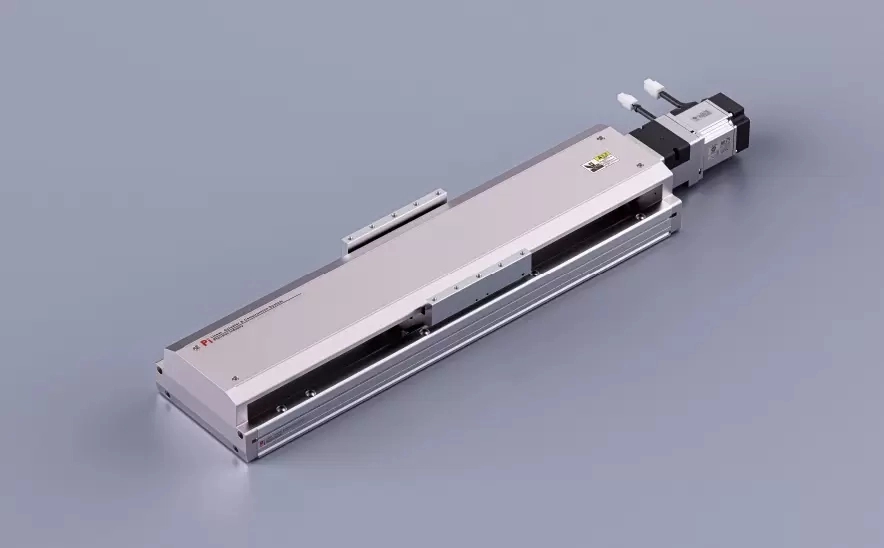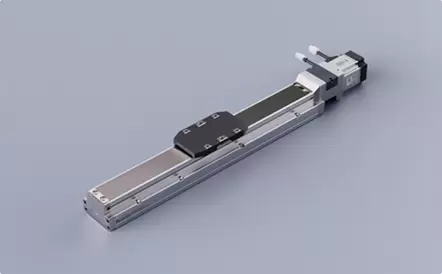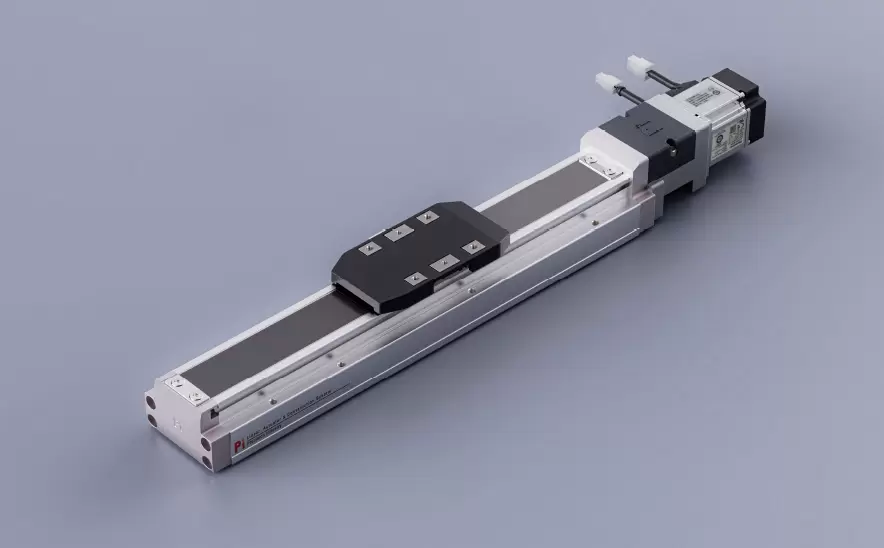
Motor Bottom Side
Repeatability:±0.005/0.01mmHorizontal Load:150kgVertical Load:55kgMaximum Speed:2000mm/sTravel Range:100-1500mm

 Current location:Home > Company > News > Latest news > Daily Care Tips for Your Precision Positioning Slide Table
 Date: Jul 29 2026
Precision positioning slide tables are built to deliver accurate, stable, and repeatable motion in demanding applications such as automation equipment, semiconductor manufacturing, optical inspection systems, and laboratory instruments. Although these systems are designed for long-term reliability, daily care plays an important role in maintaining their performance.
Many positioning issues do not happen suddenly. They often develop gradually due to dust accumulation, improper operation, insufficient inspection, or changes in the working environment. With a simple daily maintenance routine, users can help prevent unnecessary downtime and extend the service life of their equipment.
As a precision positioning slide table manufacturer, we believe that proper care is just as important as product quality. This guide shares practical daily maintenance tips to help you keep your precision slide table operating smoothly.
A precision positioning slide table combines mechanical structures, drive systems, sensors, and control components to achieve accurate movement. Because these parts work together closely, small problems can affect overall performance.
Regular daily care helps to:
Maintain positioning accuracy
Reduce friction and component wear
Prevent contamination-related issues
Identify potential problems early
Improve equipment reliability
A few minutes of attention each day can make a significant difference in the long-term performance of your motion system.
The working environment has a direct impact on precision equipment. Dust, particles, oil residue, and other contaminants can enter moving areas and affect smooth operation.
Remove visible dust from the surface
Keep the surrounding area clean
Check protective covers for contamination
Use a soft, clean cloth when wiping surfaces
Avoid using rough materials or excessive force, as precision surfaces can be sensitive to scratches and damage.
For applications in environments with more contamination, such as machining or industrial production areas, cleaning frequency may need to be increased.
A precision positioning slide table should move smoothly and consistently. Operators who use the equipment every day are often the first to notice small changes.
During operation, pay attention to:
☐ Delayed movement response
☐ Uneven travel speed
☐ Increased resistance
☐ Sudden vibration
☐ Unusual operating sounds
If the slide table behaves differently from normal, record the situation and investigate the cause as soon as possible.
Small changes in motion performance may indicate early signs of wear, contamination, or adjustment issues.
Proper lubrication helps reduce friction and supports smooth movement. However, lubrication should be managed carefully.
Daily checks should include:
Confirming that moving areas are not dry
Checking for abnormal lubricant buildup
Looking for contamination mixed with lubricant
Ensuring there is no leakage around lubrication points
Adding excessive lubricant is not recommended. Too much lubricant can collect dust and create additional problems.
Always use the lubricant type recommended for your specific slide table model.
The environment around a precision positioning system can influence its performance.
Try to maintain:
Large temperature changes may affect mechanical accuracy due to material expansion and contraction.
Dust, oil mist, and particles can reduce motion quality over time.
Nearby equipment vibration may influence positioning stability, especially in high-precision applications.
Creating a suitable operating environment helps the slide table maintain consistent performance.
Although the internal structure of a precision slide table is carefully assembled, external connections should also be checked regularly.
Inspect:
Mounting screws and fixtures
Motor connections
Cable conditions
Sensor installation positions
Loose connections can create vibration, reduce accuracy, or cause unexpected operation problems.
If any abnormal condition is found, avoid making major adjustments without proper technical guidance.
Modern precision positioning systems often include monitoring functions that provide information about system conditions.
Operators should:
Review error messages
Monitor abnormal warnings
Check communication status
Record repeated alarms
Ignoring frequent warnings may allow a minor issue to develop into a larger problem.
Keeping a simple operation record can help maintenance teams identify patterns and solve issues more efficiently.
Correct operation is one of the easiest ways to protect a precision slide table.
Avoid:
Operating beyond the designed load range can accelerate wear and affect accuracy.
Do not manually push or pull the moving platform when the system is powered or locked.
Collisions or unexpected mechanical shocks may damage precision components.
Changing mechanical settings or control parameters without understanding their effects may reduce system performance.
For convenience, operators can follow this quick checklist:
| Check Item | Action |
|---|---|
| Surface condition | Remove dust and contaminants |
| Motion performance | Confirm smooth movement |
| Noise level | Check for unusual sounds |
| Lubrication | Verify proper lubrication condition |
| Connections | Check cables and mounting parts |
| System status | Review alarms and feedback information |
This basic routine only takes a short time but provides valuable information about equipment health.
Daily care can solve many common issues, but some conditions require professional support.
Contact a technical service team if you notice:
Significant loss of positioning accuracy
Persistent abnormal noise
Repeated system errors
Visible component damage
Unusual vibration that continues after basic checks
Performance changes after equipment modification
Professional inspection can help identify the root cause and prevent further damage.
Consistent maintenance provides several advantages:
Reducing contamination and unnecessary stress helps protect important components.
Reliable motion performance supports consistent product quality and fewer interruptions.
Early detection of problems often reduces the need for major repairs.
A well-maintained precision positioning slide table can continue providing accurate performance for many years.
Daily care is a simple but essential part of maintaining a precision positioning slide table. Regular cleaning, careful observation, proper lubrication, and responsible operation can help protect accuracy and reliability.
At our precision positioning slide table company, we understand that every application has different requirements. While advanced design and manufacturing provide the foundation for performance, proper daily care ensures that the system continues to operate at its best.
By developing good maintenance habits, users can maximize equipment reliability, reduce unexpected downtime, and keep their precision motion systems performing consistently over the long term.