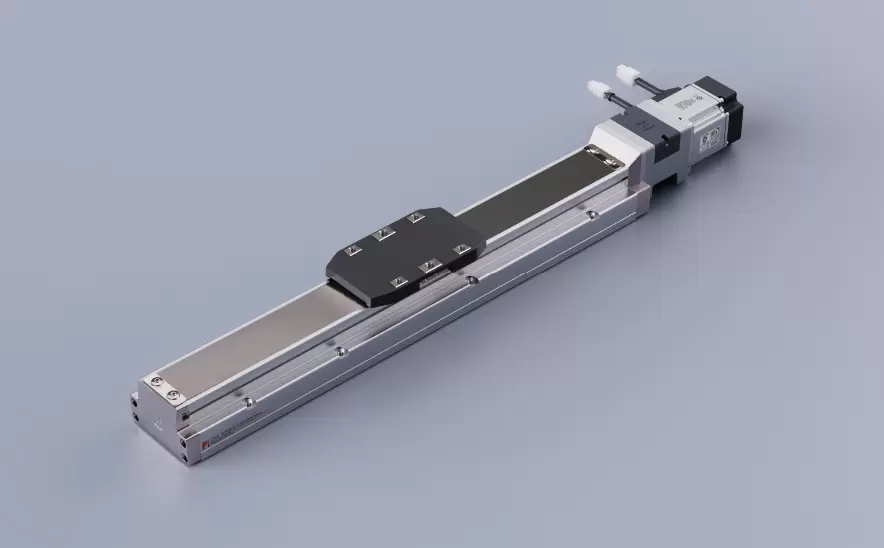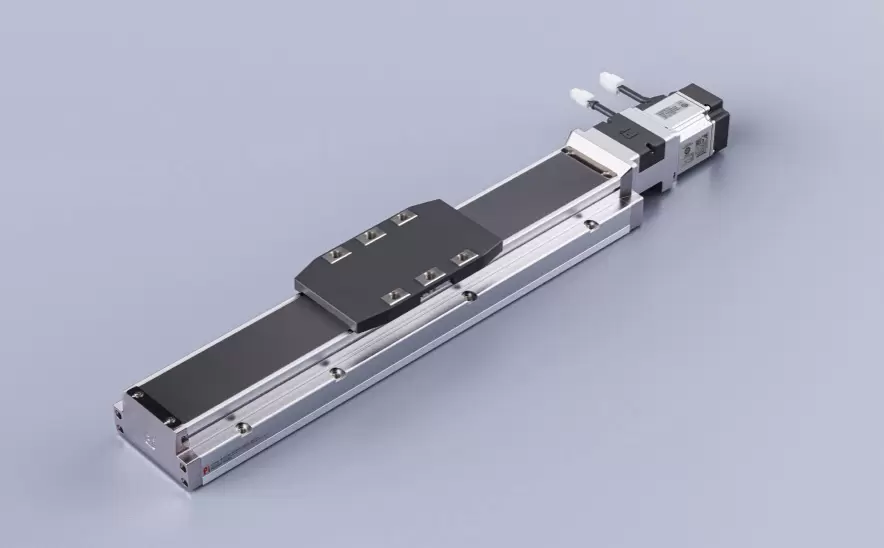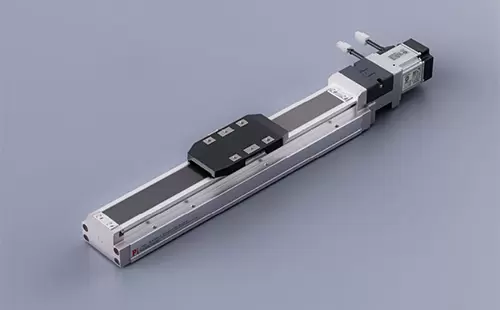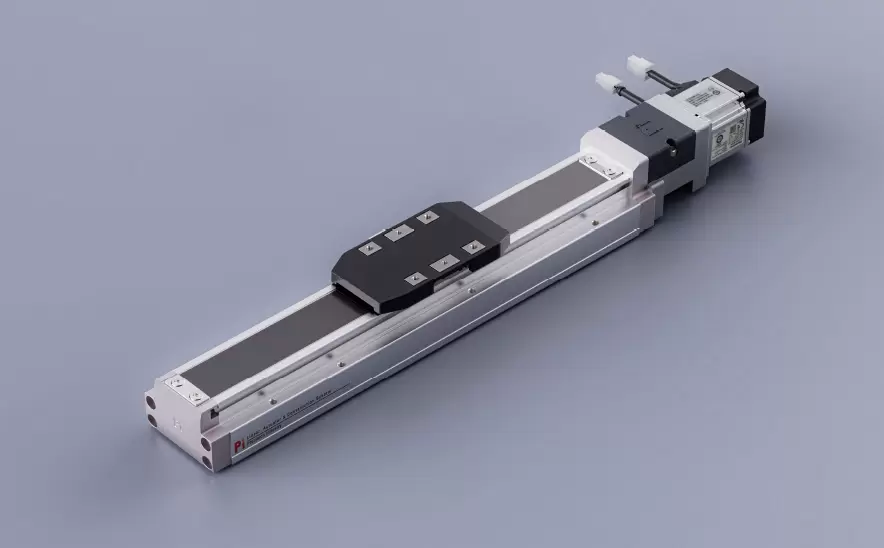
Motor Bottom Side
Repeatability:±0.005/0.01mmHorizontal Load:150kgVertical Load:55kgMaximum Speed:2000mm/sTravel Range:100-1500mm

 Current location:Home > Company > News > Latest news > What to Check During the Annual Maintenance of a Precision Positioning Slide Table
 Date: Jun 17 2026
Precision positioning slide tables play a critical role in modern automation systems, semiconductor equipment, optical inspection devices, laboratory instruments, and high-accuracy manufacturing processes. Their ability to deliver smooth, repeatable, and accurate motion directly affects production quality and equipment performance.
While daily operation may seem trouble-free, even the most reliable positioning system requires regular maintenance. An annual inspection helps identify potential issues before they lead to unexpected downtime, reduced accuracy, or costly repairs.
This guide outlines the key areas that maintenance personnel and equipment operators should inspect during the yearly maintenance of a precision positioning slide table.
Over time, factors such as dust accumulation, lubrication degradation, mechanical wear, temperature fluctuations, and continuous operation can gradually impact positioning accuracy and motion performance.
A structured annual maintenance program can help:
Maintain positioning accuracy and repeatability
Extend component lifespan
Reduce unplanned downtime
Improve system reliability
Lower long-term maintenance costs
Rather than waiting for performance issues to appear, preventive maintenance allows operators to address small problems before they become major failures.
The linear guide is one of the most important components of any precision slide table. During annual maintenance, carefully examine the guide rails and bearing blocks for signs of wear or contamination.
Check for:
Surface scratches or abnormal marks
Corrosion or discoloration
Dust, debris, or hardened grease buildup
Excessive resistance during movement
Unusual vibration or noise
Move the slide manually across its entire travel range. The motion should remain smooth and consistent without sticking points or irregular resistance.
If any contamination is present, clean the guide system according to the manufacturer's recommendations before applying fresh lubricant.
For slide tables driven by ball screws, annual inspection is essential to maintain positioning performance.
Areas to inspect include:
Ball screw surface cleanliness
Signs of wear or pitting
Lubrication condition
Axial play or backlash
Coupling integrity
Excessive backlash may indicate wear in the screw, nut assembly, or coupling components. Early detection helps prevent positioning errors from affecting production quality.
For belt-driven systems, inspect belt tension, alignment, and signs of aging such as cracking or fraying.
Lubrication is often overlooked until problems occur. However, insufficient or degraded lubrication is one of the most common causes of premature wear.
During annual maintenance:
Remove old or contaminated lubricant if necessary
Apply the correct lubricant type specified by the manufacturer
Check lubrication ports and delivery systems
Ensure grease is evenly distributed
Using the wrong lubricant can negatively affect performance and may even damage precision components.
Always follow the maintenance guidelines provided for the specific slide table model.
Mechanical components may gradually shift over time, even when no visible wear is present.
Annual maintenance should include performance verification tests such as:
Positioning accuracy measurement
Repeatability testing
Straightness inspection
Travel consistency evaluation
Comparing current measurements with original factory specifications can help identify performance drift before it becomes problematic.
For applications involving optics, semiconductor manufacturing, or precision assembly, this step is particularly important.
Whether the slide table uses a servo motor, stepper motor, or linear motor, the drive system should be evaluated during maintenance.
Check for:
Loose electrical connections
Cable damage
Connector corrosion
Motor overheating history
Abnormal operating noise
Encoder feedback should also be verified to ensure accurate position reporting. Faulty encoder signals can cause positioning errors even when mechanical components remain in good condition.
Moving cables experience continuous flexing during operation. Over thousands or millions of cycles, cable fatigue can occur.
Inspect:
Cable carriers
Flexible cables
Sensor wiring
Connector strain relief
Look for:
Cracked insulation
Abrasion marks
Loose connectors
Restricted cable movement
Replacing damaged cables before failure can prevent unexpected production interruptions.
Vibration and continuous machine operation may gradually loosen mounting hardware.
Verify the tightness of:
Mounting bolts
Motor brackets
Sensor mounts
Couplings
Base structures
Also inspect the slide table frame for signs of deformation, impact damage, or misalignment.
Even minor structural changes can influence motion accuracy in high-precision applications.
The operating environment has a significant impact on slide table longevity.
During annual maintenance, assess whether environmental conditions remain within recommended limits.
Consider factors such as:
Ambient temperature
Humidity levels
Dust exposure
Chemical contamination
Vibration from nearby equipment
If environmental conditions have changed since installation, additional protective measures may be necessary.
A maintenance inspection is only valuable if the findings are properly documented.
Record:
Inspection date
Measured accuracy results
Lubrication activities
Replaced components
Observed wear conditions
Recommended future actions
Detailed maintenance records help identify long-term trends and simplify troubleshooting in the future.
Even if annual maintenance is not yet due, the following symptoms may indicate the need for immediate inspection:
Increased positioning error
Unusual noise during motion
Vibration or instability
Reduced travel smoothness
Unexpected motor load increases
Inconsistent repeatability
Addressing these issues early can prevent more serious mechanical failures.
A precision positioning slide table is designed to deliver accurate and reliable motion for years of operation. However, maintaining that performance requires more than simply keeping the system running.
An annual maintenance inspection provides an opportunity to evaluate mechanical condition, verify positioning performance, refresh lubrication, and identify wear before it affects production. By following a structured maintenance checklist, manufacturers can maximize equipment reliability, reduce downtime, and protect their investment in precision motion systems.
In high-precision applications, proactive maintenance is not just a good practice—it is an essential part of maintaining consistent performance and long-term operational success.